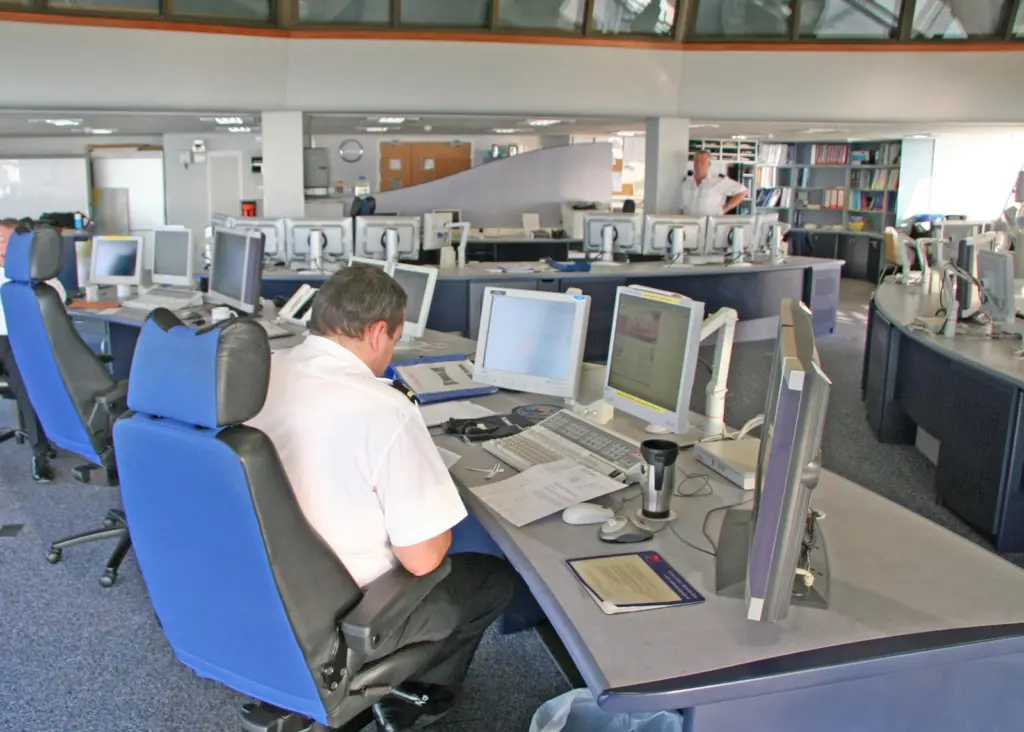
At the heart of the Coastguard operation is a maritime coordination service operated through 18 Maritime Rescue Co-ordination Centres (MRCCs) grouped into nine pairs, with an additional small centre co-located with the Port of London Authority to cover the tidal Thames.
The proposals for the reorganisation of the MCA include two nationally networked Maritime Operations Centres (MOCC’s), capable of managing maritime incidents wherever they occur and with improved systems to monitor ships and manage incidents. One will be located in Aberdeen, the other in the Portsmouth/Southampton area. There will also be six sub-centres fully integrated into the national network around the coast.
But the consultation paper has identified some problems. Firstly an increasing workload due to congestion of coastal waters and more extreme weather conditions increasing the number of incidents and the risk of coastal flooding.
There is a lack of resilience caused by pairing the centres. In the event of a problem affecting both centres in a pair, it is not possible for an incident to be managed from another centre.
Then there is the uneven workload distribution. The busiest centres handle five times as many incidents as the quietest, with 30% of all incidents happening in July and August and 70% of all incidents occurring between 09:00 and 19:00. These uneven workloads lessen resilience, hamper staff development and lead to higher than necessary staff costs.
Lastly, much of the computer and radio technology that was cutting edge a few years ago is now outdated. Assuming that the proposal after consultation is taken forward, how will the problems facing the service be overcome?
According to David Watts, managing director of CCD Design and Ergonomics, the key to success will include putting the users at the centre of control room design, which will help to deliver efficiency, effectiveness and operational benefits.
There will probably be changes in processes and procedures, in management and supervision. But there may also be changes in operational philosophy and the fundamentals of “how things get done”. The key is how the project involves staff in the change. Without this the chances of getting their buy-in and commitment to the change is low and resistance increases the risk of project failure.
The two new MOCCs can be designed and built to the highest standards. Where an existing building is being re-used, the focus on investment will be to ensure they are fit for purpose.
Automation is often the almost inevitable result of the application of new technology, and this will have a significant impact on how people work. Driving the system design by user need rather than seeing how different systems on the market might fit is critical. The challenge will be to achieve this within the constrained budgets in the current public sector environment.