Over this period, the most environmentally friendly carrier for port to hinterland operations at Germany’s biggest seaport carried a total of 6m tons of goods, for the most part consisting of bulk goods like ore, agricultural products, foodstuffs, animal feeds and mineral oils. The volume of transport rose by 6.5% in comparison with the same period last year, making for the best result since 1990.
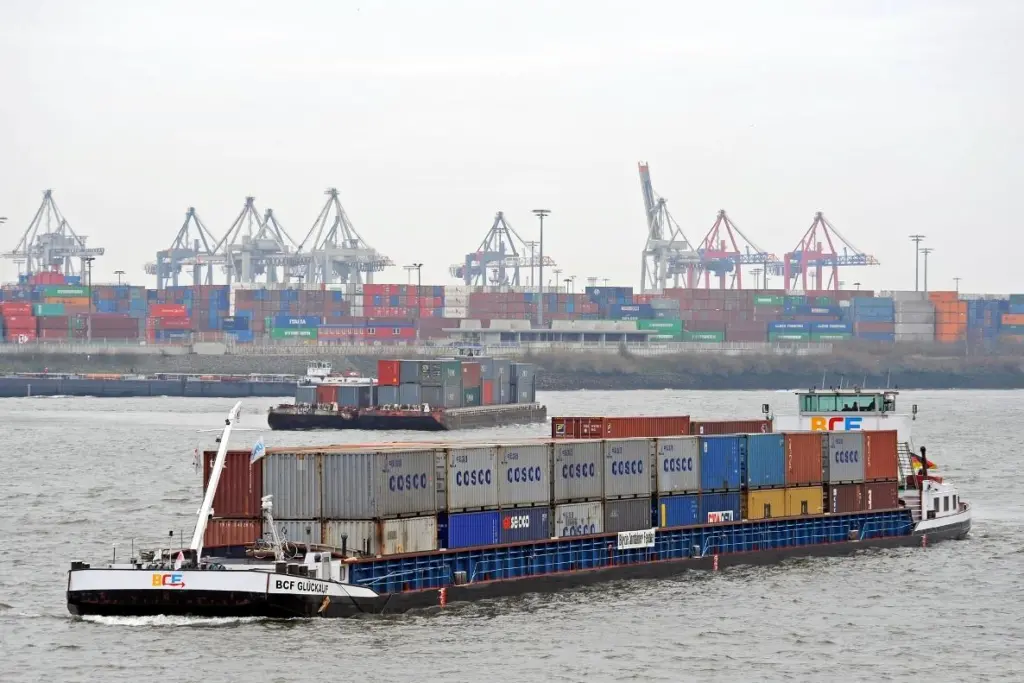
Container transport is particularly important for Hamburg, and 63,800 TEU were carried to or from the port by inland waterway vessel during the period, a 47% increase over last year. Container shipments by inland waterway vessel alone managed to replace some 200 lorry loads per day. Container services put in regularly to the ports of Aken, Brunswick, Brunsbüttel, Cuxhaven, Glückstadt, Haldensleben, Hanover, Magdeburg, Minden and Riesa.
Inland waterway vessels on the Elbe were responsible for the environmentally friendly transport of even greater volumes of goods, although the viability of what was once the most important waterway in Europe has been subject to repeated restrictions in view of low water conditions. After the floods of August 2002, all upgrading and maintenance measures on the Middle and Upper Elbe were discontinued. Although expert reports have shown that these undertakings would not accentuate the risk of flooding, shipping conditions since then have steadily got worse. At present, a fairway depth of 1.6m can be guaranteed for only 345 days per year.
As Germany’s biggest seaport, the Port of Hamburg has practically doubled the volume of goods it handles in the last 20 years. In view of this dramatic growth, especially in the area of container shipments, upgrading of the port infrastructure is a particularly urgent concern. Seaport to hinterland transport by inland waterway vessel is seen by the Port an environmentally friendly solution, and holds great potential for meeting future transport demands.