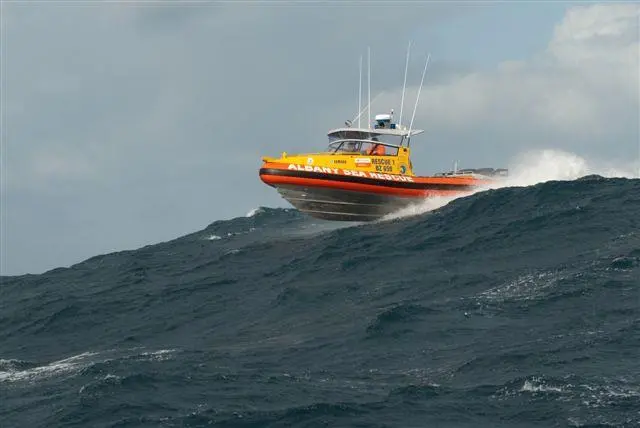
In recent years the industry has worked hard to reduce the risks of personnel transfer and collisions with turbines with new technical solutions and operational procedures. However, John Haynes, operations director for Bournemouth UK based training provider FRC International, told MJ, “The less obvious, invisible risk is that crews and passengers are being exposed to excessive amounts of WBV simply by the effects of wave action on planing craft.”
Vibration can be caused by continuous ‘hammering’ from short steep seas or wind against tide conditions. Repeated Shock (RS) can be caused by random ‘hits’ from head sea impacts, crossing seas or overtaking following seas.
Industry pressures are growing. “Operators were saying that with a zero tolerance for injury policy from the major energy companies, they now realise that WBV exposure needs to be considered for all operations”, Mr Haynes pointed out, adding that the 2010 EC Vibration Directive lands the issue squarely in employers’ hands.
While the maritime sector recognises the need to reduce the effects of WBV, “this is not a straightforward process” said Mr Haynes. The issue needs to be addressed on a number of levels. Operational considerations include using alternative routes and accepting slower transits in rougher sea conditions. Training includes coxswain education regarding varying boat speeds and helming in waves plus briefing passengers on good posture and bracing.
Technical considerations include ensuring that suspension seats are fit for purpose and have adequate suspension travel to avoid bottoming out. Maintenance considerations include regular inspection of seat condition, repairing damaged upholstery, replacing worn shock absorbers and dampers.
Mr Haynes concluded by saying that vibration exposure on planing craft is an issue “that needs to be understood by all managers, crews and passengers.”