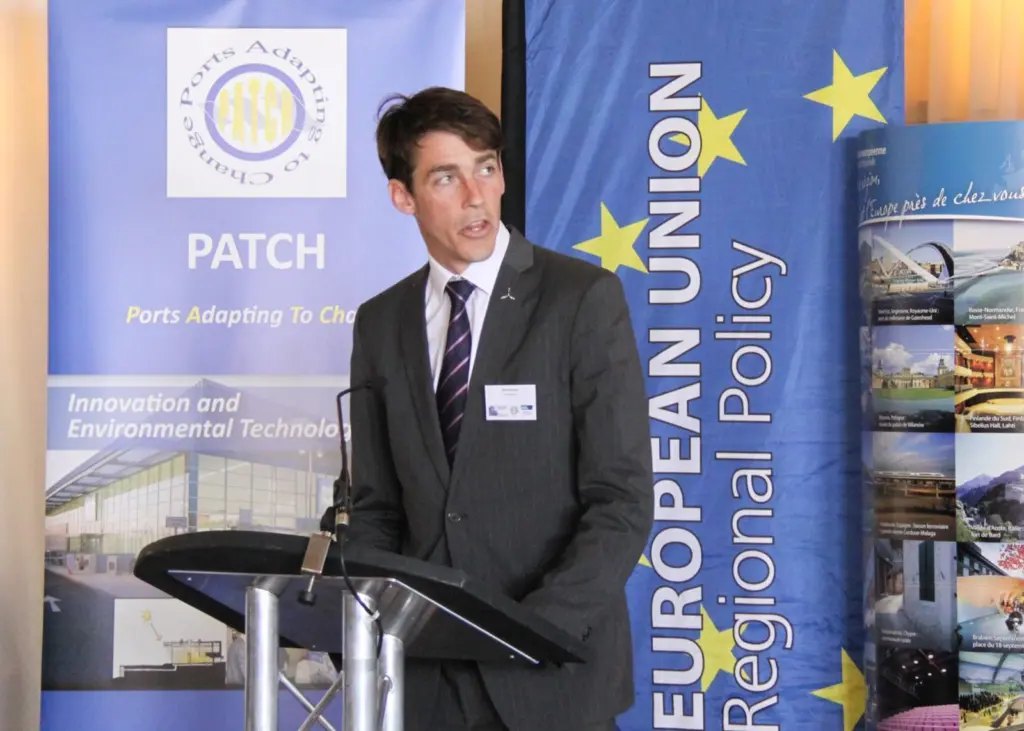
The Thames Estuary and southern North Sea are well established with offshore wind, so selecting Port of Ramsgate UK to host the Blue Energy Workshop was an apt choice, the event bringing together an eclectic mix of people from the world of ports, wave and tide energy, EU regulation and skills development.
In his introduction, Howard Holt from Seeports reminded the audience that wave and tidal energy is around ten years behind wind, the technology currently being “tested to destruction” (an assessment later described in different words by another speaker!). In her keynote speech, Laura Sandys, MP for South Thanet, spoke about the area becoming “the capital of renewables and wind in the south east, and while maybe not the Orkneys, [referring to wave and tidal] we certainly are aspiring to be the Aberdeen of the south east for wind”.
She described the need for maritime skills as a key factor that needed scaling up, and spoke about the “deeply complex” areas of planning and the Committee on Climate Change’s recommendation for a ‘one gateway’ planning authority, as in Norway, leading to the coordination of other involved authorities.
Wim Stubbe from the Port of Oostende, gave a brief overview of the PATCH project, this being their last working meeting after three years of work as the voice of small and medium sized ports in the channel region. He stated, however, that their voice was not being heard, adding “we cannot say that we have made a lot of progress”. He cited the strengths of the big ports, stating “all of the big money goes to the people who do not need it”, smaller ports lacking the administrative strengths and resources of their larger cousins to deal with strategic issues. On a more positive note, he reported a good partnership had developed between all port managers “standing with their feet in the sand and their boots in the water” stating that port and business communities can give support to each other. While obviously an honest and frank assessment of the work of PATCH, Mr Stubbe emphasised the positives of the project and the opportunities for small and medium sized ports in adapting to change.
Tom Howes, Deputy Head of Unit, DG Energy, European Commission, outlined EU involvement in renewables, listing examples of EU funding for all areas of offshore renewable energy including wave and tidal. David Krohn,Wave and Tidal Energy Development Manager, RenewableUK, reported a doubling of installed wave and tidal capacity in the previous ten months. Aquamarine Power and Pelamis Wave Powerwere mentioned as being particularly active with wave power projects, along with world leading facilities at The European Marine Energy Centre Ltdin the Orkneys and Wave Hubin Cornwall.
Offshore wind is currently attracting the lion’s share of renewable energy publicity, but Mr Krohn stressed that wave and tidal is also progressing, adding, “Moving to the development stages has really attracted the interest of some major industrials and the involvement of these major players has really improved our credibility and turned us into a properly commercial proposition”. He said the industry has the potential of installing upwards of 1.5GW by the end of the decade and described the UK as “one of the most attractive places in the world to develop marine energy”, thanks to a stable revenue support stream package.
Echoing voices in the wind sector however, he stated it isimportant that government provides “urgent clarity over the level of support we can expect”. He expressed disappointment with the approach of the Green Investment Bank which has taken “a very commercial view, not identifying marine energy as a priority sector”, and reminded the GIB of a potential “pot of gold at the end of the rainbow”. Returning to the theme of the workshop, he reminded ports of the potential massive opportunities from marine renewables.
As Mr Holt pointed out, there are two port organisations in the UK, The UK Major Ports Grouprepresenting the larger commercial ports, and British Ports Association, with 86 full members representing ports of varying sizes, but particularly small and medium sized ports. He stated that both organisations are co-located, and working closely together. He suggested that progress made by small ports in adapting to the needs of the wind industry, along with synergies with wave and tidal could provide a springboard for ports looking at entering that sector. He stated one problem for smaller ports was the considerable investment required catering for windfarm developers but only providing maximum returns for a few years of the construction phase.
The bulk of the workshop involved interesting and thoughtful presentations by marine energy industry representatives, including those from Regen SW, Royal Haskoning, Tidal Energy Ltd and Pulse Tidal.
Providing a skilled workforce for renewable energy is never far from the top of the debate and John Parsonage from Thanet College Centre for Environmental Technologiesoutlined plans for an Energy Infrastructure and Utilities Academy by 2013, involving integrating renewable technology skills with established building services skills on a national, regional and local level. After Mark Seed, Commercial Manager, Thanet District Council, spoke of the opportunities for the port of Ramsgate, delegates were treated to a coach tour of the harbour, to see first-hand the activity offshore wind had created in the port.
An interesting subject touched on, was that of co-location of marine and wind energy projects, given the establishment of offshore wind infrastructure such as in the southeast UK. Hurdles would include contractual aspects of existing arrangements, particularly perhaps in the eyes of The Crown Estate, but the debate was an example of positive forward thinking that clearly exists in pushing marine and offshore wind energy forward. Marine renewable energy is currently mostly centred in the north of Scotland and the south west of England, and the insight into this sector of renewable energy certainly provided food for thought in an area of the UK dominated by offshore wind energy.
By Peter Barker