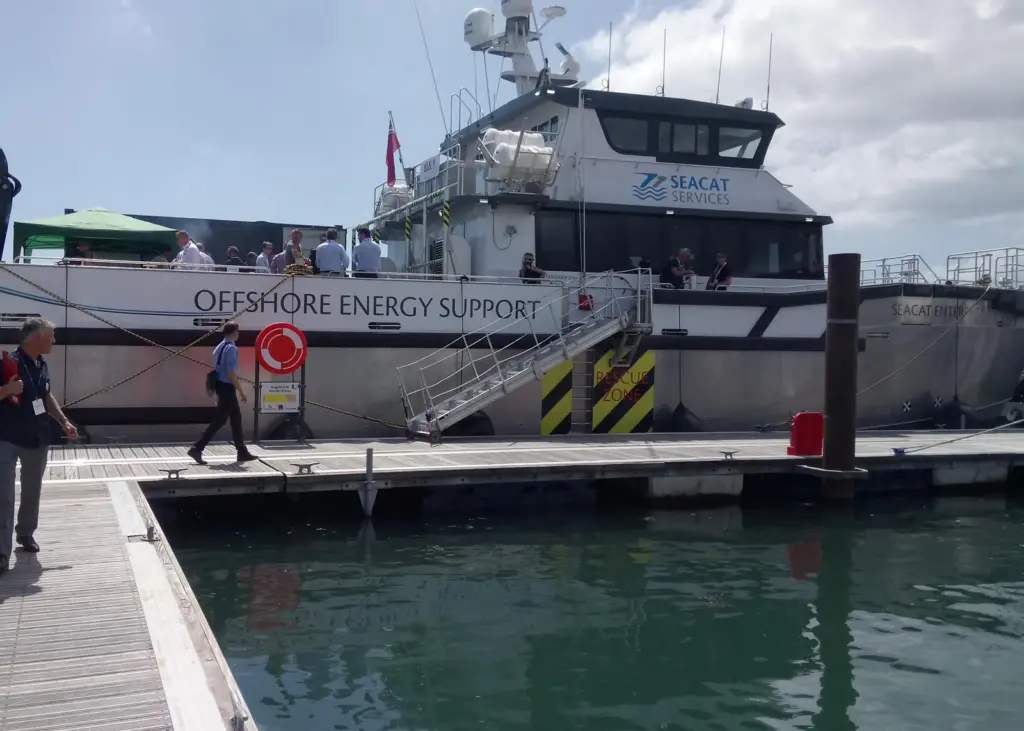
This is the message from the managing director of Seacat Services, Ian Baylis, who said that project pipelines are strong and that while the price of offshore wind generated power is falling, maturity, advances in turbine technology and industry experience are leading to efficiency.
Mr Baylis said: “The outlook for construction is extremely healthy. There’s a lot of projects being built over the next five years.
“It’s giving people the feeling that we’re going to have a nice solid period of cooperation with the industry moving forward at the moment.”
Maintenance focus
However, he stressed that while confidence has strengthened in the industry following a drop in the level of boatbuilding as a result of the low demand period of 2015-16, the focus is now on operating and keeping current fleets well maintained.
“I’m actually encouraged by our industry’s generally showing maturity that we understand that we should be concentrating on getting the global fleet of quality CTVs back to work after this quiet period,” he stated.
He added: “For the first time since our inception we don’t have a boat in build. We need to concentrate on keeping our KPIs up, keeping our operations as safe as possible, keeping our vessels as reliable as possible and the added complication of going ahead and getting involved in a pile of newbuild boats right now is not on our radar, we need our operations to stabilise.”
Availability
Mr Baylis explained that for Seacat, which has 14 vessels working mainly off the east coast of the UK and the west coast of Germany, keeping vessels available and making sure they can meet the challenges working with offshore wind farms present is key.
This is about building boats fit for purpose, he said. “The Seacat Enterprise has just done a four month contract where she was offshore for seven days at a time and then in for less than a day.
“It’s about how you line up your contracts, your technical team, how you make sure you get the servicing done during those periods and that again goes back to how are you set up.”
By Rebecca Jeffrey