![MaritimeJournal[Seawork]](https://www.maritimejournal.com/wp-content/uploads/2026/09/MaritimeJournalSeawork.svg)





Parat Halvorsen targets Scottish power market
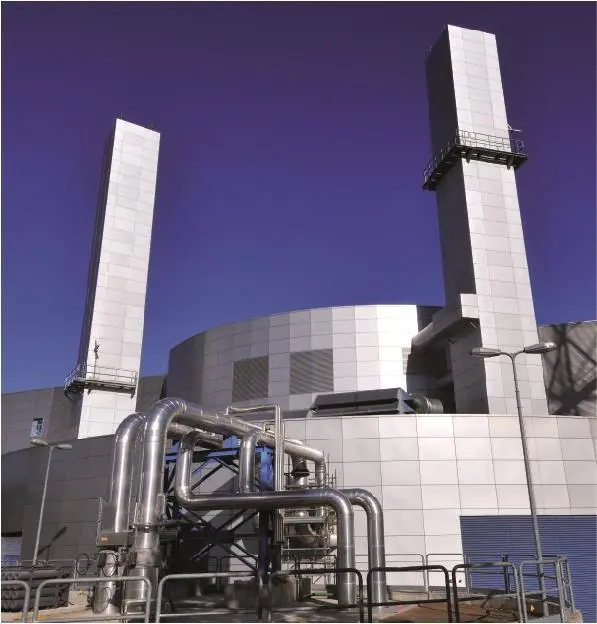
A leading Norwegian manufacturer of steam and heat energy systems, Parat Halvorsen AS, is preparing to promote its innovative high-voltage electrode boiler technology in Scotland, as the country ramps up its supply of renewable energy, particularly from wind.
The company will be exhibiting and presenting at this year’s All-Energy Exhibition 2018 at Glasgow’s SEC Centre in early May and hopes to make an early impact in this rapidly developing market.
Martin Løvland, technical director at Parat Halvorsen, has been closely involved in the development of electrode boiler design for many years. He is clearly excited about the opportunities in the Scottish power industry and views this as the next frontier following several successful projects in energy markets elsewhere in Europe and other parts of the world.
Efficient power
Electrode boilers work by passing a current through water, between electrodes. They provide a very efficient transformation of power to heat and can be supplied in steam or hot water versions.
In many European countries, combined heat and power plants typically run on oil, coal or nuclear energy. Adjusting supply to meet the peaks and troughs in demand – a process called ‘grid regulation’ – has traditionally been managed by using gas turbines. Running at intermediate load, these turbines can be adjusted quickly, up or down, to cope with grid variations. However, where the contribution from renewables is significant, many gas turbines are stopped and are not available for ‘negative’grid regulation.
Electrode boilers, by comparison, offer a cheap and green way to manage the peaks and troughs of demand and keep power plants operating at a stable load. The boilers are highly flexible and offer a cost-competitive source of power, not just at a national or regional grid level, but also across a range of industrial applications.
They are cheap to operate with an efficiency rating of 99.9%; they have no moving parts, zero emissions and relatively small footprints, even for the largest units. Available across a power range from 5MW to 60MW, they can be fired up to operate at full capacity in just five minutes. When in operation they regulate from minimum to maximum in just 30 seconds.
Grid regulation
This makes them an ideal solution for grid regulation at a national or regional level, as well as generating another income stream for individual industrial facilities which have surplus energy at certain times. In some countries, industrial facilities which may require large amounts of power only occasionally must nonetheless pay for power all the time. PARAT Halvorsen boilers enable them to use surplus energy for other requirements, or to sell it to third parties.
Mr Løvland explains that power regulations are complex and vary from one country to another. The rules in various countries have failed to adapt to offer more flexibility, he believes, as new sources of renewable energy are supplied from wind and sun at rates which vary. However, governments still want to make the most of energy generated from renewable sources, whatever the spikes in supply might be.
Power generation companies therefore now face a different set of challenges. From a concern over whether there would be enough power to meet spikes in demand and how to respond very quickly to avoid energy disruption to consumers, they now face the challenge of what to do at periods of low energy demand when they have too much power available.
“What we have seen in countries like Denmark and Germany is that when renewable energy contributes a significant percentage of power to the grid, then several things happen,” Mr Løvland explains. “First, electricity tends to get cheaper at certain times of the day. Second, renewable energy from wind and sun is not a stable source of power and therefore there is a requirement for what is called ‘dump loading’ – getting rid of power when there is too much or pulling in more capacity very quickly to meet unforeseen peaks in demand – positive or negative regulation.
“In Denmark, for example, where wind power makes a significant contribution to energy requirements, they found that they had too much power in their grid at certain times. This meant that the grid became unstable and so they had to install 200 MW facilities to dump the excess power and stabilise the grid. However, with our boilers now installed at certain facilities, any excess power can be routed to our boilers to make heat which, in turn, can be used in various ways.
“So, our boilers harness surplus power at times of low energy demand and ensure that conventional power generating installations continue to operate at stable load, without time-consuming and expensive shutdowns or the need to run gas turbines for no good reason,” says Mr Løvland. “It also makes sense to make the most of sustainable energy sources such as wind, waves and sun, rather than turn off the supplies when energy demand is low.
Managing power
“The reason we are now focusing on Scotland,” Mr Løvland continues, “is that harnessing more wind power there will inevitably mean more volatility in power supplies. Our electrode boilers could provide an ideal solution for managing power fluctuations and dump loading in peak production periods.”
Recent installations in Europe have included the supply of a 10MW high-voltage electrode boiler for A2A Calore e Servizi, Italy’s largest district heating company. The boiler was due to be commissioned at the end of January and will be used for peak load and grid regulation in Milan.
Meanwhile, a 15MW boiler has been installed in Škoda Energy’s power-to-heat system at a thermal power station in Mladá Boleslav, Czech Republic. This boiler will feed heat into the district heating system and provide a buffer during peak loads in the public power grid.

Related Articles
 OFFSHORE RENEWABLES
 OFFSHORE RENEWABLES
 ENVIRONMENT