![MaritimeJournal[Seawork]](https://www.maritimejournal.com/wp-content/uploads/2026/09/MaritimeJournalSeawork.svg)



Katanes Wind Wave project development
The concept of a floating structure that can generate power from both wind and wave energy has moved a step closer with progress on the Katanes Wind Wave project reports Dag Pike.
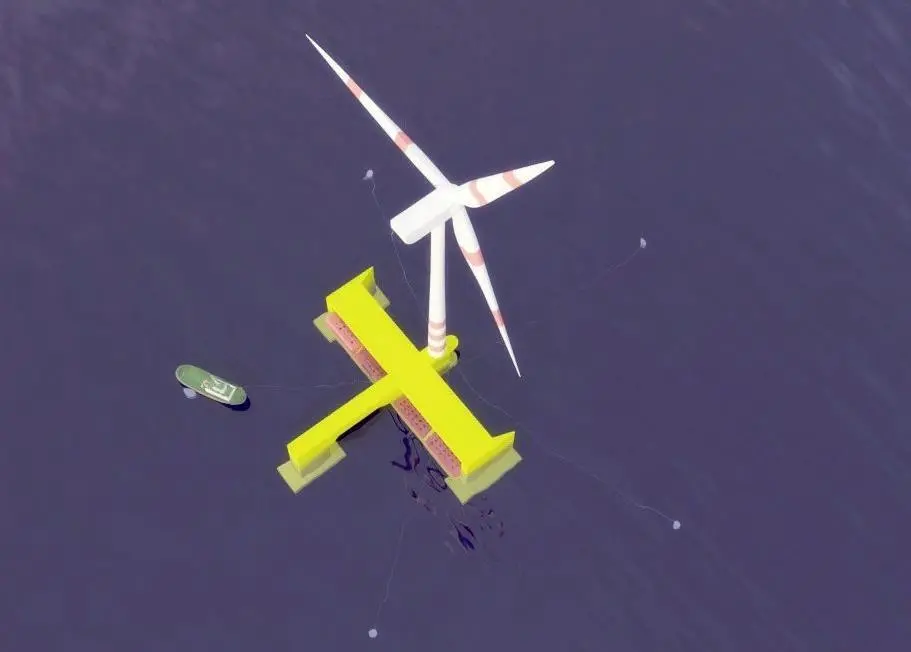
The Danish company, Floating Power Plant (FPP) has developed and patented a technology platform that includes a floating wind turbine combined with wave power devices. Now the company has established a joint venture with DP Energy to evaluate the potential of two sites, one in Scotland, the other in Wales, and if successful, they could be up and running by 2020.
The companies have decided to proceed to the next stage of the development, having recently completed the Environmental Impact Assessment screening. “We consider Katanes to be a world-leading location for an early-stage development of this technology. This, together with the strengths of the local and national supply chain and the Scottish Government’s commitment to support the offshore energy sector, especially emerging technologies such as floating wind and wave, has led us to this decision,” said Simon De Pietro, the CEO of DP Energy.
The long-term goal of the two companies is to develop a commercial scale project in staged development steps. Floating Power Plant has developed the P80 wind-wave energy platform, which hosts a single wind turbine ranging from 5MW to 8MW and integrates a wave energy device with a capacity between 2MW and 3.6MW, depending on the wave resource. The technology has been proven by two years of offshore, grid-connected testing in Danish waters.
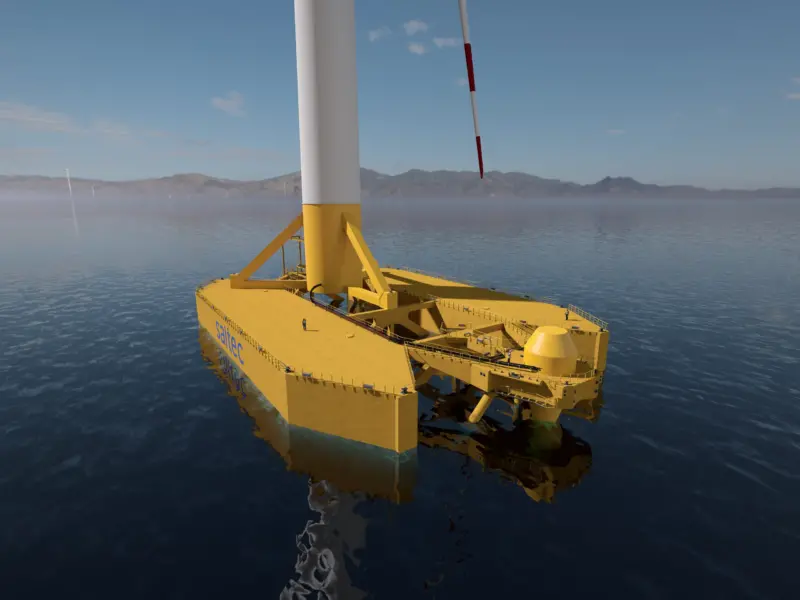
FPP’s system is based around a semi-submersible structure which provides a stable platform on which to mount a standard offshore wind turbine generator of between five and eight MW in capacity. In addition, the platform provides a base for four of FPP’s patented wave energy converters which use a uniquely shaped absorber fixed in a channel in the platform, each producing between 500 and 900kW, depending on available wave resources at the project site. This results in between 2 and 3.6MW of wave power, giving a total platform capacity of between 7 and 11.6MW, although it is possible that the platform could support even larger wind turbines.
A bonus is improved accessibility on the lee side with the structure forming a breakwater to give calmer water in the lee for personnel transfer.

Related Articles
 OFFSHORE RENEWABLES
 OFFSHORE RENEWABLES
 ENVIRONMENT