![MaritimeJournal[Seawork]](https://www.maritimejournal.com/wp-content/uploads/2026/09/MaritimeJournalSeawork.svg)





Pioneering study finds seabirds avoid offshore wind turbines much more than previously predicted
The Offshore Renewables Joint Industry Programme (ORJIP) has released findings from what it says is the world’s most comprehensive investigation into seabird behaviour and collision risk around offshore wind farms.
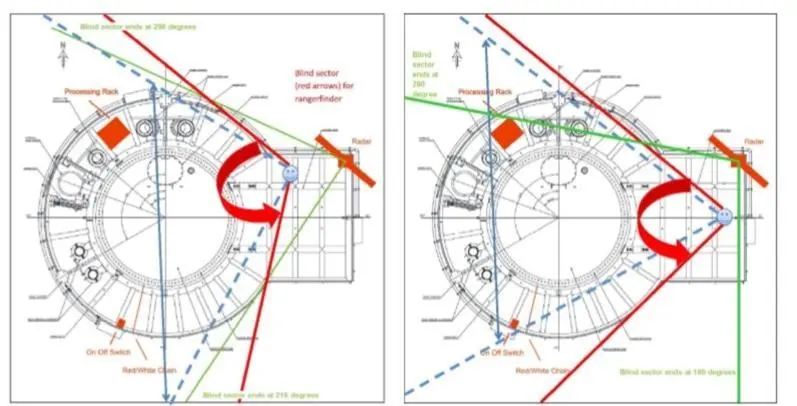
The Bird Collision Avoidance Study is the first of its kind employing a multi-sensor monitoring system, combining human observer-based tracking with a system that automatically recorded seabird movements, at a working offshore wind farm in the English Channel. Radars were also used to record data 24 hours a day for two years.
COLLABORATIVE STUDY
The multimillion pound, collaborative study was commissioned by 11 leading offshore wind developers, The Crown Estate, The Crown Estate Scotland and Marine Scotland, was supported with funding from the UK Government and was managed by the Carbon Trust. The project was developed and run with the support and advice from the UK and Northern Europe’s leading ornithologists and environmental advisors such as Natural England and RSPB.
During the two years of fieldwork a significant number of videos were recorded at a representative area of Vattenfall’s Thanet offshore wind farm, one of the largest in UK waters. This resulted in the analysis of over 600,000 videos, of which only 12,131 contained evidence of bird activity and only six collisions with turbines were observed. The analysis revealed that collision risk of seabirds was less than half of what would be expected based on current understanding. During the study seabirds were observed to exhibit avoidance behavior and change their flight path to avoid the turbines.
PROVIDING EVIDENCE
To obtain planning consent for an offshore wind development the planning inspectorate needs to consider the risk of environmental impacts, as well as any mitigation measures proposed by a developer. The developer needs to provide evidence of how seabirds will behave within and around the farm. In order to quantify bird collision risk with turbines, collision risk models (CRM) are used to estimate this impact. Although extensive studies have looked at migratory patterns and behaviour of seabirds around offshore wind farms, until now there was only limited evidence to substantiate their actual behaviour.
The conclusions from this research on collision risk will allow better informed wind farm design and consent decisions just as the next generation of more powerful offshore turbines are being tested and manufactured. As a result the research will support UK Government plans to rapidly and sustainably grow the offshore wind sector by 2030.
The research was designed to generate robust, empirical evidence on the levels of avoidance behaviour and collisions to improve collision risk models. This will provide greater certainty on the true impact of offshore wind farms on seabirds and the mitigation measures required.
Piers Guy, UK Country Manager, Vattenfall said: “This pioneering study, hosted at Vattenfall’s Thanet Offshore Wind Farm, is a significant step forward in our understanding of the way in which seabirds avoid offshore wind turbines, and comes at a crucial time as the next generation of wind turbines are designed and developed. This research will support UK Government plans to rapidly and sustainably grow the offshore wind sector by 2030.”
The project data is publically available via The Crown Estate’s data sharing platform the Marine Data Exchange: http://www.marinedataexchange.co.uk/
By Jake Frith

Related Articles
 OFFSHORE RENEWABLES
 OFFSHORE RENEWABLES
 ENVIRONMENT