![MaritimeJournal[Seawork]](https://www.maritimejournal.com/wp-content/uploads/2026/09/MaritimeJournalSeawork.svg)




MUPs can offer lower cost development
New research has identified three areas of innovation that could significantly reduce the development costs of Multi-Use Platforms at Sea (MUPs) to make them more economically attractive.
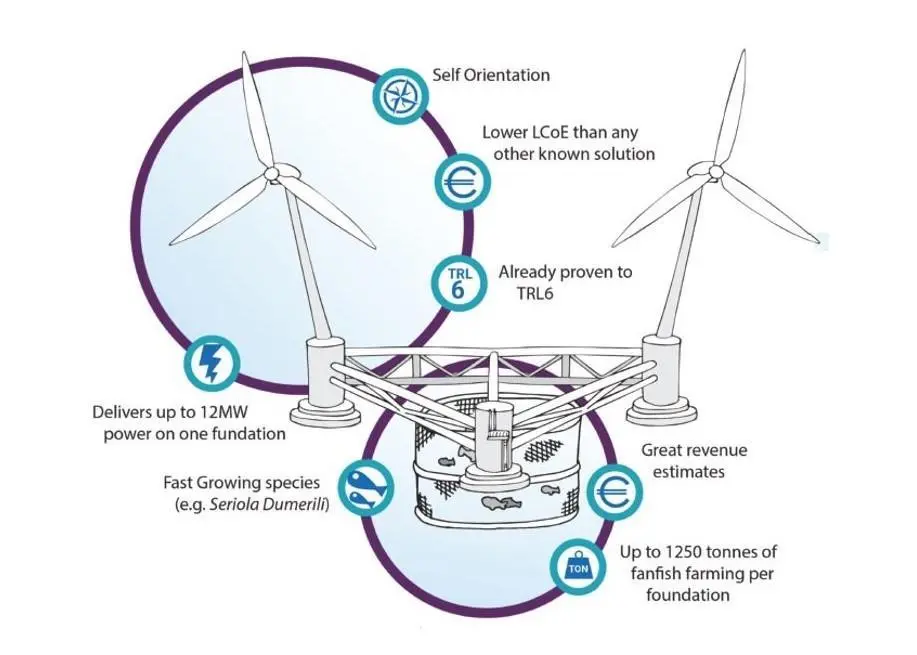
European-funded project ENTROPI said that cost has been a major barrier to the development of multi-use facilities to date, but its project has identified anchoring and mooring solutions, security and surveillance applications and a concept platform supporting renewable energy devices and aquaculture facilities as cost-reduction options. ENTROPI added that MUPs will limit the impact of offshore marine infrastructure development on fragile marine ecosystems.
Project partners researched engineering, technology, construction and operational issues to produce ‘Road-Maps’ which businesses, investors, developers and users can download to understand the key actions, benefits and milestones for each innovation scenario.
Marine South East led the work on anchoring and mooring solutions and concluded that the use of sub-sea helical screw pile anchors would significantly reduce the costs and installation times compared to traditional approaches. This capability would enable tethering of floating platforms at both substantially lower cost and without the need for specialist installation vessels.
Pole Mere Bretagne Atlantique assessed the ability of remote security and surveillance capabilities to provide efficient, low-risk protection for a variety of MUPs. It proposes equipping the platforms with strategic airborne and sub-sea facilities to enlarge the geographical coverage capacity further offshore and provide possible additional revenue streams.
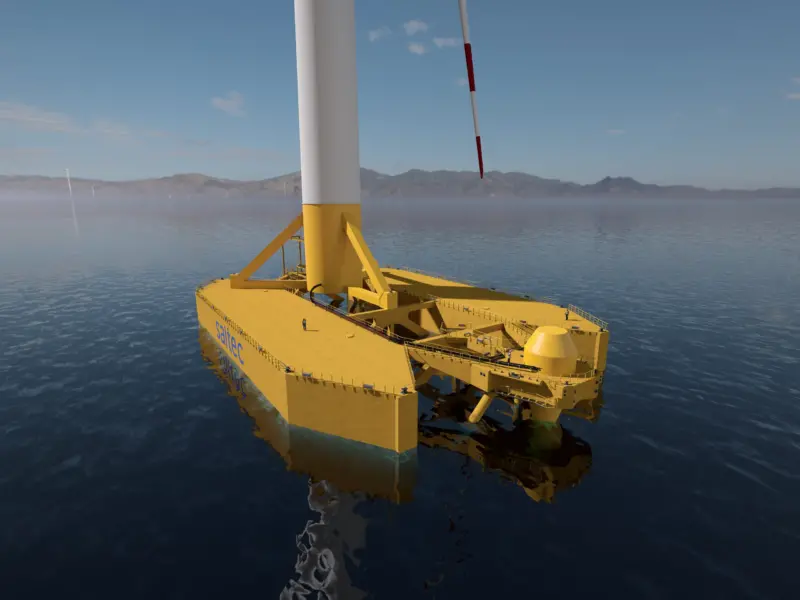
PLOCAN, looked at the viability, financing and investment potential of MUPs. Its findings indicate that a concept platform that could support renewable energy devices and aquaculture facilities has the most immediate potential for development. The likely financial mix for this is likely to be a combination of venture capital, private investment, government grants and commercial banks.
By Rebecca Jeffrey

Related Articles
 OFFSHORE RENEWABLES
 OFFSHORE RENEWABLES
 ENVIRONMENT