![MaritimeJournal[Seawork]](https://www.maritimejournal.com/wp-content/uploads/2026/09/MaritimeJournalSeawork.svg)


EU-backed project aims to create hybrid wave energy testing platform
In December last year, an international wave energy consortium launched the VALID project, a 5M€ EU-backed initiative focused on the development of a hybrid testing platform for ocean energy.
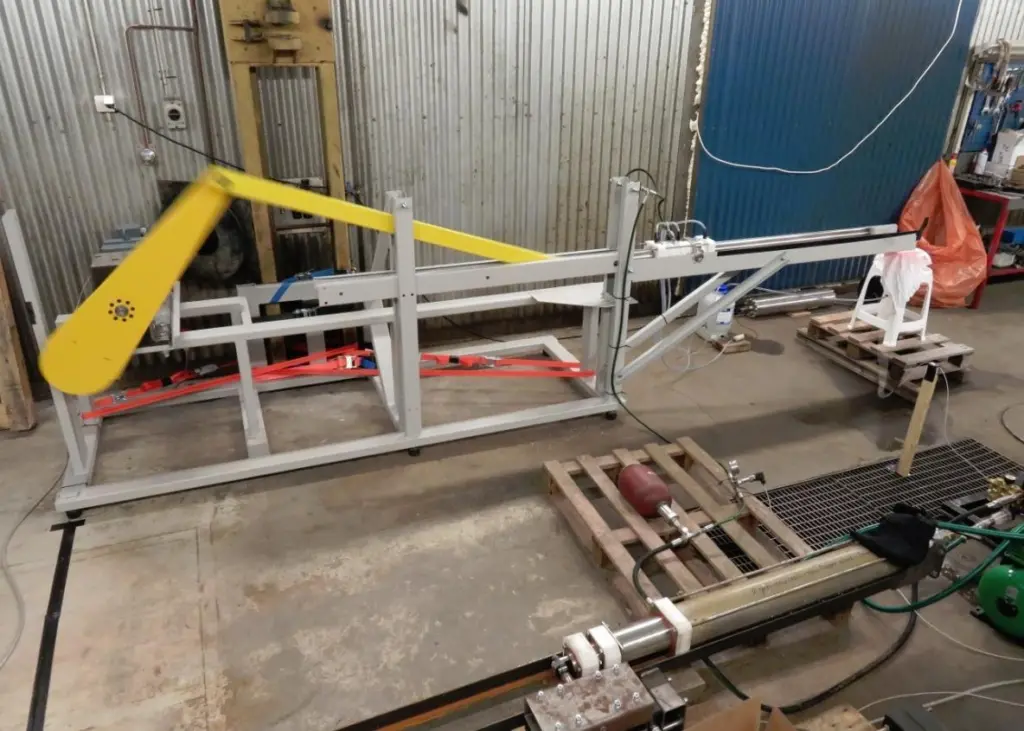
The main objective of the three-year VALID project is to develop and validate the new VALID Hybrid Test Platform (VHTP), as well as procedures for accelerated hybrid testing that can be used across the entire wave energy sector, in order to improve the reliability, survivability and performance of the components and subsystems that form Wave Energy Converters (WECs). Ultimately, the project team (which includes Fundación Tecnalia Research & Innovation, RISE Research Institutes of Sweden, Biscay Marine Energy Platform SA, Aalborg University, Technical University of Delft, Corpower Ocean, Rina Consulting, Idom Consulting, Engineering, Architecture, AVL LIST, Yavin Four Consultants, Wavepiston, Aquatera Sustainability Ireland and consulting engineer Julia F. Chozas) believe the platform will help project developers to tackle scaling challenges, lower project uncertainty and reduce product development costs. As Pierre Ingmarsson, Senior Project Manager at RISE, explains, hybrid testing is ‘an innovative and cost-effective way to evaluate structures, where the full structure is divided into physical and numerical substructures.’
“The basic idea is to numerically represent part of the substructures using well-established mathematical models, while physically testing the rest of the other substructures that may have complicated or unknown mechanical properties. A key advantage of hybrid testing is that it allows users to integrate inputs from laboratories … in different geographic locations,” he says.
According to Ingmarsson, current testing procedures in the wave energy sector are ‘not well-balanced,’ largely because most laboratories focus solely on functional tests relating to aspects such as proof of concept and performance assessment – disregarding ‘other key performance measures such as reliability and survivability.’
“This is where the VALID project comes into play. VALID will integrate both reliability and testing methods, together with relevant data on component failures from ongoing and recently finished projects, early in the design and testing process to ensure that the proposed testing procedure is built upon past experience,” he adds.
USE CASES
The development of the VHTP and associated methodologies will be based on input from three individual technology developers – each of which will contribute data about specific use cases, as well as physical test rigs, representative numerical models of their devices (virtual test rigs) and high-fidelity data from their operation in real environmental conditions obtained in past, ongoing and future open-water sea-trials.
The first use case, represented by Corpower, will focus on developing a deeper understanding of dynamic sealing failures in hydraulic PTO point absorbers – identified by the EU-funded H2020 WaveBoost project as a critical component in need of attention for this type of WEC. Under the auspices of the VALID project, the company’s existing 1:10 scale physical test rig for seal testing will be customised and re-built to 1:1 scale to substantially improve understanding of scale effects.
A second use case, represented by IDOM, will investigate electric generator failure in floating and fixed Oscillating Water Columns and validate how the proposed methodology can assist in the understanding and evaluation of failures in generators and power electronics that operate above nominal power about 20% of the time. Project partner Tecnalia will also provide accelerated test data from its test rig facilities –complemented by historical data collected over the last few years of continuous operation of the Mutriku fixed OWC pilot plant.
A third use case, represented by Wavepiston, will investigate a variety of hydraulic pump failures by drawing on experiences gained on extensive testing of the Wavepiston device in dry lab and open-sea conditions at the DanWEC test site at scale 1:4 to 1:2. Wavepiston will also deploy a pilot version of the full scale WEC at PLOCAN, Gran Canaria, followed by more installations in 2021, which will be used to compare test results from the test bench with real sea testing, as well as following the installation of improved VALID components.
By Andrew Williams
Related Articles
 OFFSHORE RENEWABLES
 OFFSHORE RENEWABLES
 ENVIRONMENT