![MaritimeJournal[Seawork]](https://www.maritimejournal.com/wp-content/uploads/2026/09/MaritimeJournalSeawork.svg)


Infrastructure for Portuguese ferry electrification
10 new electric passenger ferries will soon begin servicing routes across the Tagus River in the Portuguese capital of Lisbon.
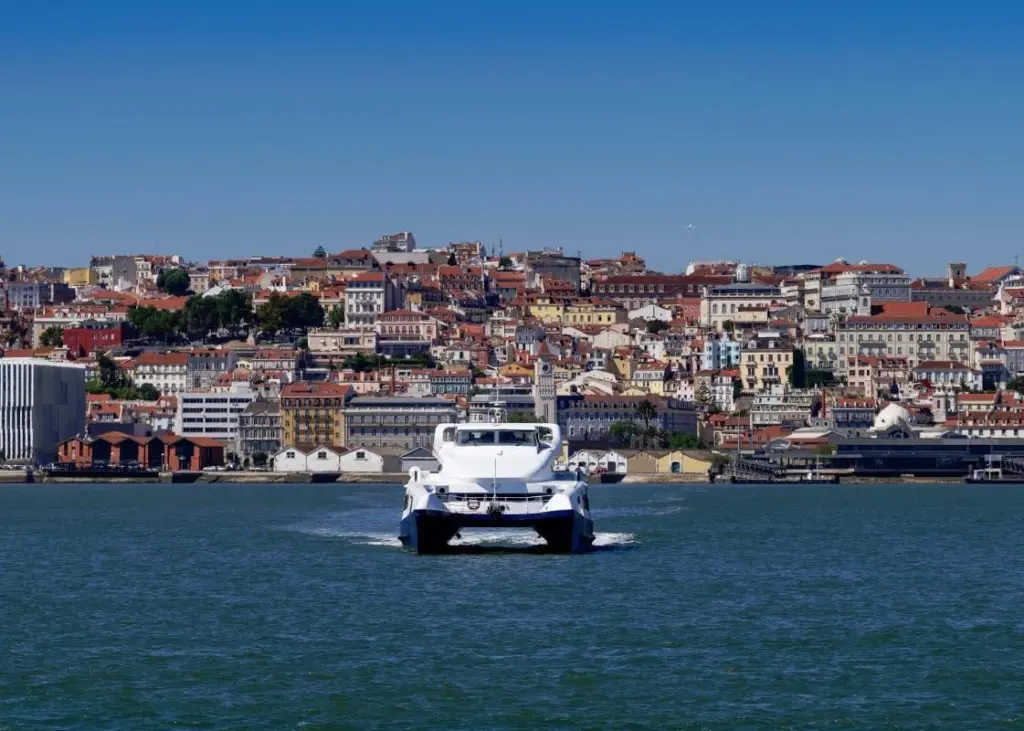
ABB AS recently awarded norwegian company Zinus a contract for the delivery of 20 SWC100 charging connections for the new ferries. The ferries are to be built by the Astilleros Gondán shipyard for the Transtejo S.A ferry company, and ABB has been selected as the total integrator of electric power supply and the vessel and propulsion automation.
“We are both proud and happy that ABB has chosen Zinus as supplier of the charging connections for this large-scale electrification of an important part of Lisbon’s infrastructure. With two fully automatic SWC100 charging connections on each vessel, the ferries are ensured fast and smooth connection to the charging stations on land and efficient charging of the batteries on board. This is important to ensure the regularity of the routes over this busy waterway,” says Ronny Olson, Sales Manager at Zinus.
SWC100 is the unit on board that automatically receives the charging plug from land and connects charging power to the batteries while the vessel lies docked. When the ferry departs, the charging plug is released and hoisted back into the charging tower – ready for the next charging. The automatic connection and disconnection only take 20 seconds, ensuring the longest possible charging time.
Zinus will deliver its charging connections to the yard from the fourth quarter of 2021 onwards into 2023. The ferry crossings will also need charging towers on land, and Zinus will also compete to win these orders.
The 40 metre passenger ferries will have a capacity of up to 540 passengers each, servicing three important routes that connect Lisbon to Cacilhas, Seixal and Montijo on the south bank of the Tagus River. The three crossings transport a total of around 19 million passengers annually. The ferries will have a service speed of 16 knots, a maximum speed of 17 knots and will enter service in 2022-2024.
The newbuilds are part of Lisbon’s efforts to accelerate the introduction of emission-free public transport solutions. Increased electrification of the transport sector, including transport on the country’s inland waterways, will play a key role in Portugal’s efforts to achieve carbon neutrality by 2050.
ABB estimates that by replacing the ten diesel ferries currently operating on Tagus with all-electric ferries, an annual emission reduction of around 6,500 tonnes of CO2 can be expected.
By Jake Frith