![MaritimeJournal[Seawork]](https://www.maritimejournal.com/wp-content/uploads/2026/09/MaritimeJournalSeawork.svg)


DNV confirms technical feasibility of innovative WindGrid system
In late June, leading international classification society DNV confirmed the technical feasibility of Norwegian outfit Odfjell Oceanwind’s WindGrid system.

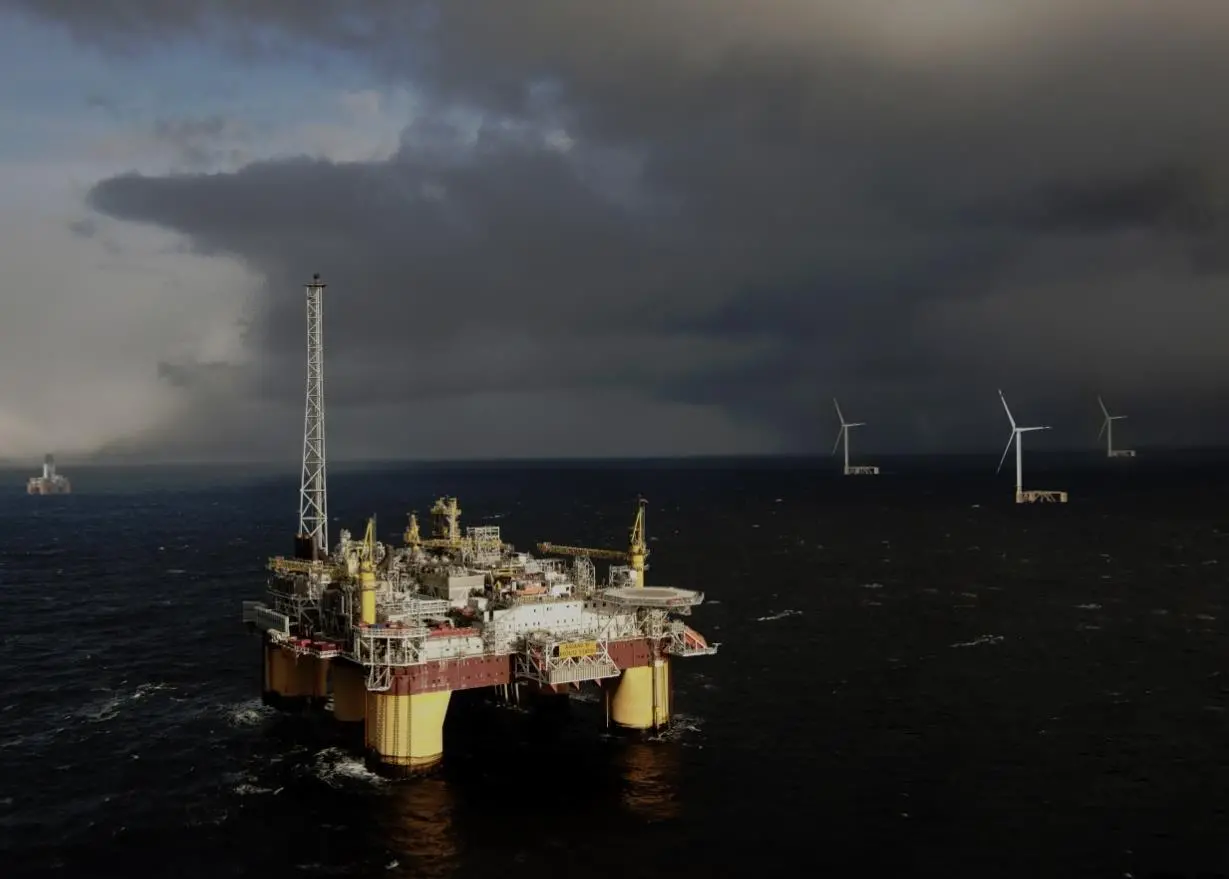
DNV revealed that expected reductions in CO2 emissions for North Sea applications of the system ‘are in the range of 60-70%’ when compared to the generation of electricity from conventional gas turbines. So, what exactly is the WindGrid system – what technology does it use, and how does it work in practice? What did the recent DNV verification process entail? And what are the next steps for the development and deployment of the system in the coming years?
HYBRID SOLUTION
In basic terms, WindGrid is a hybrid solution that uses Mobile Offshore Wind Units (MOWUs) to provide an uninterrupted power supply to micro-grids. The system employs an innovative combination of floating wind turbines, battery energy storage, grid converters and controllers that enable it to act as a supplement to renewable energy sources, primarily to avoid the need to run natural gas turbine and diesel generators on idle just in case the renewable source drops out. As Per Lund, CEO at Odfjell Oceanwind, explains, the system enables operators to stop running such generators on a micro-grid during periods of peak wind power production, where there is sufficient renewable power generation.
“The system takes over control of the micro-grid in periods of renewable energy production – and hands the control back to the fossil fuel generators when, for example, the wind is dropping,” he says.
VERIFICATION PROCESS
As part of the in-depth verification process, DNV drew on the expertise of technical units across the whole Group. In doing so, it carried out a thorough technical assessment of each component of the WindGrid system and ran through a HAZID (Hazard Identification) process to identify hazards that could prevent successful implementation. The multi-disciplinary DNV team also conducted a verification of the estimated wind power production – as well as the corresponding estimated fuel savings and CO2 emission reductions for oil and gas installations connected to the integrated system.
In Lund’s view, the comprehensive verification of systems like WindGrid is vitally important because power systems on micro-grids like oil and gas installations ‘are critical for the safety and reliability of the operations.’
“What the WindGrid system does has never been tried before in marine applications. It is therefore essential to carry out extensive verifications to create sufficient comfort around the solution,” he says.
“In addition to confirming the feasibility of the system, the verification study helped us to identify the main risks – as well as how to mitigate these in order to further improve the solution as we move into the detailed engineering and execution phases,” he adds.
NEXT STEPS
Moving forward following the successful verification of the system, Lund reveals that Odfjell Oceanwind now plans to include WindGrid on its fleet of Mobile Offshore Wind Units – and confirms that the system has the potential to ‘increase the effect of wind energy on micro-grids like oil and gas installations from approximately 30% to 60-70%.’
“Odfjell Oceanwind will continue to mature the solution in close collaboration with its clients. The plan is to have the first MOWUs with WindGrid operational in 2024,” he says.
Looking ahead, Erik Henriksen, Director of Business Development – Offshore Classification at DNV, believes that floating wind is going to be ‘an essential part of the global energy transition.’
“We have made this a Group priority and are working to harness all of the expertise across our business segments to support the industry,” he says.
“We are very pleased to be working with Odfjell Oceanwind on this innovative project, especially because it demonstrates their recognition that using well-tested and independent standards and qualification processes in the verification of new technologies is essential to building customer trust. We look forward to continuing to work on the project as it develops, and on through to its final deployment,” he adds.
By Andrew Williams
Related Articles
 OFFSHORE RENEWABLES
 OFFSHORE RENEWABLES
 ENVIRONMENT