


Robotic fish will fight pollution
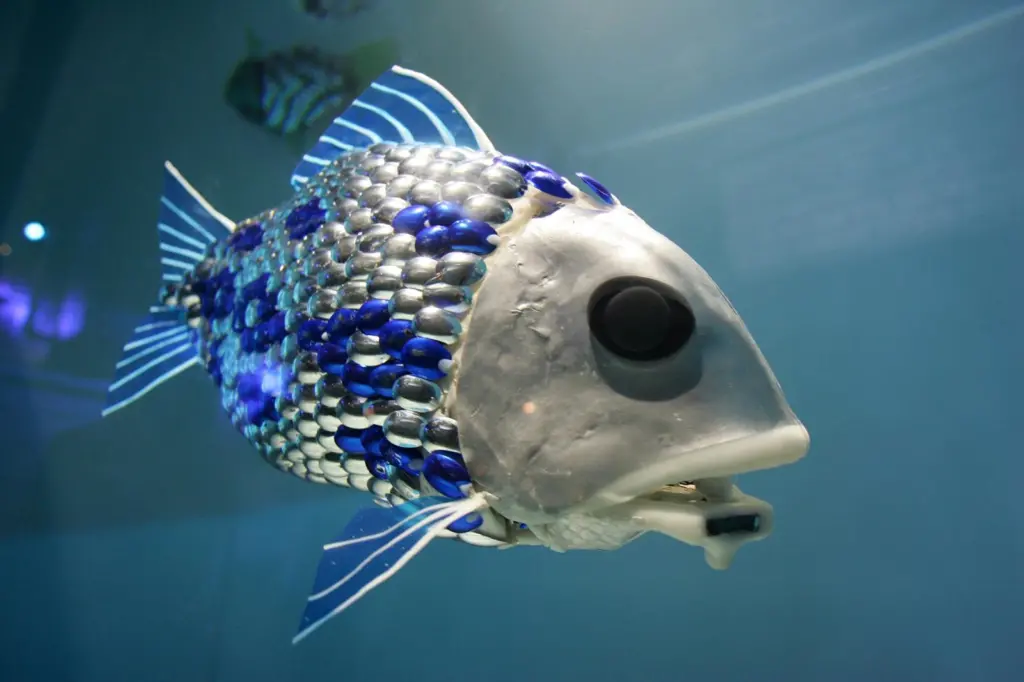
Another level in artificial intelligence is to add its weight to the fight against marine pollution. Robotic fish are being developed that will not only detect potentially hazardous pollutants in the water, such as leaks from vessels in port or underwater pipelines, but will also communicate their findings with each other and recharge themselves automatically.
Talking to
MJ
, Luke Speller of BMT Group said that the latest stage in AI research is allowing the fish to not only coordinate their recharging and distance from each other, but also to gain the benefits of a ‘swarm’ intelligence, where although each will be an individually functional unit, they will be able to call each other to points of interest and share information.
‘The whole shoal will see the whole picture, if they come across something, they will all work together,’ explained Mr Speller.
The next stages of research include the miniaturisation of the chemical sensors so that the fish can analyse the substances independently of a lab, and hydrodynamic modelling so that the robots will be able to counter the strong tidal pulls in locations such as around port structures.
The robotic fish will eventually be let loose in the port of Gijon in northern Spain as part of a three year research project funded by the European Commission and coordinated by BMT Group, an independent engineering and risk management consultancy. The five fish are being built by Professor Huosheng Hu and his robotics team at the School of Computer Science and Electronic Engineering at the University of Essex in the UK. The hope is that since they will be able to detect even quite small quantities of dissolved pollutants, they will be able to alert the authorities before a more dramatic problem arises.
Related Articles
 MARINE CONSTRUCTION
 POWER & PROPULSION
 ENVIRONMENT