
Remarkable safety record for OAS
An efficiency milestone has been reached by the seven Offshore Access Systems (OAS) presently in use around the world. Designed to operate in 2.5 metre significant wave heights, four of these are currently taking on the sometimes difficult conditions of the North Sea.
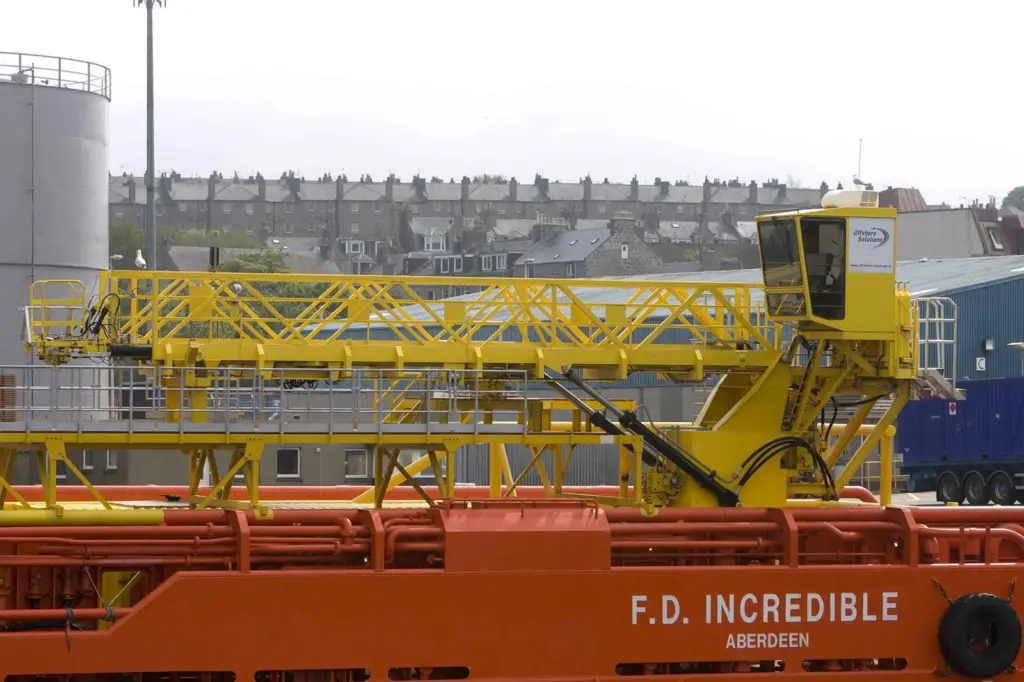
The heave compensated, telescopic gangways started to roll from the facilities of Offshore Solutions BV, a joint venture between AMEC and Cofely Nederland BV, about three years ago, and collectively they have achieved 100,000 man hours of service without any lost time incidents. Considering the systems have in total made in excess of 20,000 operational connections (carrying out more than 25,000 individual crossings), this is something of an accomplishment. OAS general manager Ian Sadler points out that it is remarkable that none of the units has had any downtime ‘given the differing geographic locations and diverse conditions in which the units operate.’
In spite of its simple concept, the operation of an OAS is not as easy as it looks. It requires considerable skill and coordination to make smooth connections. Because of this, there are now eleven fully competent operators and twenty more in varying stages of training. In the changeable conditions of the North Sea, this training period can take anywhere up to six months, but it is obviously of paramount importance.
When the vessel is holding station, the OAS is slewed outboard from its cradle, the heave compensation system is automatically engaged and the gangway is extended to make contact with a vertical pole on the installation.
To maintain contact, a constant torque system ensures that pressure is exerted against the pole. This is required before the latching apparatus is engaged, ‘landing’ the gangway. The mechanism ensures a secure connection, and it has been designed with fail safe systems for emergency disconnection if necessary.
It is at this point that the reliance upon technology stops. The heave compensation system is disengaged, resulting in the gangway being put into floating mode between the vessel and the installation. The walkway is robustly connected to the fixed structure and its ‘free floating’ condition automatically compensates for the motion of the vessel, allowing the safe transfer of personnel without reliance upon any active technology.
Designed to support a spread load of up to a ton, it comes with its own independent power source. Should a power blackout or serious malfunction of the DP system occur, a safe and controlled disconnection can still be carried out.
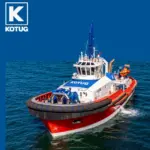
The most recent OAS to enter operation is currently working in the Central North Sea for Chevron, mounted on board the FD Incredible. There are a further three units currently in production which are due for completion later this year.