


Magnetic rope testing guidance published
There are a plethora of wire ropes used on offshore construction vessels. The wires can be very long (several kilometres) and quite inaccessible. They are performing in a harsh environment in terms of being underwater or in corrosive weathers and atmospheres. They often have dynamic and widely fluctuating loading. Yet they are depended on for safe and efficient operations, so all reliable aids to inspection are very valuable to the industry.
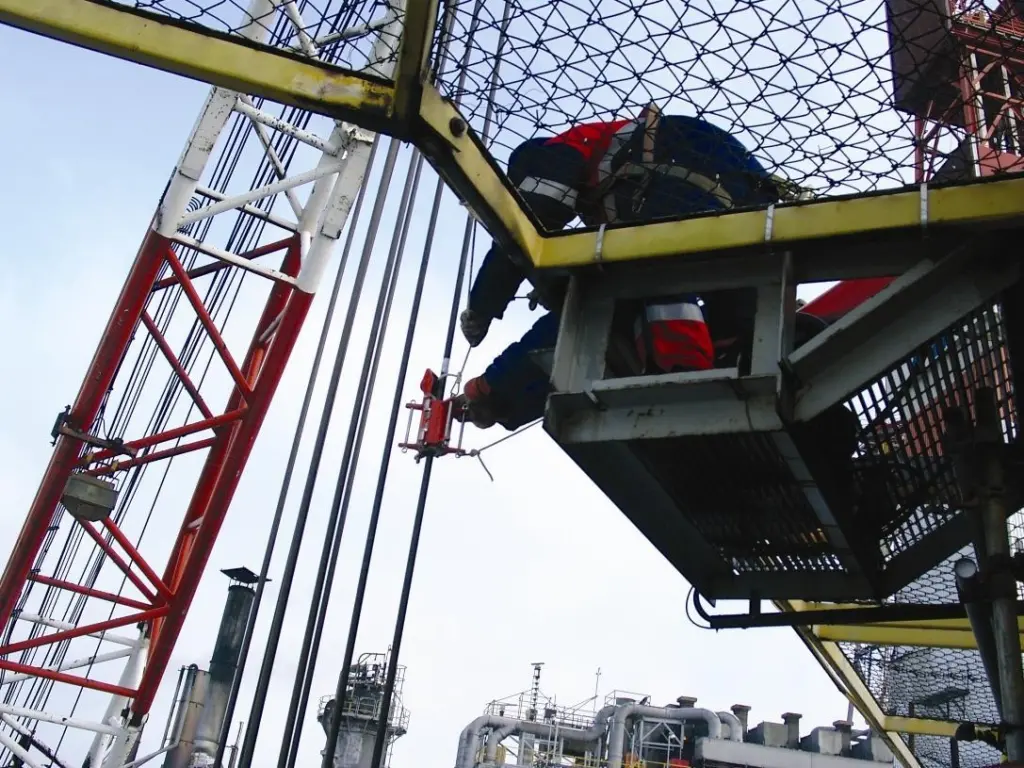
Magnetic rope testing (MRT), which measures changes in magnetic flux along the length of a wire rope and identifies the presence of anomalies in its structure, is a comparative process. To fully assess the condition of a wire rope, the operator of an instrument needs to know what to expect in terms of wire rope structure, fill factor and metallic cross section. As there is little published on MRT in the marine industry, the International Marine Contractors Association (IMCA) has risen to the challenge and published ‘Guidance on Non-Destructive Examination by Means of Magnetic Rope Testing’ (to be used as supplement to ‘Guidance on Wire Rope Integrity Management’).
The new illustrated document aims to provide complete guidance on the subject, covering health and safety, principles of operation, parameters, procedures, training and interpretation as well as a glossary and a section devoted to eight practical pitfalls, ranging from heavy lubrication to surging.
IMCA’s chief executive, Hugh Williams, takes up the story. ‘The development of the use of variations in magnetic fields to detect defects in steel wire rope started in the early 1900s. Since that time there has been an improvement in the technology used. This particular method of ascertaining the continuing integrity of steel wire ropes has been used in the mining and cableway industries for many years. The most recent advances have been in the digital recording of data.
‘A magnetic material (such as a steel wire rope) in a magnetic field will become magnetised. The degree to which the material has become magnetised is measured by the density of the magnetic flux within the material. The magnetic flux is dependent on the strength of the magnetising field and the cross-section of the material being magnetised. However, there is a limit to the maximum flux density within a material, that is, a point after which it cannot become more magnetised, which is referred to as magnetic saturation.
‘MRT should be considered to be a supplement to visual examination and an aid to thorough examination. It will identify areas in the steel wire rope in which defects may exist which will require further physical assessment. Where there is a significant defect, suitable MRT will detect it. Its particular capabilities help offset the limitations of visual examination, particularly on long lengths of wire rope.’
‘Guidance on Non-Destructive Examination by Means of Magnetic Rope Testing’ is available from IMCA at £15 for members and £30 for non-members (plus 20% for delivery outside Europe) from www.imca-int.com or from the Association at 5 Lower Belgrave Street, London SW1~W 0NR, UK. Tel: +44 (0)20 7824 5520; Fax: +44 (0)20 7824 5521. Email:
publications@imca-int.com