


The big chill is hot stuff for deck equipment
Ship and workboat equipment gets a bashing. If it isn’ t physically banged around during docking, towing or unloading, the salt water corrosion alone would finish any less than tough pieces of machinery off in no time, so finding a process that can extend the life of metal parts would be significant and, literally, quite cool.
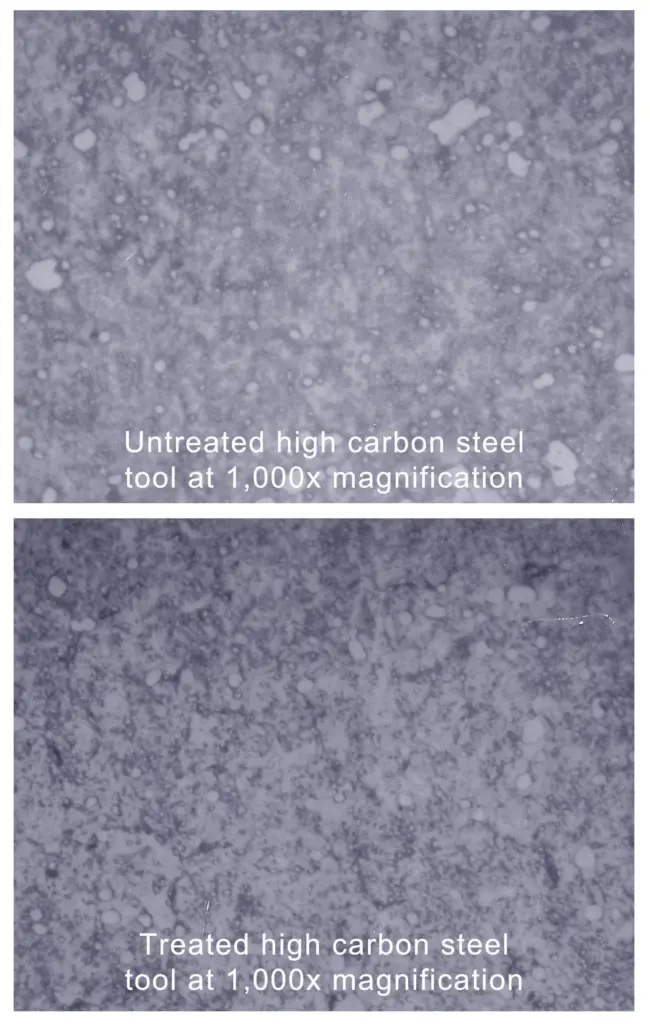
Although the use of cryogenic temperatures (below about -240F) in metal treatment was thought to be a no-go area because it created stresses that made the metals fragile, a new process in the realm of the ‘ultra-cool’ comes down to chilling metal parts in cold gaseous nitrogen. Dramatic improvements in the wear life were found for machine elements, lengthening them typically by 200 to 600%.
Dura21 has on this basis developed a technique called Duragenics. The company’s Dan Martone said that the process can be applied to winches, cranes and vessel gearing. The company has many different sized chambers that will process a range of parts, and anything made of metal can be treated.
Getting down to the technical details, it appears there are three significant changes occurring in metals following treatment. When a steel is quenched in the normal shaping process, there can still be a significant amount of crystal-like structure (austentite) which stays as a cubic, lattice like structure instead of being transformed into the stronger, more desirable body-centered tetragonal martensite lattice.
However, if the steel is cooled to liquid nitrogen temperatures, the amount of retained austenite is reduced by factors of two to three, depending upon the carbon content.
Secondly, very fine carbide particles are formed within the martensite matrix, a process known as ‘carbide precipitation’. This means that when a hard foreign particle is raked across the treated metal surface these carbides resist ploughing and reduce wear.
The third transformation is the reduction of random internal residual stresses within the structure. These tensile and compressive stresses are present following prior heat treatment/tempering and also come about through the machining process. Metal fatigue resistance, internal heat dissipation and dimensional stability are all improved by the process. Last but not least, damage from corrosion is minimised as well.
The Dura 21 team claim that the company’s expertise in cryogenic technology means they will ‘guarantee quantifiable performance improvements and considerable cost savings’ through treatment of metal parts. Anything less would be uncool.