

Turkish Navy goes fishing for sonar
Simrad has asserted that their SP92MKII commercial sonar is up to competing with military units on both specifications and performance at a fraction of the cost. The Turkish Naval Forces Command is about to take them up on the challenge.
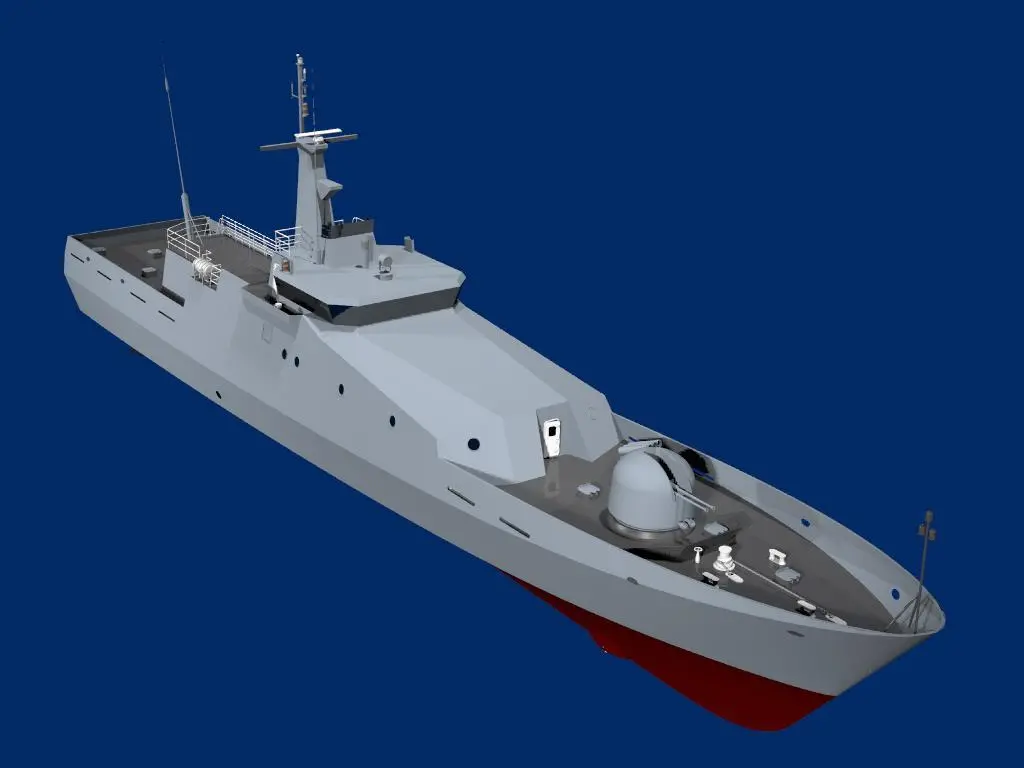
Kongsberg Maritime AS, a company specialising in development of high end hydro-acoustic technology, has signed a contract worth some EURO 3.5m with the Turkish company Havelsan for a supply, installation and training deal on 16 patrol boats for the Turkish Naval Forces Command.
Kongsberg, together with its partner Promar Marine Equipment (another Turkish company) will provide the installation plus operator and service training of the sonars onboard the new type patrol boats.
The Simrad sonars, which are better known for fishing applications, will be fitted onto the new vessels presently being built by Dearsan Shipbuilding. Havelsan was awarded the main contract for the combat systems as the company has become a familiar collaborator with the Turkish armed forces, previously developing integrated command and control systems, battle management, ship integrated war administration, and the MILGEM sensor data platform for installation onboard armed forces vessels.
The company is a longstanding partner for a nation which has deep and strong economic ties to ‘volatile regions’, while also being familiar with what might be euphemistically called ‘troubled borders’. Those involved in choosing a sonar more associated with fishing will know exactly what they are doing.
Simrad will know the decision is a vindication of their research and design. The model in question is a third generation Simrad sonar, a development first introduced to the market in 1997. The Simrad SP92MKII is a stabilised multi-frequency unit with 11 operating frequencies, ranging from 20 to 30kHz, with detection range of more than 3,000m.
The units uses hyperbolic frequency modulated transceiver technology giving a noise free picture and higher picture details than CW or standard FM transceiver technology. The sonar hull unit with its 120cm hoist length will withstand a vessel speed of 24 knots fully extended.
Dearsan is scheduled to start delivery of the new vessels to the Turkish navy in 2009, and have the last of them in place by 2014. The new 55.8m vessels will have a crew of 34, a displacement of 400 tons, a speed of 25 knots, and an operating range of up to 2,000 miles. This is the largest project to date where the Turkish Navy have outsourced the construction of ships to private shipyards.