

Port of Hamburg boosts inland waterway box transport
The German Port of Hamburg achieved record results last year for internal waterway shipping, with container transport by environmentally friendly inland vessels growing by a dramatic 29%.
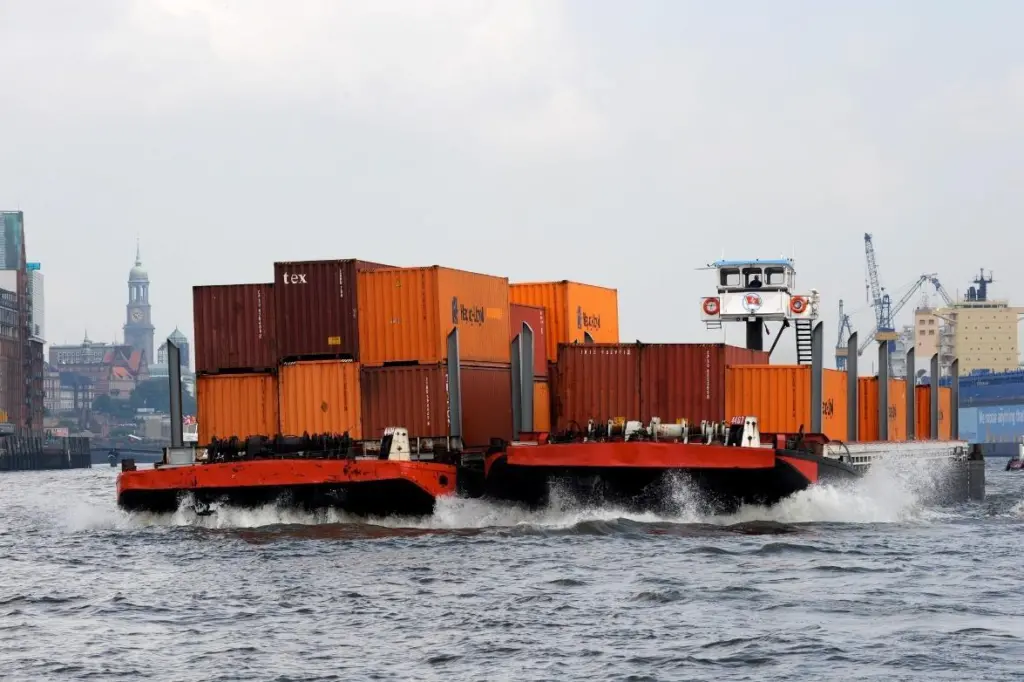
Now standing at 12.2m tons, the volume of all goods carried between the Port of Hamburg and the hinterland by inland waterway vessels in 2008 exceeded all previous levels and marked a 1.5% increase on the operating results of the previous year. In Germany as a whole, the shipment of goods by inland waterway vessel in 2008 dropped by 1.6%.The most important goods categories were mineral oil products, gases, coal, agricultural and forestry products. The latter chalked up the highest rate of growth last year, followed by chemical products, fertilisers and finished and semi-finished goods, which are generally carried by container.
Container transport is of special importance for the Port of Hamburg. Incoming and outgoing container consignments are increasingly being handled by inland waterway vessels. The 29% rise represents 119,000 TEU. This is a success for the companies involved and for the numerous inland ports along the Elbe and the north German canal network. Container shipments within the Port of Hamburg region are also increasingly being carried between the various terminals by inland waterway vessels.
If in the summer months low water levels on the Middle and Upper Elbe present a barrier to inland waterway shipping, lorry transport steps in as a substitute. In September 2008, for example, the Elbe at Magdeburg was lower than 70cm in places as a result of the failure to carry out necessary maintenance measures.
‘In spite of everything, internal waterway transport at the Port of Hamburg has managed to expand its share of the market in 2008, said Sebastain Doderer of Hafen Hamburg. ‘This shows that the Port and the transport industry are going in the right direction, with a view to making hinterland transport environmentally friendly. Adequate and reliable shipping conditions on the inland waterway network are an essential basis for the continuation of this development.’
Mr Doderer is investigating the optimisation potential of inland waterway shipping at Germany’s biggest seaport under the auspices of the Binnen-Land research project.
Related Articles
 MARINE CONSTRUCTION
 POWER & PROPULSION
 ENVIRONMENT