

Interferry focus on challenges of change
Solutions to the ferry industry’ 17 October.
The trade association’s 34th annual event, and the first in Turkey, aims to plot a proactive course through challenges ranging from world
to sweeping regulatory changes.
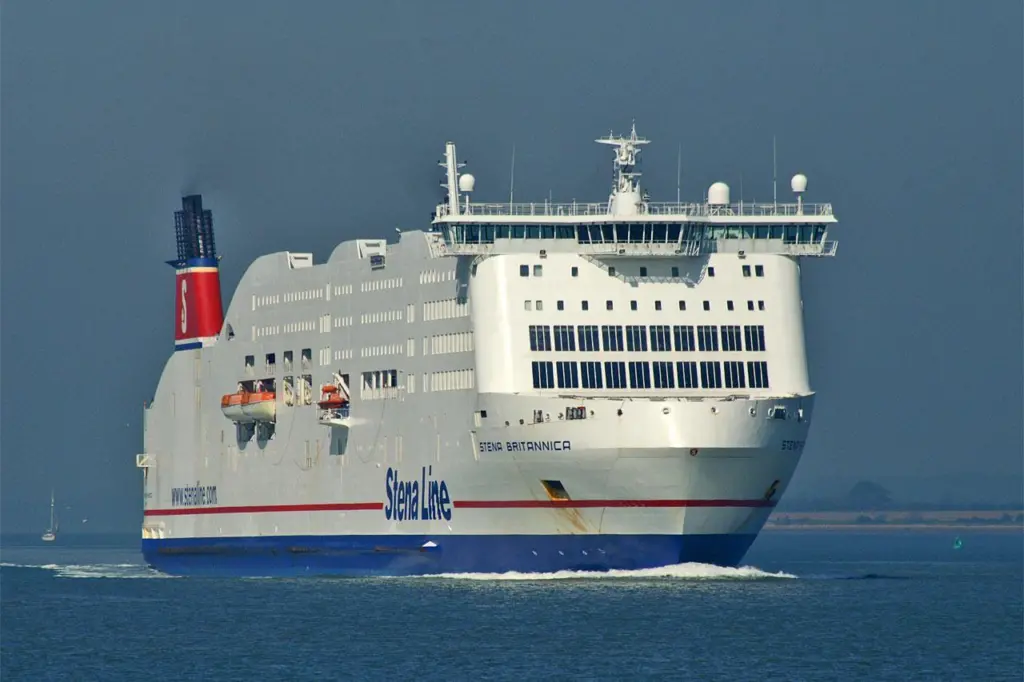
A key session on surviving financial meltdown will feature a ferry operator’s perspective from Interferry board member Pim de Lange, North Sea area director for Stena Line, whose next phase of expansion in an ultra-competitive market includes delivery of the world’s two biggest ro-pax vessels.
‘The ferry business in northern Europe has been very tough for the past decade or more, he said. ‘We fought and lost the battle against the abolition of duty free sales and faced the major challenge of competing with the Channel Tunnel. Low cost airlines took a big bite out of our passenger traffic and the spike in fuel prices caused havoc to our balance sheets.
‘After surviving all of that we deserved a reprieve but instead we got a global financial crisis. Despite that we remain optimistic for the future. The operators that survive this crisis should be positioned for a strong recovery when it comes.’
More of the industry’s major concerns will be addressed in a session on new safety and environmental requirements.
Johan Roos, director of sustainability at Sweden’s Stena Rederi, warns that there is no room for complacency over air emissions regulations despite dramatic improvements in energy efficiency driven by economies of scale in ship size. A regular member of Interferry’s IMO consultative status delegation, he pointed out that, ‘Carbon Dioxide emissions from shipping are estimated at 3.3% of global emissions compared to 1.9% from international aviation and 21.3% from road transport.
‘The benefits to society are enormous as shipping carries more than 80% of world trade. Since shipping is doing such an efficient job, it should be off the radar of the environmental regulators. Wrong. The maritime industry in general, and ship operators in particular, are under intense scrutiny by both national and international regulators. Despite obvious improvements in efficiency, we have not kept pace with the improvements that many land-based industries have experienced in the past decades.’
Oskar Levander, head of conceptual design at Finland’s Wärtsilä Ship Design, suggests that ferries and ro-ro vessels compare unfavourably with other modes of shipping according to the IMO Energy Efficiency Design Index (EEDI). He will argue that even a relatively easy 30% improvement in Carbon Dioxide emissions will not be enough, so the industry needs to develop wind, solar, waste and other renewable energy designs.
The sessions ends with a case study from Johan Snellman, vice president of STX Europe Cruise & Ferries, and P&O Ferries fleet director John Garner, who is overseeing the newbuilding programme for two giant Dover–Calais ferries ordered from STX. They will discuss the application of revised Marpol Annex VI requirements for NOx, SOx and Carbon Dioxide emissions as well as safety challenges such as SOLAS 2009, probabilistic stability calculations and Safe Return to Port regulations.
Critical new legal issues facing ferry operators will be outlined by maritime lawyer Oliver Weiss, a partner at international law firm Ince & Co, during a session on managing risk. His survey will cover UK legislation on corporate manslaughter, obligations under the ISM Code, limitation of liability under the Athens Convention and implementation of EU Directive 2005/35 on pollution.
Various other sessions will further underline the ferry industry’s ongoing attempts to survive and prosper in challenging times.
In a forum on practical IT applications for making money, seven leading providers will explain new and emerging technologies relating to booking, ticketing and sales systems, distribution strategies, automating port processes, pricing, inventory control, marketing and contactless payment.
Urban innovations will be illustrated by case studies of a water taxi service in Istanbul, the Thames Clippers river ferry operation in London and the introduction of high speed ferries in Hong Kong powered by Solar Sailor’s hybrid diesel and electric drive system.
In addition, a review of emerging markets in the Middle East and Black Sea will include developments in Oman, where the National Ferries Company has recently unveiled the world’s fastest diesel powered passenger ferries, Austal-built vessels capable of more than 50 knots.
Interferry’s long established student competition, stimulating research projects in maritime faculties around the world, culminates with the two winning presentations. Three students from Istanbul Technical University will explain their designs for improved stability and loading limits on ro-ro vessels, coupled with a terminal loading/unloading system that uses solar-powered self-propelled modular cartridges to cut turnaround times. The other winning entry, from Hamburg University of Technology, discusses the potential problems for ro-ro and ro-pax vessels under the EEDI initiative to reduce Carbon Dioxide emissions.
The long term perspectives of the conference will be summed up by special guest speaker Alphan Manas, founder of the Turkish Futurists Association and chairman of Netherlands-based Brightwell Holdings, a private investment company involved in maritime, energy and environmental technologies. His ‘Beyond the Present’ insights will range from maritime transportation and new energy sources to carbon crediting and global warming.
For further information visit: www.interferry.com
Related Articles
 MARINE CONSTRUCTION
 POWER & PROPULSION
 ENVIRONMENT