


Prolific tug and workboat innovation continues
It is only when we stop for a breath and look back over the 250 issues of Maritime Journal that it becomes obvious to what degree massive historic changes in the many maritime industries embraced by the magazine have been put on record.
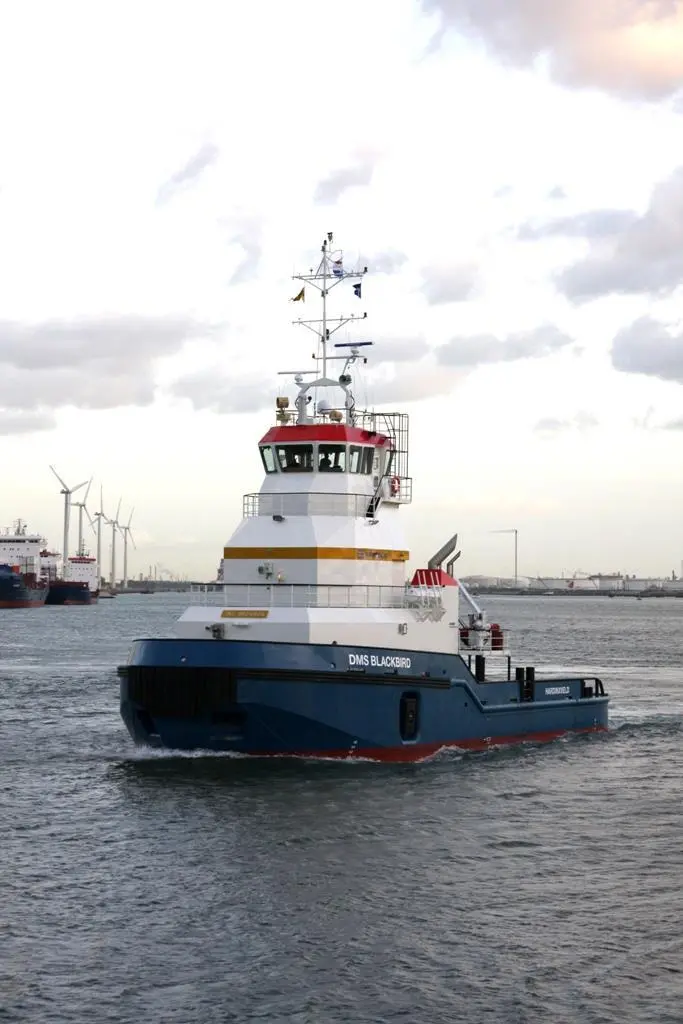
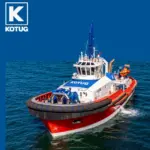
In the field of tugs and workboats, where every year brings more ‘Who would have thought it!’ moments, that is most certainly the case.In the towage sector, 2008 saw the largest number of tugs on order or under construction worldwide at any time in the history of the industry. The reasons for that boom in tug building, which at one point exceeded 600 vessels per year (excluding the offshore element), are many and complex but the events leading up to that situation have been progressively recorded in these pages. For example, 20 years ago a typical shiphandling tug was about 30m in length, had main engines of 2,000 to 3,000 horsepower, a bollard pull of 40 tons and a crew of five persons. During the life of Maritime Journal we have seen the size of an average harbour tug reduced in size to less than 24m in many cases, sporting high powered main engines of over 5,000 horsepower, the agility of ‘Go-Cart’, a bollard pull of almost 70 tons and a crew of only two or three. Many of the vessels being delivered around the world each week fall within that category, offering reduced manning costs, high utilisation, and sufficient power and manoeuvrability to handle the largest ships.
A high demand for tugs designed for highly specialised employment has also boosted the order books. The massive increase in the transportation of Liquid Natural Gas (LNG) by sea in large purpose built tankers has spawned a new generation of tugs to provide a range of services at terminals exporting and importing this volatile cargo. Vessels required for this work are built and operated to meet stringent codes of practice laid down by port and terminal operators. Among the requirements are an ability to assist the ships arriving and leaving the berths, to perform escort duties (often involving long distances to and from the seaward limits of the port), and providing fire fighting and security services whilst the ship is on the berth. Each month sees new sophisticated tanker handling escort tugs entering service to meet the needs of growing LNG traffic and to replace earlier tonnage serving new and existing oil terminals.
Developments in tug design and construction, new equipment and operating methods have evolved gradually and enriched the already diverse nature of the towage industry. Looking through back number of Maritime Journal, important examples of that evolution have been reported on and described in Tugs & Towage and frequent Vessel Launch features.
The workboat industry has developed in much the same way, albeit with different aims, and again there have been frequent ‘Who would have thought it’ moments. One such example is the evolution of that ‘workhorse’ of the maritime dredging and construction industries, the multi-purpose workboat. These vessels are referred to generically by many as the ‘Multicat’, a name introduced by Damen Shipyards for their original pontoon style work vessel. But look at how that simple mobile work platform has grown. In less than a decade one of the simplest of vessels has evolved into a large (26m x 11m), seagoing, triple screw craft with a very real towing capability of over 30 tons bollard pull. What was once a handy deck crane capable of loading spares and stores has now been replaced by (often two) powerful cranes used to support major dredging and civil engineering projects. To say nothing of an anchor handling capability to match any task likely to be devised by clients.
Back numbers of Maritime Journal have also plotted the emergence of an important new client for those supplying offshore construction plant. The construction and maintenance of wind farms all round the coasts of Europe has increased the demand for floating plant, including a variety of specialised vessels. New breeds of fast aluminium workboat have evolved to transport personnel and components at sites under construction and offshore wind farms already in service.
Among the other vessels classified as workboats, that have noticeably ‘come of age’ are the vast array of pilot vessels and rigid inflatable boats (RIBS). Maritime Journal has recorded the massive advances made in both, with regular new reports and features describing the most important developments.
Related Articles
 MARINE CONSTRUCTION
 POWER & PROPULSION
 ENVIRONMENT