![MaritimeJournal[Seawork]](https://www.maritimejournal.com/wp-content/uploads/2026/09/MaritimeJournalSeawork.svg)





Trinity House introduces its first LED Light Vessel
Trinity House, the general lighthouse authority for England, Wales, the Channel Isles and Gibraltar, is about to commission its first LED Light Vessel (LV), set for duty on the Varne station in the English Channel. This is the first major development in LV technology since the distinctive red vessels were converted to solar power.
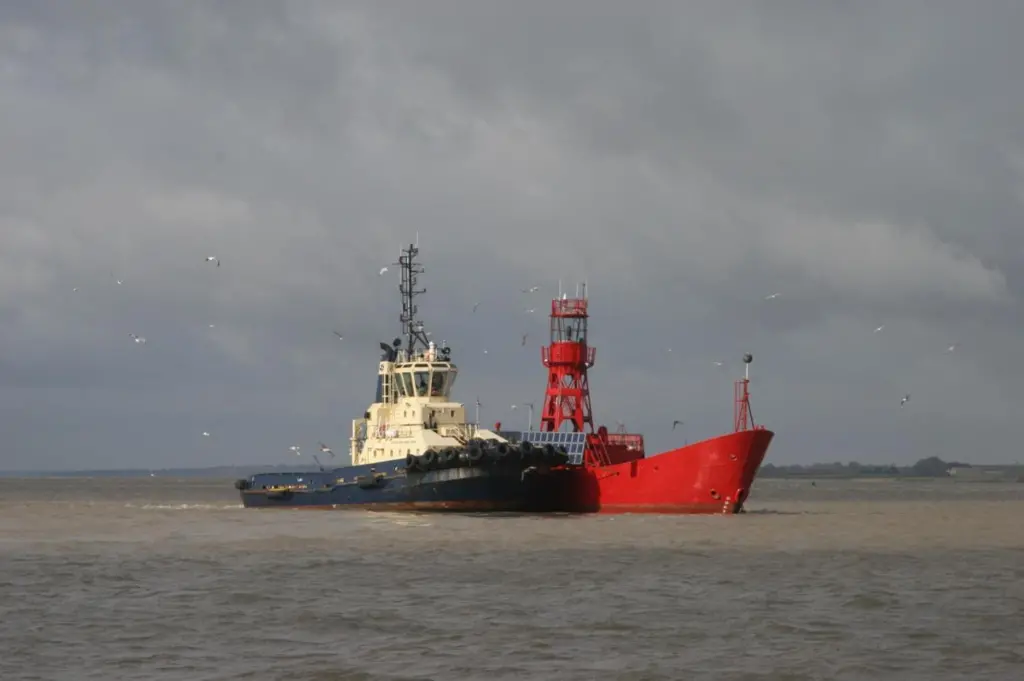
The Varne station, which uses a red flashing light, gave a particular problem to the 400 year old service. The usual main light system employed on solar powered LVs utilises a 35 watt lamp in a highly efficient rotated lens. It was not possible to convert this arrangement to give a red light as the range available from the 35 watt light source when filtered to red would be limited, so this station remained the only diesel powered LV until a solution was found in the development of LED technology. The Varne is one of two Trinity House major stations exhibiting a red light; the other is the Skokholm lighthouse in West Wales. As well as being more efficient, the new system will save up to 23,000 litres of fuel per vessel per year (when compared with the diesel powered LV), obviating the need to refuel the diesel tanks every six months. The Trinity House Strategic Plan calls for the three remaining diesel powered light vessels to be converted from diesel to solar power by 2012. There are 12 light vessels in the fleet along with two smaller Light Floats. The first LED main light has been installed in LV No 6, which was launched in 1948 as a manned vessel.
The first of these new LED marine beacons has been designed and manufactured by Vega in New Zealand, following development work by Trinity House’s 25 strong engineering team under the direction of Peter Kelly, the Planning and Project Development Manager.
The Vega VLB61 LED marine beacon exhibits a flashed red light visible to 15nm but it does not feature the glow of a rotated light with its loom and non-focused element, what Peter Kelly calls the ‘inter-flash twinkle’, which kept the light visible between the flashes.
The Varne light vessel is stationed in one of the world’s busiest shipping lanes and rather than leave a long gap between flashes (19.5 seconds) it was decided, in consultation with the Trinity House Navigation Manager, to change the stations’ character from flashing every 20 seconds to flashing 0.5 seconds in every 5 seconds. A fixed light has also been added above the main light which will be continuously visible at a range of 6nm.
Housed inside an acrylic lens to maximise light focus and intensity, the beacon is mounted on a newly designed gimbal system which provides improved horizontal stability, as the beacons’ vertical divergence is only 3.42 degrees. The overall height of the VRB61 beacon is 709mm with a diameter of 400mm. The power consumption is 326watt at 25.9v. The nominal supply voltage is 24 volts DC. The former light source was a 1,000 watt bulb with a red filter which reduces output by 90 to 95%. An LED is much more efficient at converting watts into candelas by a ratio of 10:1. The normal load of the rotated light source used on solar powered light vessels is 42 watts, including lamp rotation, losses and monitoring. The new load of the combined flashing and fixed LED beacons is 48.2 watts, which is within the 30 day autonomy requirements of a solar power light vessel. As Peter Kelly explained, even in January there will be enough battery reserve to power the navigation light for more than 30 days without any solar input.
The corporate requirements for the new project were to reduce maintenance overheads, negate fuel and refuelling costs and negate environmental hazards. Maintenance of diesel powered LVs takes three men three days every six months compared with one day per year by the same size of crew. Having fewer moving parts and using ‘fit and forget’ solutions also reduces maintenance costs. Peter Kelly says LED light sources are also ideal for lighthouse applications and when widely employed will help reduce the running costs of the lighthouse service.
By Graeme Ewens