




Report highlights global decline of coastal carbon sinks
In a major report launched in Granada, Spain on Tuesday, scientists have sounded the alarm over the threats faced by coastal marine ecosystems such as tidal salt marshes, seagrass meadows, kelp forests and mangroves, which are key tools in combating climate change.
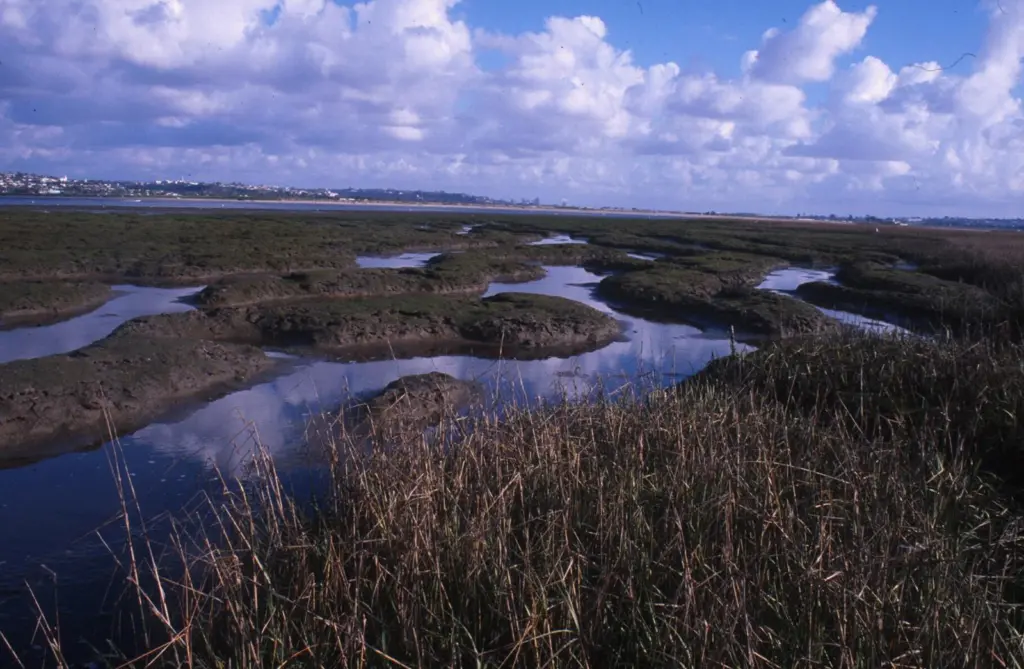
Part funded by the UK Government’s independent advisor on the natural environment, Natural England, German based sustainable development advocates the Lighthouse Foundation, and the United Nations Environment Programme (UNEP), the report by the Swiss based International Union for Conservation of Nature (IUCN) titled ‘
The Management of Natural Coastal Carbon Sinks
’ looks at a range of global options for carbon management around the world’s coastlines.
Dr Helen Phillips, chief executive of Natural England, said, ‘The role of forests and peatlands in helping to prevent carbon entering the atmosphere is widely recognised, but it is crucial not to overlook our coastal habitats, which can have just as much impact in helping limit climate change. Many of these coastal habitats, like tidal salt marshes, are under significant threat from development and rising sea levels, and urgent action is needed to prevent further damage to their essential carbon storage role. Natural England welcomes this compelling and timely research from the IUCN, which provides vital information on how these coastal carbon sinks work and why it is so important to preserve them.’
The report highlights the wide ranging benefits that coastal habitats provide and also the increasing threats that they face. For example, the loss of two-thirds of seagrass meadows and 50% of mangrove forests due to human activities has severely threatened their carbon storage capacity and is comparable to the annual decline in the Amazon forests.
Natural England’s Professor Dan Laffoley, lead author of the report and also Marine Vice-Chair of IUCN’s World Commission on Protected Areas added, ‘Over the past two years we have worked with a range of leading scientists to document the carbon management potential of particular marine ecosystems and understand how they can be successfully managed. Until now, surprisingly little attention has been paid to the ocean and its habitats, despite the fact that they form a critical part of the carbon cycle and one of the largest sinks of carbon on the planet. We cannot afford to ignore their potential.’
A PDF of the IUCN’s 64 page report is available on all of the partners’ web sites.
Related Articles
 MARINE CONSTRUCTION
 POWER & PROPULSION
 ENVIRONMENT