![MaritimeJournal[Seawork]](https://www.maritimejournal.com/wp-content/uploads/2026/09/MaritimeJournalSeawork.svg)






Converteam configures for all the consequences
‘The consequences of losing position, Andy Cooper of Converteam tells MJ, ‘can run from mild inconvenience to disastrous, depending what you are doing at the time.’
There are thus very good reasons why Converteam has been working on a new power and propulsion system concept that reduces the consequences of single point failures. ‘Reliable Dynamic Positioning (DP) is the holy grail of systems and each DP vessel has its own consequence class notation’, added Cooper.
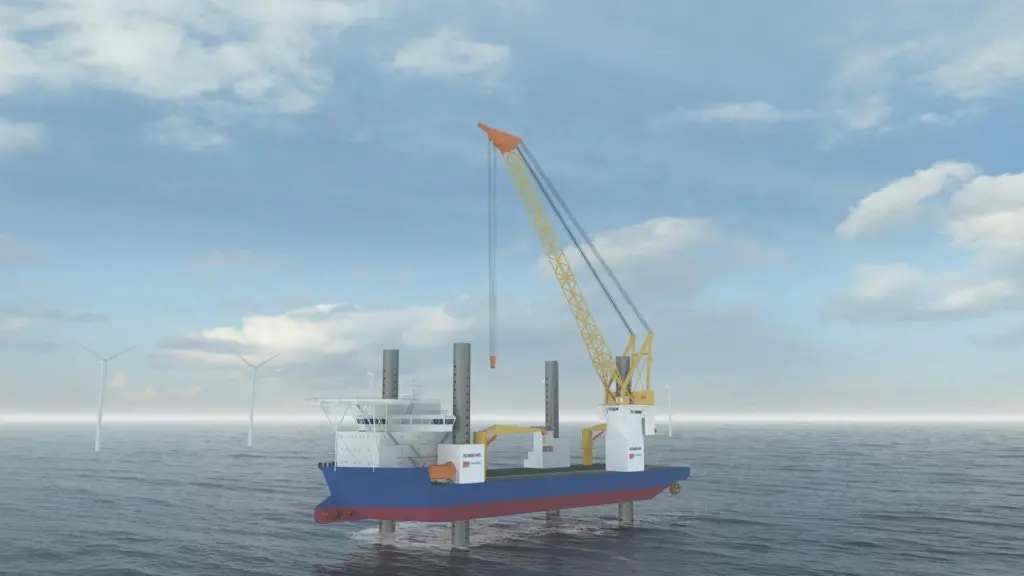
The first vessel to take advantage of the new system from Converteam is a jack-up NG-9000C-HPE vessel designed by Gusto MSC and built at Drydocks World in southeast Asia, which is to have six electrically driven thrusters, three stern azimuth units and three bow tunnel units.
In the new configuration, known as Dual Active Front End (D-AFE), each thruster drive inverter is fed by two switchboards simultaneously and is capable of operating based on a supply from either one of them or from both together.
One result of this is that thrusters, generators and switchboards can be rated such that a worst case failure of, for example, an entire switchboard, results in the loss of no thrusters but does still mean that 50% of the total available power is lost. But since 50% thrust can be obtained with as little as 35% power, the consequence of that failure is minimised.
Mr Cooper explained, ‘D-AFE allows us to greatly extend the power range that’s available in a low voltage configuration. That not only cuts the initial costs of system purchase but it also means that through-life costs are lower too since on board personnel costs are lower for LV trained crew.’
The benefits don’t end there. When thinking about advanced DP vessels there are some really tantalising possibilities in terms of the potential of D-AFE to reduce installed thrust and installed power generation capacities.
There is likely addirional benefit, as not all thrusters are equally valuable all of the time. The Dynamic Positioning system has an inbuilt allocation logic which decides which thrusters are currently most important, allocating the relative percentage of available energy in the correct proportions.