![MaritimeJournal[Seawork]](https://www.maritimejournal.com/wp-content/uploads/2026/09/MaritimeJournalSeawork.svg)



Flying chain buys time for rescue tugs
A project to enable a tow line and sea anchor to be attached to an unmanned vessel with engine failure has been boosted by the development of a chain which is lightweight enough to be deployed by air.
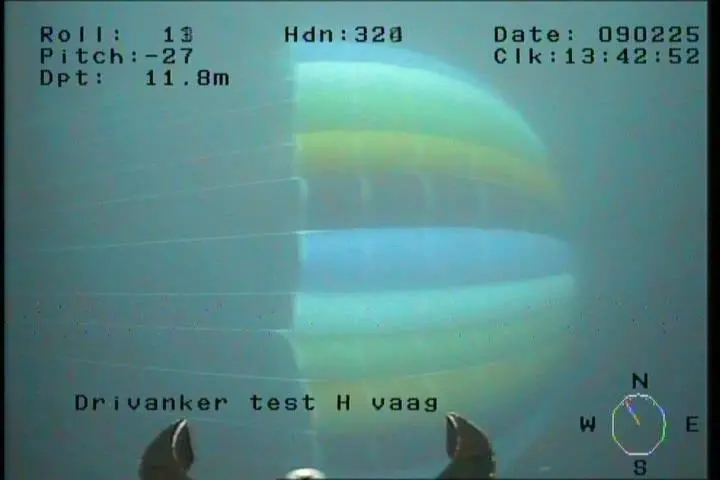
The two year Ship Arrestor project is aimed at introducing a technique that will enable a tow line and sea anchor to be attached to a distressed, drifting vessel in order to reduce travel and create more time for it to be reached by rescue tugs before grounding.
It is designed to be deployed by a conventional search and rescue helicopter that will drop the tow line around the winch gear on the foredeck of the abandoned vessel. The helicopter then lays the line (which is attached to the parachute-like sea anchor) upwind and releases it.
However, because the tow line must pass around deck equipment and over the ship’s side it is subject to considerable chafing and chain is the only suitable material for the first few metres.
Unfortunately the weight of conventional steel chain was found to be too great for helicopter deployment and threatened the viability of the entire project. Titanium chain was rejected because it is brittle and too expensive.
However, it transpired that one of the eight project partners had access to steel compositions developed in the former Soviet Union for space and defence purposes. These were subsequently used to produce a studless 24mm chain weighing just 11kg per metre yet with a tested minimum breaking load of 1250kN. This is far superior to the breaking load of 1308kN for a conventional R4 quality 34mm stud link anchor chain that weighs 27kg per metre.
The new 24mm by 86mm link chain was produced, tested and approved and the first consignment has been installed within the Ship Arrestor system and is undergoing further trials.
These require the new chain to be fitted into an inflatable deployment ring that hangs below the helicopter whilst in flight. When inflated, the ring has a circumference wide enough to encircle a ship’s winches and deck gear and trials have shown it to have satisfactory handling characteristics for the helicopter.
When the ring is lowered around the deck gear the chain is released to make a connection with the ship. The anchor line is then paid out upwind by the helicopter and the sea anchor deployed.
The patent for the Ship Arrestor is held by Miko Marine of Norway which is leading a consortium of organisations including companies from Norway, France, Germany, Netherlands and Austria as well as the Norwegian Institute of Technology and the UK’s Ship Stability Research Centre.
By applying their individual expertise to the challenge, it is hoped that it will be possible to develop a technique that will reduce the likelihood of groundings and the pollution that can result from them.

Related Articles
 ACCESSORIES & EQUIPMENT
 OTHER NEWS
 ACCESSORIES & EQUIPMENT