![MaritimeJournal[Seawork]](https://www.maritimejournal.com/wp-content/uploads/2026/09/MaritimeJournalSeawork.svg)


‘Oceans of Opportunity’ as European energy grid expands
With offshore windfarm construction now in full swing around Europe’s shores attention is turning to the establishment of a Europe wide interconnector grid to share the benefits of this new green form of energy between EU member states, a number of which are now deeply committed to developing their own offshore wind energy programmes.
Running in parallel is the development of the network of subsea connections running directly between individual countries and as part of this the 260km long, 1,000MW capacity BritNed link between the UK and the Netherlands is making steady progress. It is one of the European Union’s TEN-E projects aimed at establishing a trans-European energy network linking 23 European countries, home to around 450 million people.
Currently one existing 2,000MW high voltage subsea cable connection connects the UK and France beneath the Dover Strait (a second 500MW connection links Scotland with Northern Ireland) and the European Wind Energy Association (EWEA) has in place an ambitious Offshore Network Development Master Plan based around the 11 currently operating offshore grids and 21 being studied by grid operators in the North and Baltic Seas.
Submissions made to governments and EU officials late in 2009 by the EWEA proposed eight further offshore grids by 2020 and six more by 2030. The proposals are described by the EWEA as ‘a truly pan-European electricity super highway bringing affordable electricity to consumers, reduce import dependence, cut CO2 emissions and allow Europe to access its largest domestic energy source – offshore wind’. The benefits of security of supply will clearly be an attractive element of such a plan.
BritNed is a joint venture between the UK National Grid and the Dutch transmission system operator TenneT aimed at providing a 260km long 1,000MW two way HVDC electricity interconnector subsea cable link between the Isle of Grain in Kent and the Maasvlakte near Rotterdam. While National Grid and TenneT’s main activities operate within a regulated framework, the BritNed service will be operated on a purely commercial non-socialised basis. Market participants in BritNed will have open access to the capacity of the connection with trading determined by the differences in price and demand in each country.
Third party participants will be able to gain access to the link using a system of explicit and implicit auction procedures. Using the explicit auction process, parties will purchase capacity from BritNed but be free to buy electricity from traders. The implicit auction procedure involves participants buying both capacity and electricity in one transaction from BritNed.
In February of this year and following an extensive tender process it was announced that Prague based Unicorn Systems had been selected by BritNed as their partner, with the remit to manage and administer the capacity trading process of the explicit auction element of the project. The contract will involve Unicorn Systems providing a business portal for managing the trading process as well as operating and administering the system and communicating directly with BritNed’s customers. Following commissioning of the link it is anticipated that commercial operations will commence early in 2011.
A major part of the BritNed project involves the supply and installation of the two way bipolar HVDC subsea cable, almost half of which has now been laid. At the UK end from the Isle of Grain the cable follows a route through the Thames Estuary via the Princess Channel. The cable then follows a dog leg route across the southern North Sea before making the landfall at the Dutch end at Rotterdam, a distance of 260km, with the cable being buried between one and three metres below the seabed.
Main contractor for the cable works is Switzerland based ABB Ltd, a global player which installed the world’s first HVDC transmission system as far back as 1954 and has delivered almost 50% of the HVDC cable links in Europe. ABB is providing a single supplier turnkey solution including project management, cable and accessory design and supply, type testing, civil works, cable laying, testing and commissioning.
At the time of the announcement Peter Leupp, head of ABB’s Power System division said, ‘BritNed is another step towards an integrated electricity network for Europe. We are proud to demonstrate once again that we have the technologies needed to modernize the European grid, stabilizing supplies and increasing capacity’.
Claimed to be the largest independent provider of submarine cable installation, maintenance and related engineering services UK based Global Marine Systems is working together with Visser & Smit Hanab, appointed by ABB to carry out the actual cable installation work. They are no strangers to working with ABB, having also worked together on the power link to the StatoilHydro Gjøa platform in the North Sea and the Nord E.ON Borkum 2 wind farm cable link off Germany.
The cable installation work is being carried out in stages with the connection to the Dutch end of the link completed late in 2009. Installation work is now underway in the Thames Estuary at the UK end and as is usual with such major projects a variety of craft both large and small have been involved working under the Global Marine Systems umbrella.
At the time of writing vessels involved included the 2009 Fosen Mek built ST 256L class MPSV Deep Cygnus, owned by Volstad Management of Norway together with the 2006 Ulstein Verft built P101 class PSV Island Pioneer owned by Island Offshore Management of Norway and the 2001 Giessen built cable layer Atlantic Guardian managed by Norwegian company North Sea Shipping AS. Cable laying work is also being carried out by the 1999 De Hoop built cable layer Team Oman chartered by Global Marine Systems, owned by Team IV Ltd and managed by Nico Middle East Ltd, both based in Dubai.
Additional support services are being provided by the Acta Marine, Coastal Shipping BV managed and owned ultra shallow draught support vessel Coastal Discovery, GPS Marine Contractors’ 1965 built tug Napia, the DMPT 2500 class 2010 built tug Smit Beluga owned by Smit Transport Europe BV and the 1991 built URS Salvage & Dredging owned salvage vessel Union Beaver. The area that the cable passes through is one of the busiest waterways in Europe and the usual variety of small, mainly converted fishing vessels have been employed in the role of guardships watching over the work.
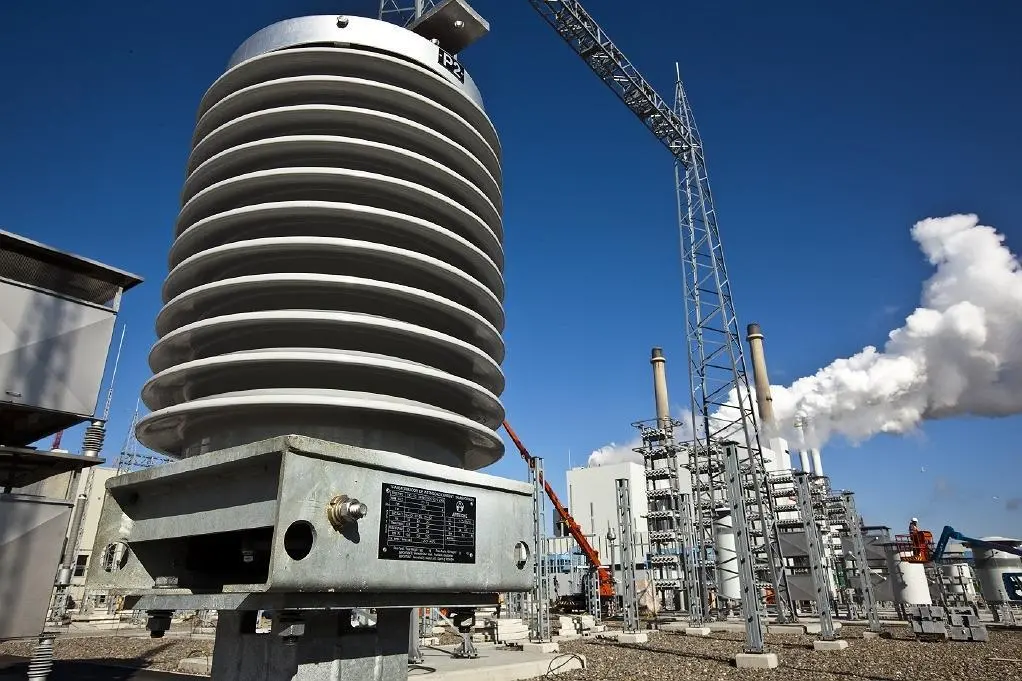
The other major elements of the project are the two converter stations at the Isle of Grain on the River Medway in the UK and on the site of the Port of Rotterdam’s Maasvlakte complex in the Netherlands. A consortium of Siemens and BAM Nuttall are responsible for the construction of the converter stations with progress being now well advanced at both locations. They will provide the conversion from the alternating current of each country’s national grid system to direct current for transmission through the link, and then back again at the other end (the link is also a two way connection). The converter stations will also make provision for the voltage difference in the electricity transmission networks of both Great Britain and the Netherlands, which operate a 400kV and 380kV system respectively.
A total of seven transformers are being installed at each converter station (six active and one reserve) and late in March 2010 the first three transformers arrived at the construction site at Maasvlakte. Measuring over 9m in length, 5m high and weighing nearly 200 tons each, the transformers were manufactured at the Siemens factory in Nuremberg in Germany and transported to the site at Maasvlakte by a combination of road transport and barge, a journey that took about a week. The transfer from barge to road for the final leg of the journey was carried out at the APM terminal at Maasvlakte, close to the BritNed converter station by one of the Matador class floating sheerlegs of Rotterdam based Bonn & Mees Drijvende Bokken BV.
The EWEA’s plans for trans-national HVDC power connections together with the associated network of the increasing number of offshore wind farms in even deeper waters further offshore clearly indicate that while the supply and installation of the wind farms themselves is currently focusing the minds of those involved, activities on and below the seabed will also be a major consideration for many years to come, or as EWEA describe the situation in the title of one of their reports, ‘Oceans of Opportunity’.
By Peter Barker