![MaritimeJournal[Seawork]](https://www.maritimejournal.com/wp-content/uploads/2026/09/MaritimeJournalSeawork.svg)


Taking the pressure off hose failures
Hydraulic cranes, winches, steering systems and stern drives all have one thing in common, and it’s often overlooked (despite being underfoot). Hydraulic hoses, which have to cope with millions of cycles of pressurisation and flexing are also vulnerable to heat, cold, sunlight and time.
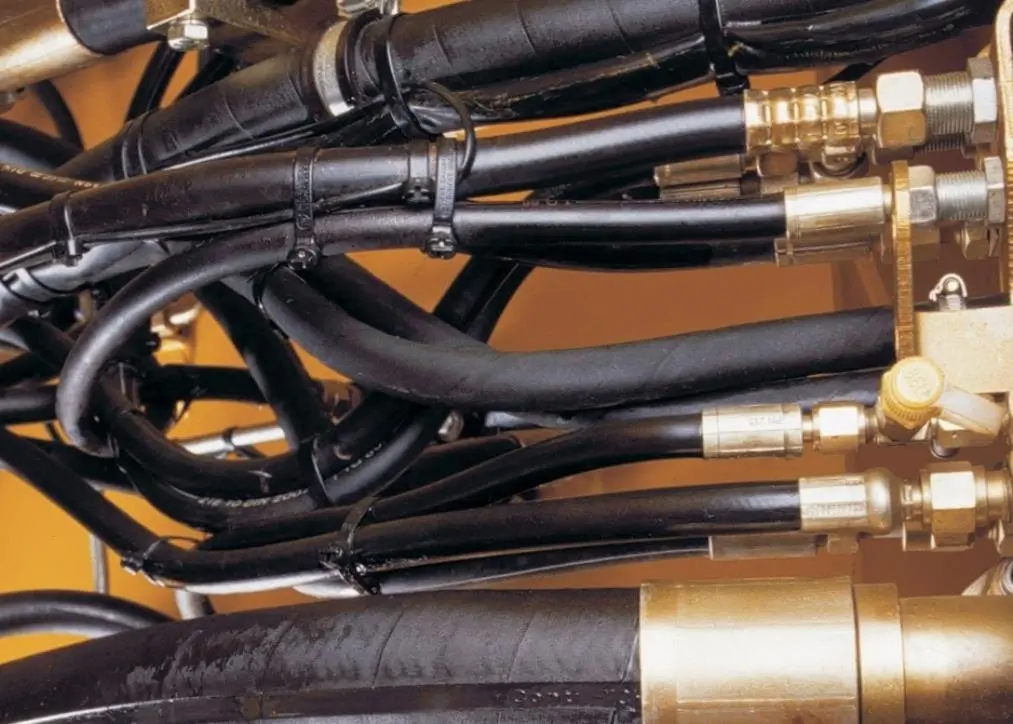
They are bound to fail at some point and, despite the best construction in the world, Murphy’s Law says it will happen at the worst possible time. Workboats are particularly vulnerable because they usually rely heavily on their hydraulics.
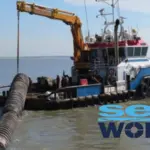
A large dredging operation (which shall be nameless) found out to its cost that having a simple hose failure pushed up the bottom line, since they had to get a specialist out to the vessel, who then had to measure up, go away, come back with the lengths required and do the fit up.
‘The cost of getting me out there must have been prohibitive in itself, said the specialist in question, David Woolston of Parker Hydraulics. ‘This despite the fact that it was a relatively simple job that, once we had the measurements, didn’t actually take that long.’
Taking the risk of possible failure out of the equation is thus a good idea, as unscheduled stops often prove expensive and no one wants to be dependent on a third party’s agenda. This is where Parker’s initiatives to get marine operations fitted out with their own Gates hydraulic hose fitting gear comes in.
David Wooston told MJ that on operator having their own machine and hoses tailored to their particular operation also brings down costs dramatically as they are taking on components rather than whole prefabricated lines and it gives operators the flexibility to get the piping routed where they want it to be.
Parker Hydraulics offers packages ranging from a hand portable crimper with a small range of hose and fittings to large industrial machines with the capacity to crimp 2″ multi spiral assemblies. The latter comes with stock tailored to suit requirements. Parker also supplies the ancillary equipment such as pumps, valves, adaptors, pneumatic control equipment, and power packs.
Along with supplying Gates swaging and cutting machines and doing a full inventory of the hose and fittings needed, the company delivers full training and the Gates safe hydraulics program. Even for the bigger machines, there’s not a huge space requirement. The smaller hose crimpers could operate out of a space the size of a boot of a car.
‘It’s worthwhile doing if you are looking at getting a vessel operational again inside half an hour’, concluded Mr Wooston.
Related Articles
 ACCESSORIES & EQUIPMENT
 OTHER NEWS
 ACCESSORIES & EQUIPMENT