


Competition to improve access to wind turbines
A global competition has been launched by UK’s The Carbon Trust to find solutions to the problem of transferring engineers and equipment safely to offshore wind turbines.
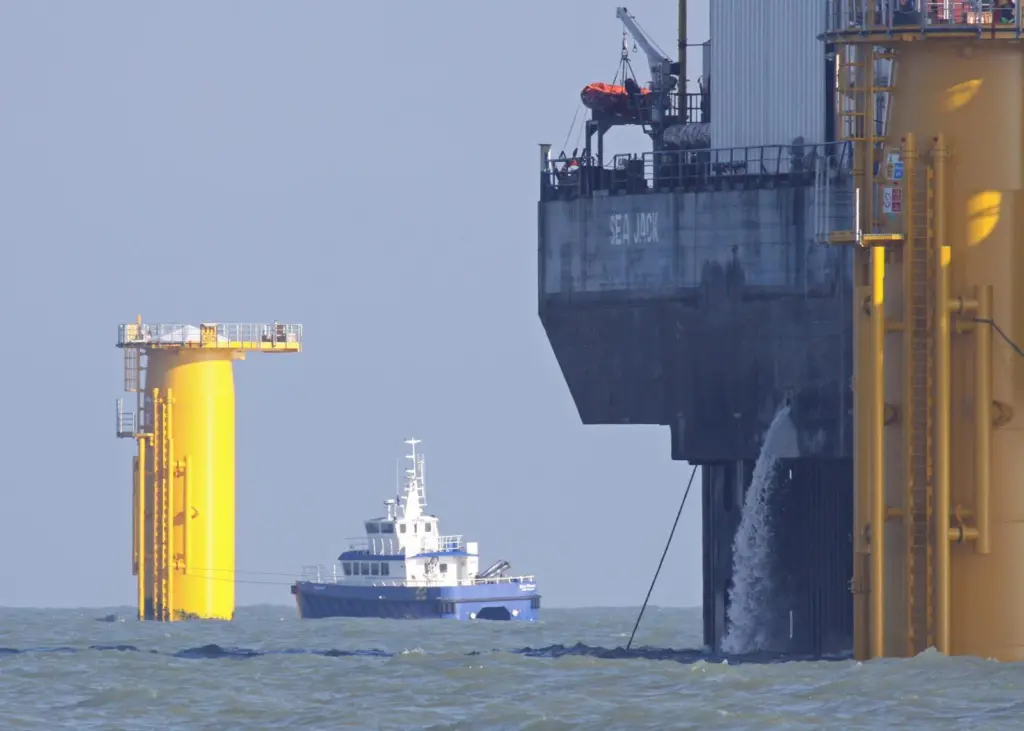
The competition is aimed at improving the economics of offshore wind energy with projects about to move into deeper and more challenging waters further offshore.
The Carbon Trust is a not for profit company primarily grant funded by the UK Government’s Department for Energy and Climate Change.
The escalation in construction and maintenance costs of offshore windfarms is currently focussing the minds of wind farm developers and the aim of the challenge is to improve turbine availability by at least 4%, which could result in savings of £3bn in lost revenue. The competition comes at a time when future Round 3 wind farms will see large scale developments up to 300km offshore, with operators facing the problem of personnel transfer in more hostile conditions perhaps beyond the reach of the current operation and maintenance modes of operation.
The competition is part of the Carbon Trust’s Offshore Wind Accelerator, a research and development initiative supported by eight international electricity companies aimed at reducing energy costs. The partners in the OWA project are Dong Energy, E.ON, Mainstream Renewable Power, RWE Innogy, ScottishPower Renewables, SSE Renewables, Statoil and Statkraft.
The winning applicant will gain funding of up to £100,000 per concept to design and develop their proposal to the full scale demonstration phase and importantly, the opportunity to work with offshore wind developers who between them hold licences to develop 60% of the UK’s licensed capacity.
Currently, transferring personnel and equipment to offshore turbines at Round 1 and 2 sites involves distances of up to around 20km offshore from suitably equipped ports, ideally close to the wind farm. It is clear however that a different approach will be needed for the greater distances and more hostile conditions that will be encountered at Round 3 sites, from the practical as well as the economics perspective.
There are three focus areas of the competition; the actual transfer system potentially using motion compensation devices, the vessels themselves operating either from shore bases or mother vessels and incorporating a transfer system and finally, launching and recovery systems for the vessels fitted either to permanent bases or on a daughter boat/mother ship principle.
By Peter Barker
Related Articles
 MARINE CONSTRUCTION
 POWER & PROPULSION
 ENVIRONMENT