![MaritimeJournal[Seawork]](https://www.maritimejournal.com/wp-content/uploads/2026/09/MaritimeJournalSeawork.svg)






UK renewable progress ‘unacceptably slow’
A recent report in the UK has said that the Department of Energy and Climate Change (DECC) will miss its target to supply 10% of electricity from renewable energy sources by the end of 2012.
Committee chair, Margaret Hodge MP, said the DECC needed ‘a greater sense of urgency and purpose’. She added, ‘Given the urgency and importance of the issue, progress in meeting renewable energy targets has been unacceptably slow over the last decade.’
The report, by the parliamentary Committee of Public Accounts, says that direct government funding for developing renewable energy technologies is delivered through a complex web of organisations that DECC does not control and consequently the Department does not have a clear understanding of how much has been spent or what has been achieved. As a consequence, the Department does not expect to hit its target until 2012.
The report states, ‘Between 2000 and 2009, the Department and its predecessors failed to use nearly half of the resources available to it to encourage innovation in renewable energy. This is a wasted opportunity for providing investment that could have helped increase the supply of renewable energy.’
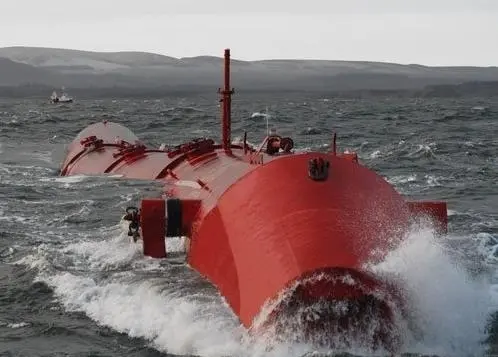
Between 2000 and 2009 the Department planned to provide support for renewable energy technologies totalling £367m but only £186m was actually spent. This was partially due to no projects being able to meet the criteria needed to receive funding from the Department’s £50m Marine Renewables Deployment Fund.
The Committee says DECC should act more quickly in the future to identify and address the reasons for this underspend so that resources for supporting the development of renewable energy technologies are fully utilised. It also accuses the Department of not knowing if value for money has been achieved from previous spending for lack of a coherent plan.
The Members of Parliament expressed concern that DECC had committed to a new, extremely ambitious and legally binding EU target to supply 15% of all the UK’s energy from renewable sources by 2020 despite having no clear plan for how to achieve it.