![MaritimeJournal[Seawork]](https://www.maritimejournal.com/wp-content/uploads/2026/09/MaritimeJournalSeawork.svg)


Seawork exhibitor racing round the world
West Yorkshire UK based Seawork exhibitor Centa Transmissions is supporting this year’s Global Circumnavigation Challenge by British ocean adventurer Alan Priddy.
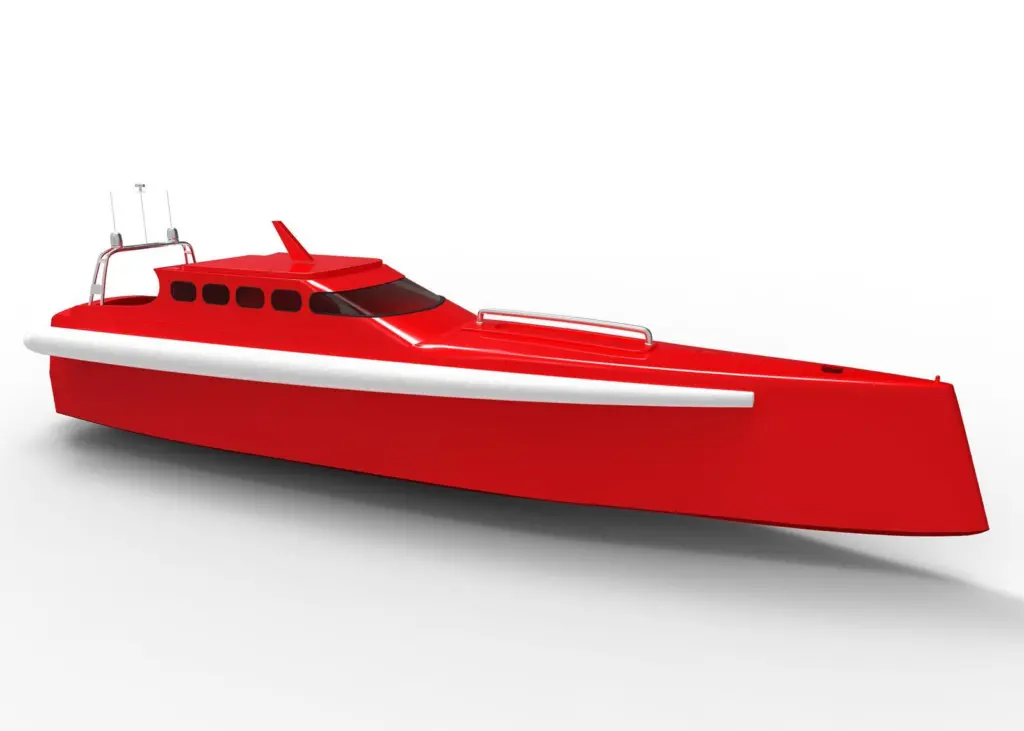
Centa is providing power transmission components for the vessel that is designed to race 24,000 miles in under 50 days.
The wave piercing powerboat will be attempting to break the much coveted UIM world record, which is currently held by the New Zealander Pete Bethune at 60 days 23 hours 49 minutes.
Alan Priddy is believed to be the only person who has separately motor boated and sailed around the world, acquiring the knowledge of what type of craft he needs to build, not only to smash the existing powerboat circumnavigation world record but to set a benchmark that will be nearly impossible to beat.
Over the past 12 months he has assembled his ‘Winning Team’, comprising a crew who are dedicated, and experts in their own field. Engines, gearboxes and drive systems will ensure ultra efficiency and reliability while being highly environmentally friendly. Navigation equipment will allow the crew to drive the craft in complete safety during the day or night.
A metal worker involved is dedicated to building the craft to an exceptionally high standard. There will also be a Formula One style road crew who will be ready to fly around the world, making all the necessary arrangements at the four fuel stops
Centa is providing two lightweight driveshafts that directly link the twin engines to the waterjets, to a design configuration that eliminates the need for gearboxes.
Centa sales manager Nigel Smith, said, “This association with the round the world record attempt in November showcases the strength and reliability of Centa’s lightweight coupling and shaft technology. Obviously, reliability is paramount to a successful outcome and we are confident our transmissions are the very best for the job.”
After two years of planning, the build has now started for the boat, which has a dry weight of 12 tons and weighs 40 tons fully fuelled. It is powered by two Castoldi jets, each driven by an FPT C13 500hp diesel engine capable of a top speed of over 47 knots.
But perhaps the most dramatic aspect will be the boat’s stopping capability. Each jet has a ‘bucket’ just like the reverse thrust devices used on jet aircraft, making it capable of eyeballs out crash stops if necessary.
For more information about Centa’s range of flexible couplings and steel shafts, plus the very lightweight composite fibre shafts, visit Stand number 94 at Seawork 2011.