![MaritimeJournal[Seawork]](https://www.maritimejournal.com/wp-content/uploads/2026/09/MaritimeJournalSeawork.svg)





A clean propeller cuts costs
Biofouling is one of the most costly problems facing commercial craft of virtually any description, but the propellers tend to get overlooked.
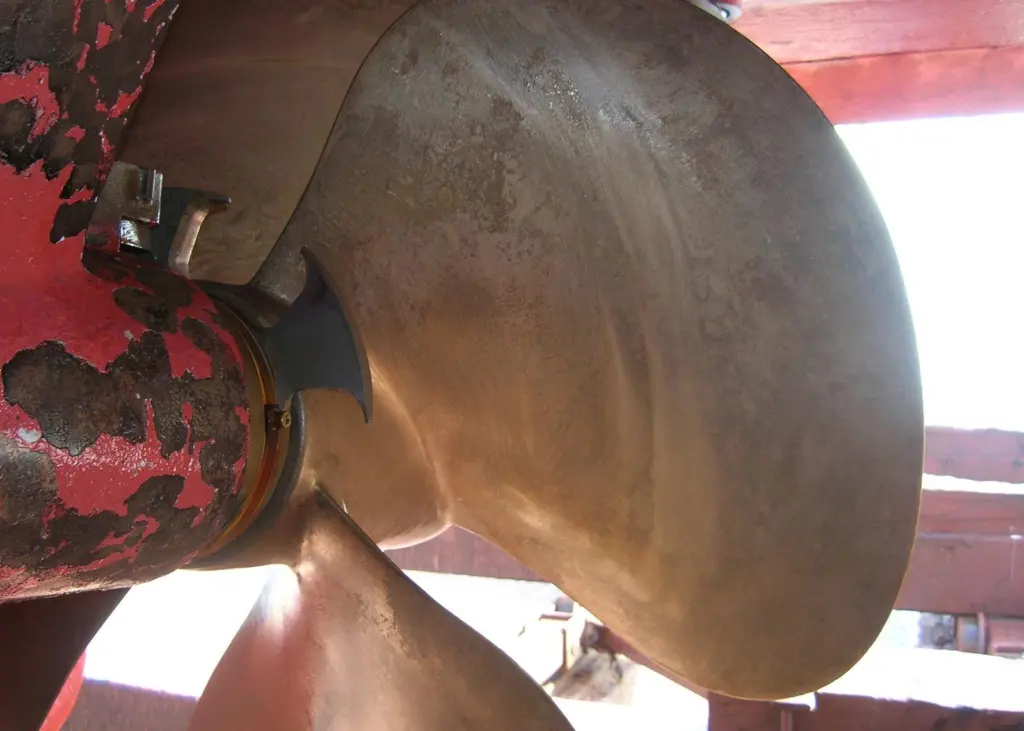
While there are some extremely efficient hull antifouling treatments on the market, one big oversight tends to be the propeller. They are often one of the most finely engineered components of an entire workboat, costing thousands of pounds, yet they tend to be neglected when it comes to protecting them from fouling, oxidation and electrolysis.
This increases the operating overheads through wear and tear in the shaft bearings and other components in the drive train simply because the hard growth fouling puts everything out of balance. Propellers also gradually degrade through oxidation and electrolysis can damage them beyond repair.
GUK Manufacturing says that until now there has been nothing suitable for the commercial sector and the paint coatings available tend to only last a few weeks or months in the commercial environment. Resin coatings tend to chip and degrade and have to be repaired on a regular basis due to impact damage. They are alo very expensive to apply and maintain.
GUK has developed a coating, Propshield Industrial, that it claims will last at least two years in commercial use without the need to inspect or repair. Compatible with bronze, stainless steel and aluminium propellers, the coating is self healing. As well as being an environmentally friendly product, it can also be removed easily for repairs either by solvent or steam cleaning. Welding can still be undertaken without any problems.
The company says that ships and working craft could save at least 10% to 15% in fuel and associated maintenance if propellers were protected by the product. A 10% saving on a 30m to 40m craft could save in the region of €10,000 to €15,000 per annum.
Although vessels that are moored for extended periods will still suffer from fouling, if they are taken out and gradually run up to full power for at least an hour, the encrustations will simply fall off and the engine will regain efficiency.
Re-application is simple and the product can be applied by rotary power tools with a buffing pad. After the first application, subsequent applications at haul out or dry docking is very rapid, taking just a short time per blade to apply.
An added advantage is that the shelf life of the product is indefinite, unlike traditional antifoulings, even once the container has been opened.
Operators of commercial vessels will benefit from improved fuel consumption, reduced maintenance, lower pollution from exhaust gases and steady engine revolutions across the speed range.