![MaritimeJournal[Seawork]](https://www.maritimejournal.com/wp-content/uploads/2026/09/MaritimeJournalSeawork.svg)


Gate Terminal prepares for business
Following several months of commissioning work, The Netherlands first LNG import terminal at Maasvlakte, Rotterdam, is due to commence operations next month.
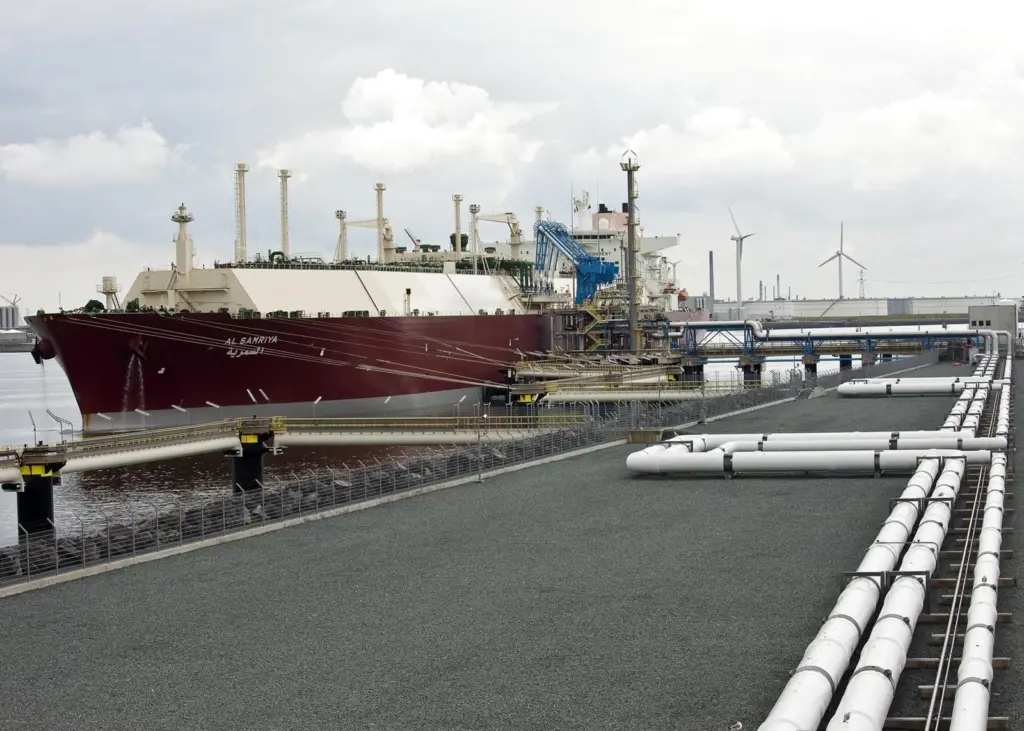
It will supply natural gas to both Dutch domestic and industrial users and to northwest Europe’s gas markets beyond.
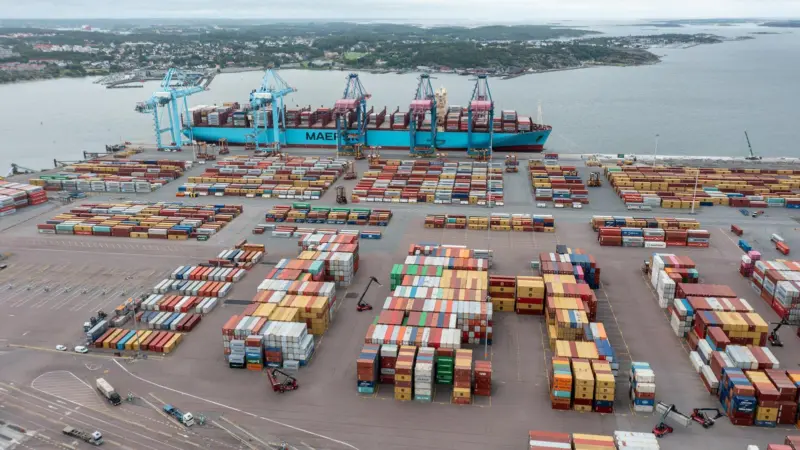
Covering a 35ha site (see MJ March 2011), Gate Terminal comprises an unloading jetty, along with gas processing and storage facilities constructed over a three year period involving both land reclamation and returning previously reclaimed land back to the sea.
Under the watchful eyes of license provider DCMR Milieudienst Rijnmond, the first shipment of LNG arrived at Gate Terminal on 13 June aboard the 138,000 m³ capacity, BP owned LNG carrier British Trader. This was followed on 5 July by the 140,000 m³ capacity Moss type, Arctic Voyager. Later in the same month the third and final commissioning cargo arrived on board the Al Samriya. At 168,189 gt and 345m LOA, this Q-Max type vessel is one of the largest LNG carriers in the world and, following an 18 day voyage from Qatar, discharged 263,000 m³ of gas at Gate Terminal.
As part of the commissioning process, the tanks were cooled down to -162°C, the temperature at which the liquefied gas is discharged from the LNG carriers. Initially, redundant gas is being flared until the associated equipment is operational.
The project has received a shot in the arm with reports that Germany’s recent decision to phase out its nuclear reactors will lead to the country becoming Gate Terminal’s biggest customer within two or three years.
In an interesting aside, while natural gas has been extracted from the Waalhaven and Pernis areas of Rotterdam for many years, Oranje-Nassau Energie Nederland (ONE) has started test drilling for natural gas beneath the Maasgeul channel off Rotterdam. As the field lies beneath the port’s main navigation channel, directional drilling is being used with the shoreside drilling site situated just a mile from Gate Terminal.
By Peter Barker