![MaritimeJournal[Seawork]](https://www.maritimejournal.com/wp-content/uploads/2026/09/MaritimeJournalSeawork.svg)





Safety is more than just a certificate
A new industry guide points out that ECDIS should be taught as part of complete navigational competency, and that safety can’t be simply the matter of an ECDIS certificate.
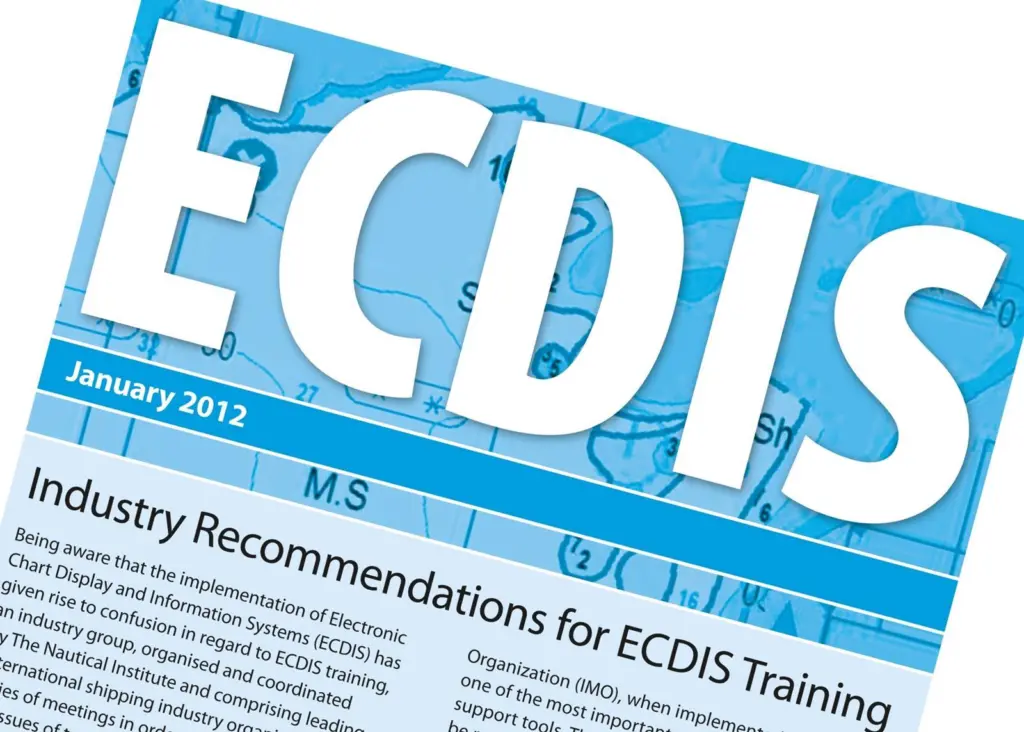
The Nautical Institute explains there are two key dates for ECDIS this year. in January 2012 ECDIS Training came into force as part of the STCW 2010 Manila amendments and, from July 2012, mandatory carriage requirements start to be phased in.
The Institute has, therefore, published a guide to help interpret IMO requirements titled ‘Industry Recommendations for ECDIS Training’. This is the work of an industry group made up of leading international shipping industry organisations and coordinated by the Institute.
The organisations supporting this guidance want the industry to understand that ECDIS is part of a navigation requirement, and so must be taught in the context of navigation, rather than just ECDIS operation. “Ship owners and operators will require those who have taken generic training to be capable of demonstrating, in full, the competencies required by the IMO”, it says.
A thorough generic training course (unlikely to be less than the IMO recommended 40 hours) and effective familiarisation of onboard equipment for all watchkeepers is recommended prior to taking charge of a navigational watch. It also emphasises the need for watch-standers to maintain these competencies, including familiarisation with any updates or alterations.
James Robinson DSM FNI Irish Navy (Retired), president of The Nautical Institute said, “ECDIS is a complex system and will be one of the most essential tools for supporting mariners in their efforts to ensure the safety of navigation and protection of the marine environment. Shipowners must not assume that an ECDIS course certificate is enough to ensure safety and shipmasters should work with their bridge teams to ensure that ECDIS best practice and company procedures for familiarisation and use of the ECDIS are continually maintained.”
The guidance also makes recommendations to ensure that watchkeepers remain competent and that other industry stakeholders such as trainers, inspectors and auditors are capable of assessing such competence.
The organisations supporting this guidance are BIMCO, GlobalMET, International Federation of Ship Masters’ Associations, International Group of P&I Clubs, International Maritime Pilots’ Association, International Chamber of Shipping, Intermanager, Intertanko, International Shipping Federation, Marine Accident Investigators’ International Forum, The Nautical Institute and OCIMF.
Related Articles
 ACCESSORIES & EQUIPMENT
 OTHER NEWS
 ACCESSORIES & EQUIPMENT