![MaritimeJournal[Seawork]](https://www.maritimejournal.com/wp-content/uploads/2026/09/MaritimeJournalSeawork.svg)




Falkor on trials after conversion completed
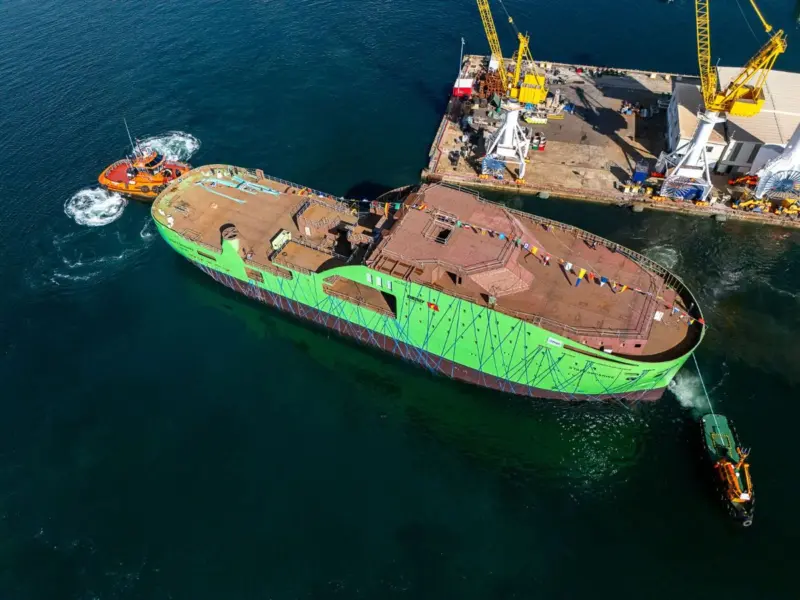
The new oceanographic research vessel Falkor is now undergoing extensive sea trials which will last until Autumn after completing three years of conversion at Germany’s Peters Shipyard.
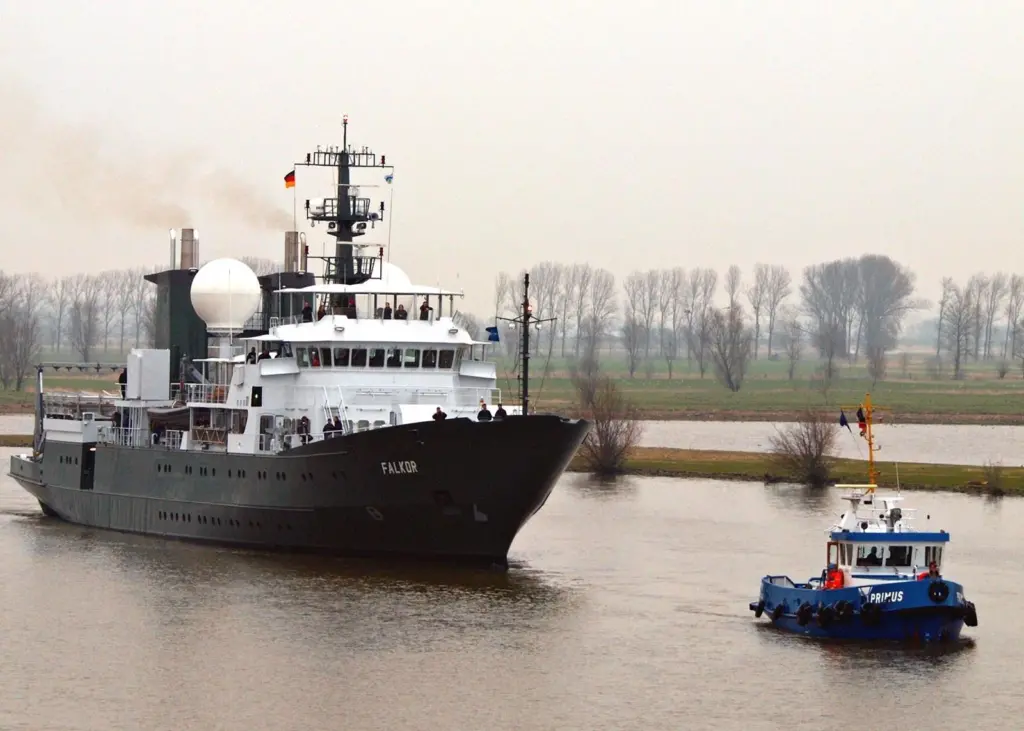
The 82m long and 13m wide vessel has been converted from the former fisheries ship Seefalkeafter being bought from the German Government in 2009. Operators Schmidt Ocean Institute (SOI) say the wait has been worth it. SOI director of science operations, Victor Zykov, told Maritime Journal SOI expected that “Over the next decade, Falkor will become one of the best and most capable privately funded research ships in the world.”
SOI president Eric Schmidt said Falkorwill cross the Atlantic to the United States in the third quarter of this year. Before then it will undergo “extensive field trials to test and calibrate all embedded systems and new scientific equipment in preparation for research cruises that will start in 2013.”
Those trials have so far placed the vessel in the North Sea, German Bight and along the coast of Holland.
Schmidt said converting the ship had involved “three years of careful and collaborative ingenuity” and praised the expertise of those involved.
Zykov told MJ the conversion had involved “many changes, primarily related to the outfitting of research laboratories and installation of scientific systems such as dry and wet labs, scientific echosounders, scientific overboarding equipment and the extension of the aft working deck to provide more space for the scientific operations.”
Highlights of the conversion, a virtual rebuild in effect, include a new equipment staging hangar adjacent to the main deck house, a working deck space aft open for equipment deployment and including the space where the original helideck support structure was removed, and a new aluminum helideck on top of the laboratory and equipment bay for light helicopters and unmanned aerial vehicles. On the main deck are a general purpose dry lab, an ROV control room with scientific echosounder work stations, data and video systems.
Scientific equipment includes a range of echosounders, including Kongsberg and multi-beam systems, a single beam echosounder, a Simrad EK60 multi-frequency fishery research system, a EH90 high definition, omni-directional fishery sonar, a Knudsen CHIRP 3260 single beam sub-bottom profiling system, two Teledyne acoustic doppler current profilers, and a Sonardyne Ranger 2 ultra-short base line system for the positioning and remote navigation of equipment and vehicles.
The 1930gt ship’s main diesels are two Deutz MVM TBD 510 8 units, each of 2,941 kW, delivering a cruising speed of 12 knots and two Deutz auxiliary engines of Type MWM TBD 602 12, each of 560 kW. Drawing 5.8m including the sonar gondola, Falkor’spost-refit cruising range and endurance are put at 8,000 nautical miles and 28 days at 12 knots.
By Tom Todd

Related Articles
 SHIPYARD NEWS
 VESSELS
 INDUSTRY NEWS