![MaritimeJournal[Seawork]](https://www.maritimejournal.com/wp-content/uploads/2026/09/MaritimeJournalSeawork.svg)



Pageant’s navigation nightmare on the Thames
The Queens Diamond Jubilee Pageant, to be held on the River Thames on 3 June, is the biggest event on the London river for more than 300 years and will probably never be surpassed.
With some 1,000 craft joining the flotilla from Battersea Reach to Greenwich, it is providing all manner of navigation, logistics and security problems for the organisers.
The main flotilla will include some 700 boats, from working craft, little ships, Class 5 passenger boats and barges to kayaks and rowing boats, with the charter vessel Spirit of Chartwell designated as the Royal Barge to carry the Queen and Prince Philip, sitting on the top deck within a specially designed canopy. Downriver of London Bridge, the Avenue of Sail and moored vessels will comprise at least 100 ships and boats, while there will be an additional 200 safety, rescue and marshalling boats in action.
The sheer number of invited vessels means that ahead of the event a huge number of boats will be arriving in central London from downriver and upriver, and navigation is likely to be disrupted for four days ahead of 3 June and for at least two days afterwards.
In order to accommodate the various boats, some 300 additional moorings will have been laid by the port of London Authority (PLA) for powered vessels plus a similar number of mooring arrangements for rowing and other small craft. The key concentration will be in and around West India Dock downriver, and in the Barn Elms area, upriver of Putney.
On the day itself, there will be a full Thames Barrier closure from two and a half hours after low water (09:30) blocking the tidal flow, and a staggered navigational river closure from 06:00, when the only movements permitted will be pre-planned Pageant traffic. The flotilla will muster upriver of Battersea Reach in the morning and is due to pass Victoria rail bridge at 13:30, travelling at 4 knots.
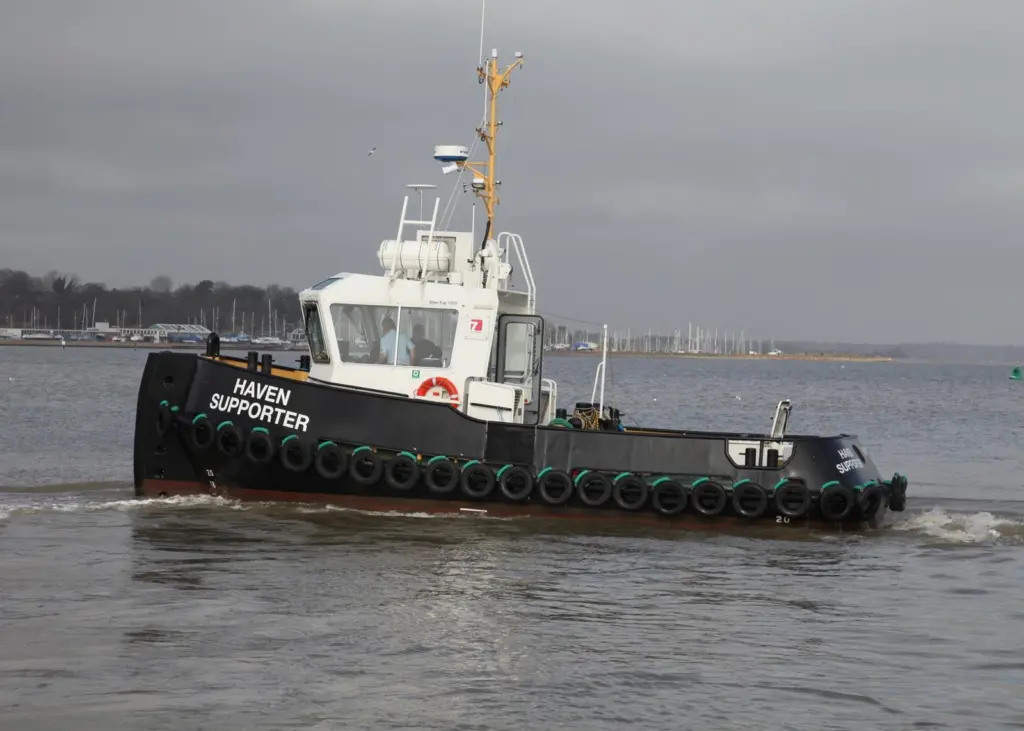
In the Royal Party the Queen’s barge will be escorted by the tug Haven Supporter and preceded by Trinity House’s Number 1 boat, and escort launches from the ex-Royal Yacht Britannia. The Havengore, which carried the coffin at Churchill’s funeral, will be joined by other boats from that era, including retired police launches, various navy pinnaces and RIBs.
The river closure will roll downriver under control of a PLA harbour launch to Wappingness and from there the PLA Diver will extend the closure downriver to Greenwich. An additional PLA launch acting as Thames Barrier Closure vessel will be stationed at Blackwall Point, maintaining the closure down to the Thames Barrier by 14:15.
Upstream, the river down to Putney will be re-opened by approximately
15:45 and will re-open from Wappingness for inward bound Class V Passenger traffic only going upstream from approximately 17:45 until about 19:30. By then the river is due to re-open throughout although the PLA may need to institute local traffic controls as necessary.
Among the working vessels travelling through the bridges will be Cory’s fleet of modern Damen built tugs along with the vintage tugs Barking; Cob, built in 1911; the Kennet, built for the Thames Conservancy; MSC 1, a historic Bantam canal tug built at Brentford; and the steam Tug Brent. A fleet of Dunkirk Little Ships and ex-WW2 craft will add to the nostalgia, while a 60-strong group of cruisers represent the ’Tupperware Navy’.
Downriver, below the bridges the steam tug Portwey will be joined by the Kent, a TID and two remaining VIC ‘puffers’. The Avenue of Sail will include several tall ships, most of the surviving Thames sailing barges and a variety of sailing smacks and fishing vessels.
Keeping that lot moving at a steady pace, dealing with inevitable mishaps and breakdowns and looking out for waterborne protesters will keep the authorities busy. And then they will spend another two days marshalling the vessels back up and down stream, before they begin the arduous task of preparing to secure and administer the River for the period of the Olympics and Paralympic games.
By Graeme Ewens

Related Articles
 ACCESSORIES & EQUIPMENT
 OTHER NEWS
 ACCESSORIES & EQUIPMENT