![MaritimeJournal[Seawork]](https://www.maritimejournal.com/wp-content/uploads/2026/09/MaritimeJournalSeawork.svg)


OMC helps to make Pacific transit safer
Global safety expert, OMC International, has developed a new safety product, a ship motion measurement instrument called the iHeave, in response to challenging weather conditions faced during a study at the Columbia River Bar entrance to the Pacific.
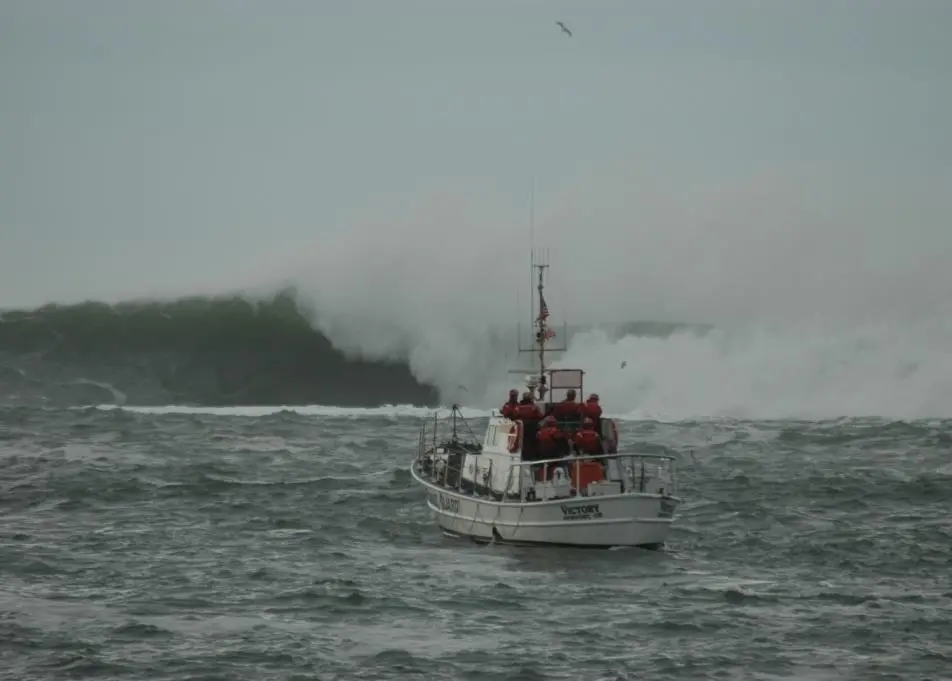
The study, commissioned by the Columbia River Bar Pilots (CRBP), with funding from the Oregon Department of Transportation, aimed to investigate the commercial and safety benefits of installing an OMC Dynamic Under Keel Clearance (DUKC) system at the Columbia River Bar in order to prevent vessel groundings. The treacherous entrance to the Pacific has claimed over 2000 ships since the late 1700s.
During the study, the transfer of DGPS instruments to carry out the study at the Columbia River Bar was deemed too dangerous so OMC engineers had to come up with another way of getting the data required.
OMS, executive director, Dr Terry O’Brien OAM, said: “Accessing the bow and transferring DGPS equipment by helicopter during winter at the Columbia River Bar was regarded as too dangerous and would have prevented us from measuring the very ship motions the pilots were most concerned about. So, a group of our engineers chose to develop OMC iHeave as a practical approach to assist the pilots gather vital ship motion data for a wide array of ships in this very challenging environment.”
OMC’s iHeave is a light weight self contained unit which can be set up on the ship’s bridge in minutes. It continuously monitors ship movements during transit and measures all six degrees of ship motions in waves. This does away with the need for setting up multiple DGPS instruments outside on a ship’s bow and bridge wings – dangerous or even impossible to mount in some weather conditions – especially around the Columbia River Bar.
The iHeave complements the DUKC but doesn’t do away with it because ship masters and pilots must know in advance of their transit that they will have sufficient water underneath the keel. But iHeave’s measurements can be used to verify that DUKC predictions are accurate.
With OMC input, the Columbia River Bar Pilots set up and operated the OMC iHeave themselves to accurately measure the wave response of 24 ships crossing the Columbia River Bar under moderate to high swell conditions in four months between November 2011 and March 2012.
OMC is now offering the iHeave along with an analysis service to other clients.