


Dynamic Tidal Power plans promise plenty
China and the Netherlands have signed a deal to examine the feasibility of constructing the world’s largest tidal power scheme.
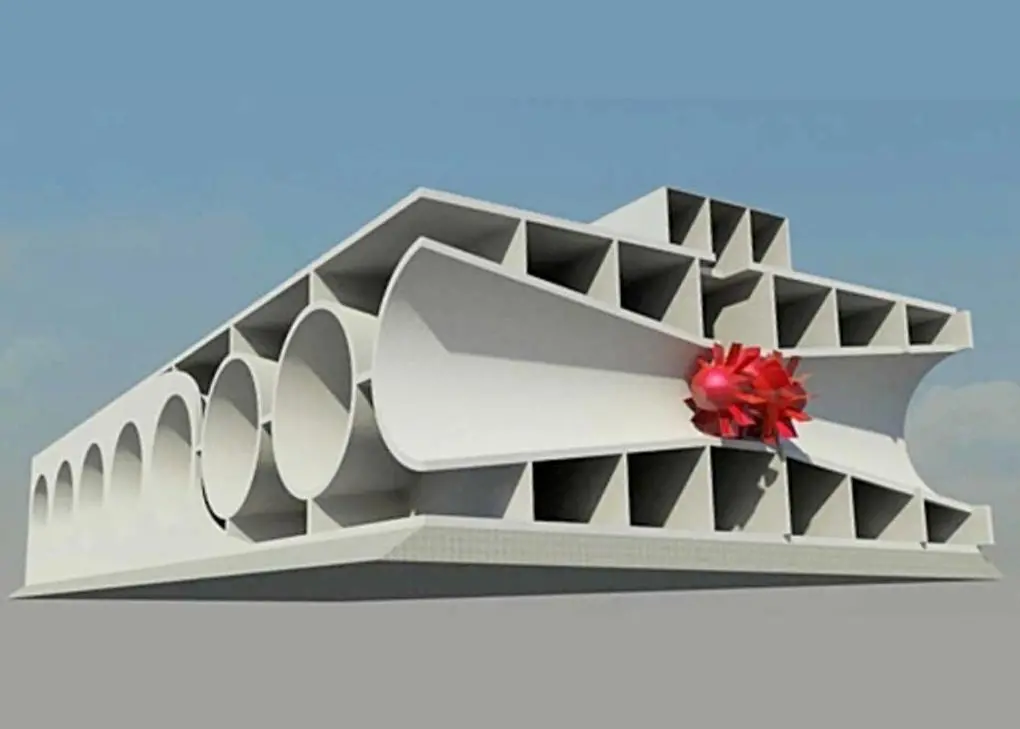
The agreement will look at the potential for a new type of tidal technology, Dynamic Tidal Power (DTP), developed by Dutch engineers.
Part of the agreement is to assess specific, potential DTP sites in China, the UK and South Korea. The Severn Barrage, a traditional tidal scheme in the UK, has courted controversy because of the environmental consequences of its construction.
More traditional tidal schemes involve building barrages across estuaries that destroy upstream wetland ecosystems. DTP involves building long dam like structures stretching out from the coast, long enough to influence tidal patterns and cause high and low tides to occur simultaneously on opposite sides of the dam but not enclosing any waters. The dam would have enough turbines to generate electricity for three million Europeans. The tide runs high and low on either side of the dam simultaneously, switching sides with the tidal cycle. Turbines built into the dam turn as the high tide waters flow through to the low tide side.
“Dynamic Tidal Power has fewer environmental and social impacts than traditional tidal power, and it allows for larger plant sizes. It will become an important new type of renewable energy”, said Dimitri de Boer, EU team leader for UN Industrial Development Organisation (UNIDO) in China, which has helped facilitate the deal.
“Global political debates on energy typically focus on existing forms of renewable energy”, de Boer said. “There are limited opportunities to gain support for promising new technologies like DTP, although the United Nations Sustainable Energy for All initiative, which was launched in Rio+20, has been helpful in putting this technology in the global spotlight.”
A demonstration plant will be constructed to evaluate the suitability of the technology for the Chinese market. However, preliminary evaluations found South Korea, the UK and China to be the most suitable regions for DTP. Studies have shown that a large DTP dam along the Chinese coast could feature installed capacity of 15,000MW or more. The Dutch government has provided more than €2m for the POWER consortium to further investigate its potential in partnership with Chinese research partners. Dutch consortium partners include Strukton Engineering, ARCADIS Nederland, TU Delft, Pentair Nijhuis, DNV KEMA, Oranjewoud, IMARES, and H2iD.
“I am confident that these joint efforts will lead to DTP being demonstrated in the coming years, and that full scale Dynamic Tidal Power will become a reality in the coming decade”, said Hans Moll, director of Strukton Engineering and chairman of the POWER consortium.
Related Articles
 MARINE CONSTRUCTION
 ENVIRONMENT
 ENVIRONMENT