![MaritimeJournal[Seawork]](https://www.maritimejournal.com/wp-content/uploads/2026/09/MaritimeJournalSeawork.svg)



New professional standards working group
A new Maritime Coastguard Agency/Certifying Authority (MCA/CA) working group has been formed to support the application of the new UK Workboat Code, the final issue of which is due later this year.
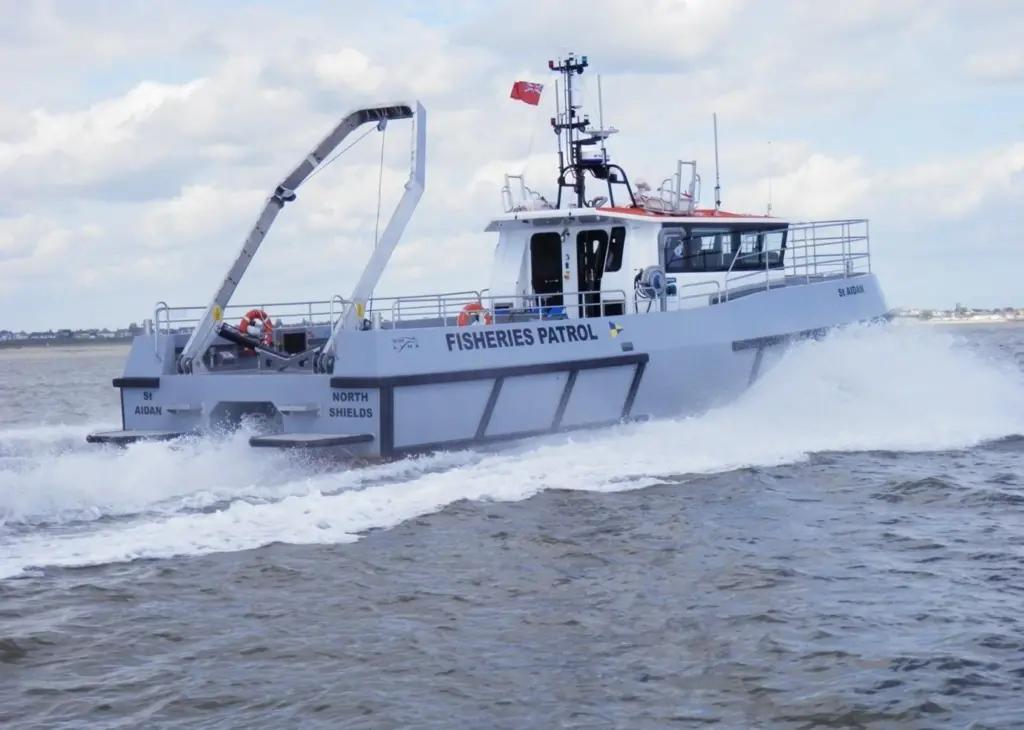
This new workboat code, which is an update of the original Workboat (Brown) Code first developed in the mid-1990s, must be applied by surveyors and naval architects who have the necessary qualifications and experience. So, the Certifying Authorities Professional Standards Working Group is working with the Maritime Coastguard Authority (MCA) to address industry concerns.
“The industry wants the people who enforce the code to be properly qualified and experienced to apply the new code,” John Fearnley, chairman of the PSWG and CEO of international consultancy and certifying authority MECAL, told Maritime Journal.
“Another driver for looking at these professional standards has come out of the International Maritime Organisation (IMO) with the adoption of the IMO Instruments Implementation Code (IIIC),” he explained. “This requires all IMO member states including the UK to demonstrate professional competence in applying International Conventions.”
“Such Conventions like MARPOL, IMDG, COLREGS and MLC, do filter down to varying extents into the workboat sector and will therefore be subject of IMO verification starting in 2016, with audits of Flag States (including MCA),” Mr Fearnley added.
As a start, the group is using the current IMO professional standards requirements for Recognised organisations as a model to adapt to the small commercial vessel and workboat sector. Certifying authorities (including class societies) are set to increase co-operation to develop common professional standards and training to ensure that their people are able to keep up with the fast developing technology of the sector. In the future, these standards and training should also be available to the industry as a whole.
The new working group says this will give all certifying authorities the opportunity to be recognised as an equivalent to Class for workboats.
“One reason that the new code hasn’t yet been issued in final form is because the UK Government requires all major changes like this to have an industry impact assessment, which is now virtually complete,”
The new workboat code was completely re-written by a working group comprising the MCA, certifying authorities and industry representatives co-ordinated by the National Workboat Association and a first draft was issued at Seawork International 2014.
The Brown Code, which is applied to small UK commercial vessels of up to 24m, was first updated back in 2004 when all the original colour codes were combined to create a harmonised UK code (MGN280) which was later heavily criticised by the industry and Flag States, especially north European countries like Germany, Norway and Denmark, because it ‘diluted’ the technical competence of the original code. This meant UK workboats had difficulty working in Danish, Norwegian and German sectors – especially renewable energy – as authorities asked for additional requirements to allow them to work.
“Now, the Code is recognised internationally as being perhaps the best in the world,” Mr Fearnley said.
The final code will be issued later this year.
The PSWG is made up of representatives from MCA, Red Ensign Group Flag States, certifying authorities and class societies.
By Rachael Doyle
Related Articles
 ENVIRONMENT
 OTHER NEWS
 ACCESSORIES & EQUIPMENT