![MaritimeJournal[Seawork]](https://www.maritimejournal.com/wp-content/uploads/2026/09/MaritimeJournalSeawork.svg)




RNLI lifeboat centre due to open
The UKs RNLI will open its All-weather Lifeboat Centre (ALC) on Friday 21 August to take over production, maintenance and refit of the charity’s all-weather lifeboat fleet in-house for the first time in the charity’s 191-year history.
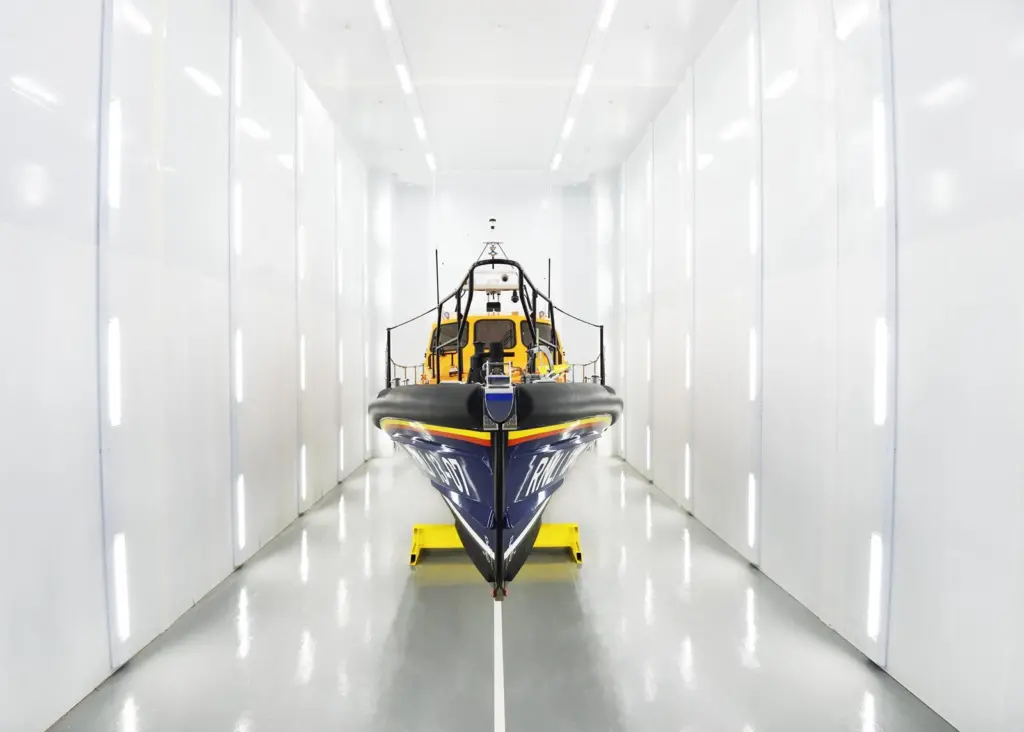
Following the official opening, the RNLI will hold an open weekend over the 22 and 23 August so that the general public will have the rare opportunity to tour the new world-class boatbuilding factory.
Angus Watson, head of construction and refit, said: “It is an impressive facility which will allow the charity to build six Shannon-class lifeboats a year and maintain our other all-weather boats. Having a state of the art facility which will see the charity produce, maintain and refit all-weather lifeboats in-house and under one roof is a first for the charity.”
The ALC, which was given the green light by RNLI trustees after concerns about future lifeboat building supply chains, is based on-site at the RNLI’s Headquarters in Poole, Dorset and will secure a supply of Shannon all-weather lifeboats for future generations of lifesavers.
It will also give the RNLI greater control of costs and quality and has created 90 new employment opportunities in Poole, including apprenticeships in marine engineering and boatbuilding. It is expected that the ALC will save the charity in excess of £3m a year once the facility is fully up and running.
The building itself was designed by Rambol, with architectural design being carried out by Ellis Belk Associates and the main contractor being J.B. Leadbitter & Co Ltd.
It includes some impressive features such as three spray booths used to apply primer, coats of paint and antifoul to the lifeboats, moveable platforms which will improve ergonomics and efficiency for accessing fit-out and refit lifeboats and a visitor’s centre.
PV panels on the roof of the ALC combined with the PV provision on the rest of the RNLI campus means that up to 8% of the RNLI’s energy requirements can be provided by solar energy.
The build project itself was complex. Prior to laying the first brick, the sea wall had to be raised and the ground works completed by Bam Nuttall. The RNLI was able to source a large amount of the fill material needed locally, including 25,000 tonnes of sand dredged by subcontractor Jenkins Marine, from sandbanks in Poole Harbour. This will also save on future dredging costs for the harbour commissioners.
The material was delivered to the site by barge, which avoided 2,500 truck journeys in and out of Poole. In addition, the RNLI recycled useable material from the demolished buildings for the new foundations saving money and 250 additional truck journeys. It also ensured the material did not end up in landfill.
By Anne-Marie Causer