![MaritimeJournal[Seawork]](https://www.maritimejournal.com/wp-content/uploads/2026/09/MaritimeJournalSeawork.svg)


Axial Seamount expedition success
The first expedition to carry out extensive exploration, mapping, and sampling of new lava flows from the Axial Seamount underwater volcano off the coast of Oregon, USA, has been successfully completed.
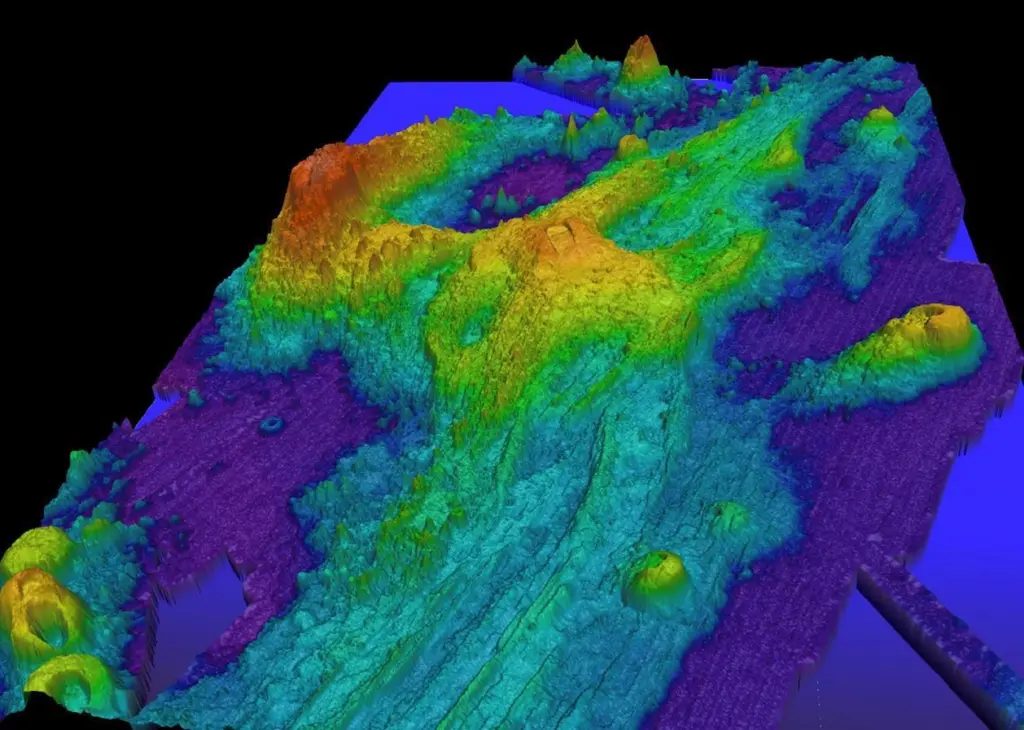
A team of researchers from the USA Earth-Ocean Interactions Programme set off from Seattle in August onboard RV Thompson, with ROV Jason and AUV Sentry in tow, after the underwater volcano erupted between April and May 2015.
The science team completed three interrelated projects: took seafloor pressure measurements to measure volcanic inflation/deflation; completed incubator experiments and collected samples of hydrothermal vent fluids for chemical and microbial analyses; and explored the volcano to observe, sample and document the physical and biological impacts of the April 2015 eruption including new lava flows, ash, hydrothermal plumes, and microbial organisms.
Pressure dives were completed using a mobile pressure recorder (MPR) on ROV Jason. Data was collected at 10 benchmarks, while bottom pressure recorders (BPRs) installed two years ago were recovered and are providing “high quality” information about tidal influence and the movement of magma beneath the volcano.
Conductivity, Temperature, Depth (CTD) casts were placed over the lava flows where new hydrothermal vents might occur to characterise the plume in terms of He isotopes, metals, methane and dissolved ionic compounds. The data and samples will be analysed at University of Washington.
Gas was then collected from the incubators, while the microbiology group extracted samples for experiments that parallel those completed in the incubator on the ocean floor. Microbes collected on filters of both sample sets will be analysed once back at the Marine Biological Lab in Woods Hole, Massachusetts.
In addition to originally planned research at Axial Seamount, the 2015 expedition became “unexpectedly well-timed” for exploring the geological, chemical and biological effects of the April 2015 eruption.
A variety of flow morphologies were observed on the 2015 flows and nearly 30 rock samples were collected from the 2015 lava flows. A sample of ash was also collected from the surface of one of the pressure benchmarks. The samples will be further chemically analysed to help characterise the lavas in terms of compositional variations with previous eruptions, which will provide a larger idea of the chemical processes of the magma at depth.
To carry out the research, the newVentO2 Probe, developed by MarqMatrix Inc, was also used and was deployed more than a mile deep to measure the dissolved oxygen in in hydrothermal fluids emitting from the volcano.
Exploration of the lava flows was facilitated by maps generated by AUV Sentry missions in and around the caldera.
The three projects were funded separately by the National Science Foundation, NOAA and the Moore Foundation, and NSF.
By Rachael Doyle
Video: Earth Oceans Interaction Programme