![MaritimeJournal[Seawork]](https://www.maritimejournal.com/wp-content/uploads/2026/09/MaritimeJournalSeawork.svg)


IMRF at SAR seminar in Cape Town
The International Maritime Rescue Federation (IMRF) took part in a seminar with colleagues from the South African SAR service.
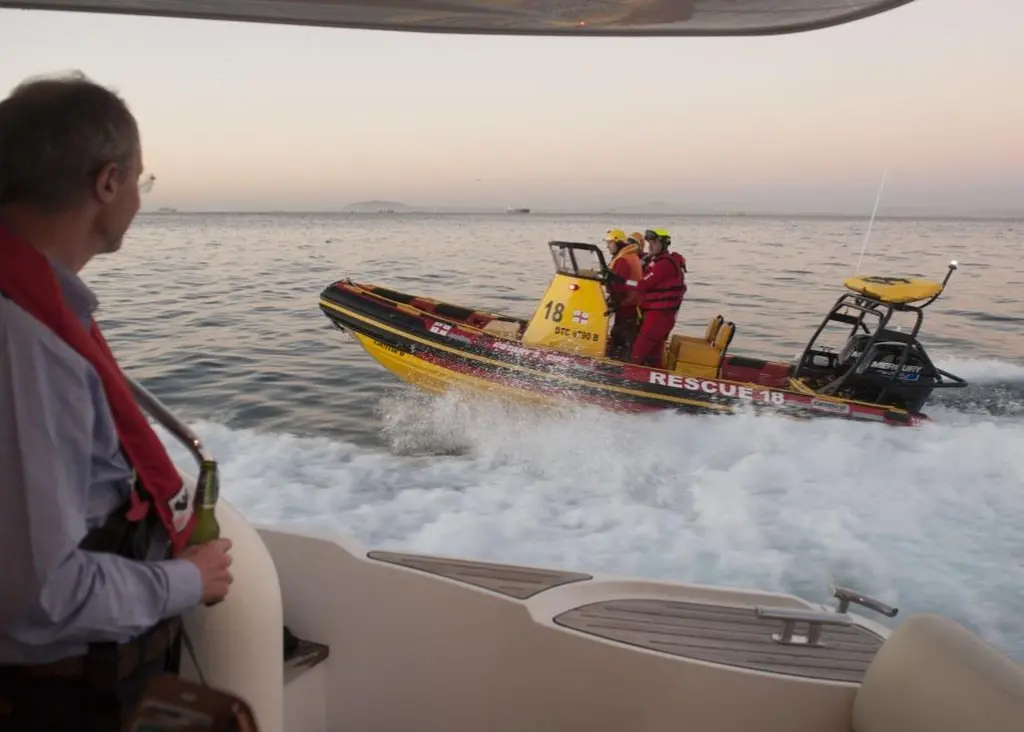
Its aim was to enable the IMRF to gain a better understanding of what SAR efforts are taking place in South Africa, as well as give the federation an opportunity to pass on information about its own international projects.
According to the World Health Organisation (WHO), 90% of global drownings occur in Africa and Asia, so the IMRF is particularly keen to focus its work on these regions.
Bruce Reid, IMRF’s CEO, said: “There is no competition in maritime SAR, except with the elements. The key to SAR success is cooperation, locally, nationally and international.”
National Sea Rescue Institute (NSRI), Lifesaving South Africa, MRCC Cape Town, the Maritime Safety Authority of South Africa (SAMSA), and the South African Defence Force all gave presentations at the seminar.
The NSRI explained that the institute now has over 1000 volunteers staffing 35 bases in South Africa.
Last year, 760 people has been rescued in 643 SAR operations, as well as volunteers responding to shoreside incidents as part of a new community-based emergency response programme.
The seminar discussed the aim of spreading this model across other parts of the African continent, parties agreed that while people have to be secure themselves before they can volunteer time to help others, a structure is required.
This debate was followed by a talk on Nowcasting from the IMRF Trustee, Dean Lawrence. It involves automatic solar-powered weather stations which broadcast current conditions and forecasts to help those on the water plan their voyages.
The president of Lifesaving South Africa, Dylan Tommy, spoke about the sport of lifeguarding and its emergency response role. It was discussed as to how these could cooperate and be involved in future SAR missions.
Day two of the seminar focused on the ‘silent epidemic’. WHO reported that 372,000 people drown each year, a number which is comparable with the losses to malnutrition and malaria.
James Vaughn from IMRF, emphasised that this figure is actually far lower than the true total, the statistics omit flooding, transport and migrant drownings. Over half of those who die are aged under 25, and the highest rates are in children below the age of four.
Experience was drawn in from the Swedish Sea Rescue Society who spoke of experiences in mixed migrant rescue operations in the Mediterranean.
The seminar saw many other short discussions before it concluded with a presentation on the IMRF’s work with the International Maritime Organisation (IMO) on SAR development and technical cooperation issues.
Copies of the presentations given at the Cape Town seminar in March can be found on the IMRF website.
By Alice Mason