![MaritimeJournal[Seawork]](https://www.maritimejournal.com/wp-content/uploads/2026/09/MaritimeJournalSeawork.svg)


Rolls-Royce AAWA project unveiled
An Advanced Autonomous Waterborne Applications Initiative (AAWA) project, led by Rolls-Royce, has been unveiled at a conference in Helsinki.
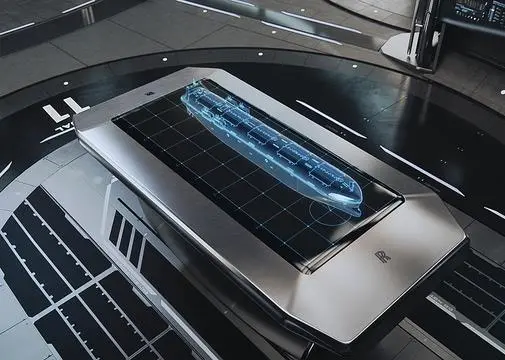
The project will aim to create a vision of how remote and autonomous shipping will become a reality, changing the nature of the shipping industry.
“Autonomous shipping is the future of the maritime industry. As disruptive as the smart phone, the smart ship will revolutionise the landscape of ship design and operations,” said Mikael Makinen, Rolls-Royce president.
Constant real-time remote monitoring of vessels worldwide will lead to ships becoming more closely integrated into logistics or supply chains. This will therefore enable global companies to focus on using a whole fleet to best effect, generate cost savings and improve revenue.
There is potential to generate new shipping services, such as online cargo marketplaces, more efficient pooling and leading of assets, and new alliances.
It hopes to allow new players to enter the market and potentially capture a significant share of business in the same was as Uber, Spotify and Airbnb have in other industries.
“The technologies needed to make remote and autonomous ships a reality exist – the sensor technology needed is sound and commercially available and the algorithms needed for the robust decision support systems are not far away,” explained Jonne Poikonen, senior research fellow at the University of Turko.
She continued: “The challenge is to find the optimum way to combine them cost effectively in a marine environment.”
The AAWA project has been supported by Finnish Funding Agency for Technology and Innovation of Tekes.
At the conference in Helsinki’s Finlandia Hall, Rolls-Royce also introduced the project’s first commercial ship operators; Finferries and ESL Shipping Oy.
Finferries will assist the project by carrying out a series of tests of sensor arrays in the range of operating and climatic conditions. While ESL Shipping will help explore the implications of remote and autonomous ships for the short sea cargo sector.
Oskar Levander, vice president of innovation at Rolls-Royce Marine, explained: “This is happening. It’s not if, it’s when.”
“This work supports the development of remote controlled and autonomous vessels and will enable proof of concept demonstration following the completion of the project.”
He concluded: “We will see a remote controlled ship in commercial use by the end of the decade.”
By Alice Mason