![MaritimeJournal[Seawork]](https://www.maritimejournal.com/wp-content/uploads/2026/09/MaritimeJournalSeawork.svg)


Project to assess potential of advanced technologies for offshore O&M
In early March 2017, a consortium of UK universities and offshore wind energy companies launched a novel initiative to assess the potential application of advanced technologies such as robotics and artificial intelligence (AI) for the operation and maintenance (O&M) of offshore wind farms.
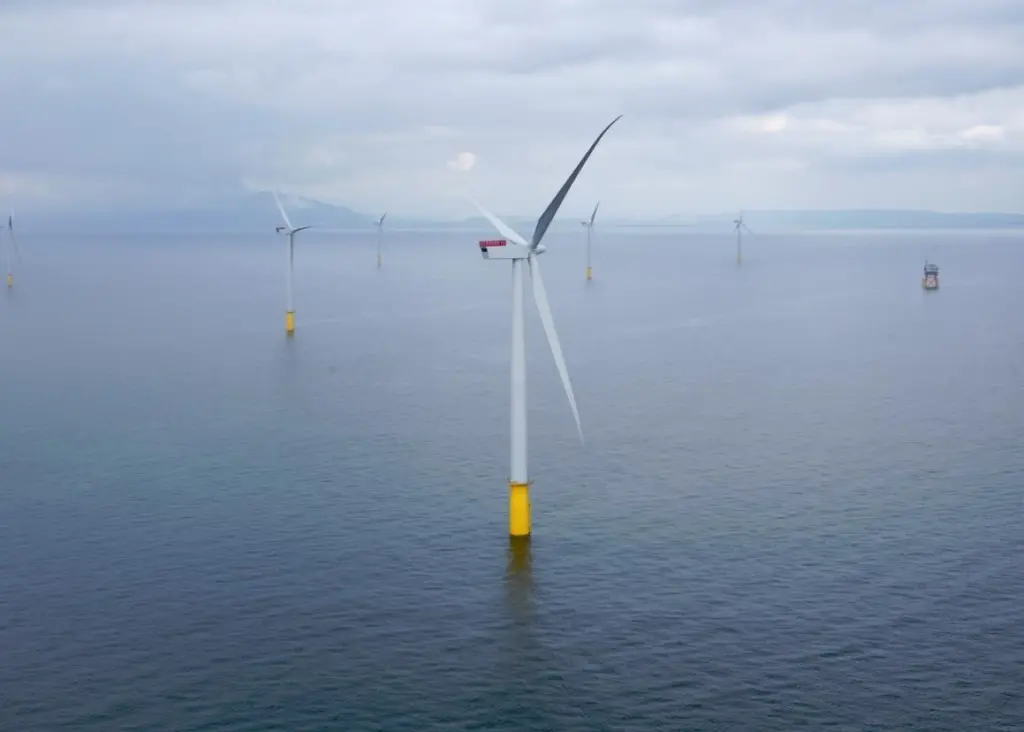
So, what exactly will the project entail? And what robotics, AI and other technology will be assessed and developed as part of the scheme?
REMOTE MONITORING
The £5m University of Manchester-led project will investigate how cutting-edge technologies such as advanced sensing, robotics, virtual reality models and AI can be employed to reduce the cost and effort of carrying out O&M activities. In particular, the team will focus on the development of predictive and diagnostic techniques to enable the early identification of problems – and develop robots and advanced sensors to minimise the need for people to carry out work in hazardous marine environments.
As Mike Barnes, Professor in the Power Conversion group in the School of Electrical and Electronic Engineering at the University of Manchester, explains, the majority of research to date has ‘mainly, and rightly, focused on the initial installation costs of offshore windfarms.’ However, now that the UK has a large amount of installed offshore wind, he believes it is appropriate to ‘also look at operation and maintenance costs, which make up 25%-50% of total lifetime costs.’
“This project will undertake the research necessary for the remote inspection and asset management of offshore wind farms and their connection to shore, an industry which will be worth £2billion annually by 2025 in the UK alone,” says Barnes.
“At present most of this is still undertaken manually onsite. Remote monitoring through advanced sensing, robotics, data-mining and physics-of-failure models therefore has significant potential to improve safety and reduce costs,” he adds.
‘HUGE MARKET’
The drive to reduce such costs is particularly pressing given the fact that, according to Crown Estate calculations, between 80% and 90% of the cost of offshore Operation and Maintenance (O&M is typically a function of accessibility during inspection – including the need to get engineers and technicians to remote sites to evaluate a problem and decide what remedial action to undertake.
“Minimising the need for human intervention offshore is a key route to maximising the potential, and minimising the cost, for offshore low-carbon generation. This will also ensure potential problems are picked up early, when the intervention required is minimal, before major damage has occurred and when maintenance can be scheduled during a good weather window,” says Barnes.
For Barnes, the advantages of remotely operated systems are fourfold. To begin with, he argues that they could substantially reduce costs – particularly because, in principle, they could be stationed offshore, in the process ‘saving expensive transit times and allowing operation in smaller weather windows.’ Secondly, they could increase safety in view of the fact that they eliminate the need to send personnel into a potentially hazardous offshore environment – and thirdly, they could help the offshore industry to overcome a lack of skills.
“The automation of O&M also addresses key skills shortages, such as the 500 new offshore divers needed for submarine maintenance if offshore wind targets are to be met,” says Barnes.
Finally, Barnes points to the likelihood that remote systems could allow developers to access a ‘huge new market for UK technology – and again quotes Crown Estate figures suggesting that, for the deployment of offshore wind, the O&M of more than 5,500 offshore turbines ‘could be worth almost £2bn per annum by 2025.’
SUBSEA ROBOTICS
In carrying out the project, the Manchester team will work alongside a number of other organisations, including Durham, Warwick, Cranfield, Heriot-Watt universities, as well as other key stakeholders like manufacturers, utilities, wind farms owners and operators and NGOs.
According to Barnes, this means that the project will ‘bring together and consolidate theoretical underpinning research from a variety of disparate prior research grants, in different subject areas and at different universities.’ In doing so, advanced robotic monitoring and advanced sensing techniques will be integrated into diagnostic and prognostic schemes, which he claims will allow improved information to be streamed into ‘multi-physics operational models for offshore windfarms.’ Life-time, reliability and physics of failure models will also be adapted to provide a holistic view of wind-farms system health and include these new automated information flows.
“While aspects of the techniques required in this offshore application have been previously used in other fields, they are new for the complex problems and harsh environment in this offshore system-of-systems. ‘Marinising’ these methods is a substantial challenge in itself,” says Barnes.
One key area of focus will include an assessment of how subsea robotics can be used for cable condition monitoring – a critical component given that such cables are often the sole link between marine energy facilities and the shore.
In other activities, the project consortium will also assess how Small Unmanned Aerial Systems (SUASs) can be used to improve the absolute performance and cost effectiveness of wind turbine monitoring systems – with the key goal being to reduce the response time to urgent requests, allow persistent operation and reduce risk to human operators. A substation robotics theme will also look at robot functionality inside the harsh environments inside high voltage substations.
According to Barnes, the team will also develop more integrated AI models focused on obtaining condition monitoring data and apply state-of-the-art computational techniques to extract information from the what he describes as the ‘sea’ of data typically generated.
The consortium will also develop some proof-of-concept demonstrators to be trialled at partner offshore sites – such as the EMEC test site in Scotland – and work closely with industrial partners to transfer techniques and learning into industry.
“As well as the wind farm market, a lot of the robotics technologies will be suited to other hazardous environments, so offshore oil and gas for example,” adds Barnes.
By Andrew Williams
Related Articles
 OFFSHORE RENEWABLES
 OFFSHORE RENEWABLES
 ENVIRONMENT