![MaritimeJournal[Seawork]](https://www.maritimejournal.com/wp-content/uploads/2026/09/MaritimeJournalSeawork.svg)


First operational STM ship systems installed
The first Sea Traffic Management (STM) compatible bridge systems, connecting ships with shore based services and actors have been installed.
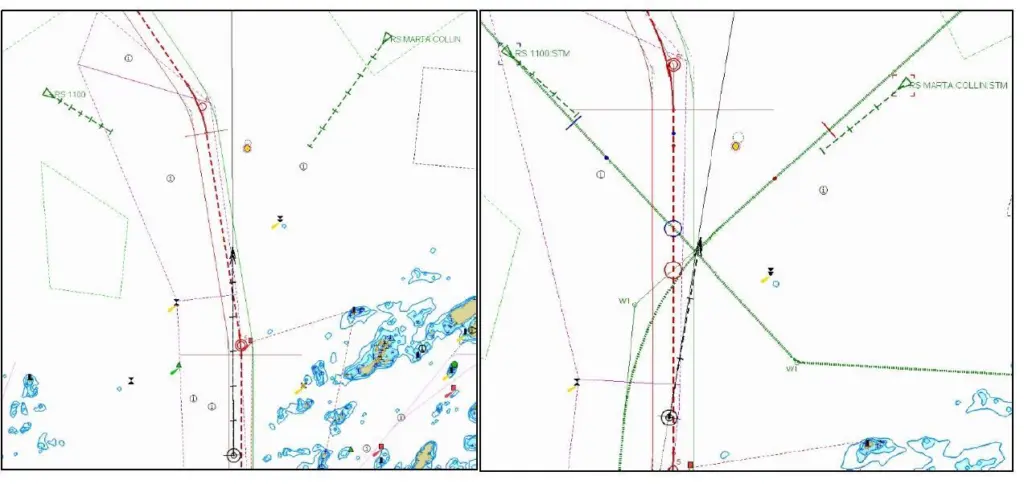
Managed by the STM Validation project, functions including route optimisation and synchronised port calls, as well as sending and receiving route segments ship to ship, are reportedly working well.
Anders Rydlinger, director for ship solutions at Transas, one of the project’s partners, said: “Through information sharing between ship and shore using the Maritime Cloud/ SeaSWIM infrastructure, we are creating a cohesive community, which enables better communications and joined-up decision making. This leads to higher operational standards, greater environmental performance, increased efficiency and improved safety record.”
Three ships equipped
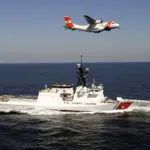
The ships equipped are Stena Germanica and two rescue units from the Swedish Sea Rescue Society (SSRS), Rescue Märta Collin and Rescue 11-00.
The route message format used, developed as a part of the STM Validation project, is transmitted to other ships over ordinary AIS, which aims to improve the common situational awareness.
The officer of the watch will see up to seven route segments of other ships, allowing him or her to predict meeting points, determine the closest point of approach (CPA), the time it will happen and at an early stage identify and avoid close situations. The technology will be very useful for ships in narrow channels and fairways with limited manoeuvrability, said STM.
Automatic route sharing
Stena Germanica, while on route from Gothenburg to Kiel, automatically shared her route with the two rescue vessels, and at the same time received their routes and displayed them on the ECDIS.
Lars Littke, SSRS volunteer and Coxswain for Rescue Märta Collin, commented: “During the installation tests, the routes were planned in advance and sent to the rescue units. This route sharing operation is very simple with the STM infrastructure and can be useful in real rescue operations.
“The capability to broadcast and share transport- and entry-routes into an area as well as routes for search patterns is a great improvement. It will simplify communication, make SAR-operations more efficient and hopefully save more lives.”
The STM test beds will include 300 ships, 13 ports and at least five shore centres.
By Rebecca Jeffrey
Related Articles
 VESSELS
 MARINE CONSTRUCTION
 VESSELS