![MaritimeJournal[Seawork]](https://www.maritimejournal.com/wp-content/uploads/2026/09/MaritimeJournalSeawork.svg)






Tidal turbulence study tackles energy capture effectiveness
Buoys will be used in a project to improve the design and effectiveness of tidal energy capture devices.
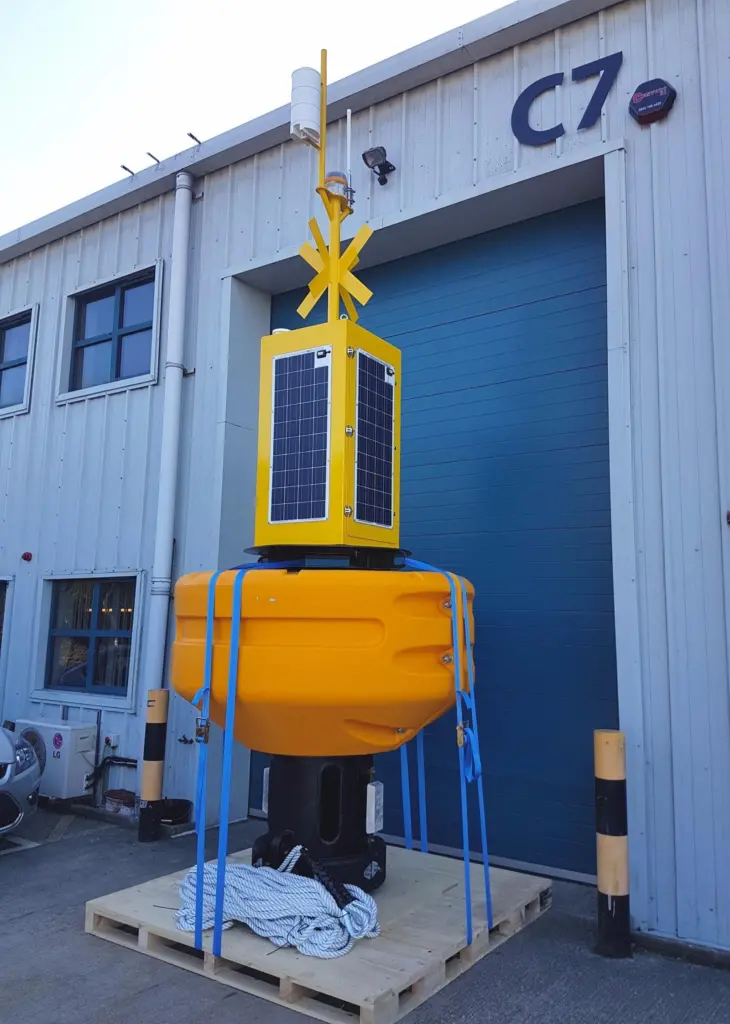
Ocean Scientific International Ltd (OSIL) shipped the network of three 1.9m data buoys to Bangor University’s School of Ocean Sciences for participation in a study of tidal turbulence at the Menai Strait in Wales, UK.
Set up to assist the development of marine renewable energy in Wales, the SEACAMS2 project will use the buoys as data collection platforms for ADCP instruments measuring currents and waves on the seabed that will transfer their data to the buoy via omnidirectional acoustic modems.
Transmitting data
The buoys will then transmit the data to the project base station using the OSIL SBD Iridium Satellite Modem and will operate alongside other high-resolution logging current meters and CTDs in the high-profile project.
The robust buoy platforms will be moored at a depth of approximately 50m in one of the most dynamic and turbulent environments in the UK coastline.
The specialist seabed instrument frames will be secured a least 100m away from the buoys to prevent acoustic dead zones from hindering data transmission.
The project is being run through a partnership between Bangor and Swansea universities and is funded in part by the European Regional Development Fund.
By Rebecca Jeffrey

Related Articles
 OFFSHORE RENEWABLES
 OFFSHORE RENEWABLES
 ENVIRONMENT