Acta Marine completes methanol-ready CSOV quartet
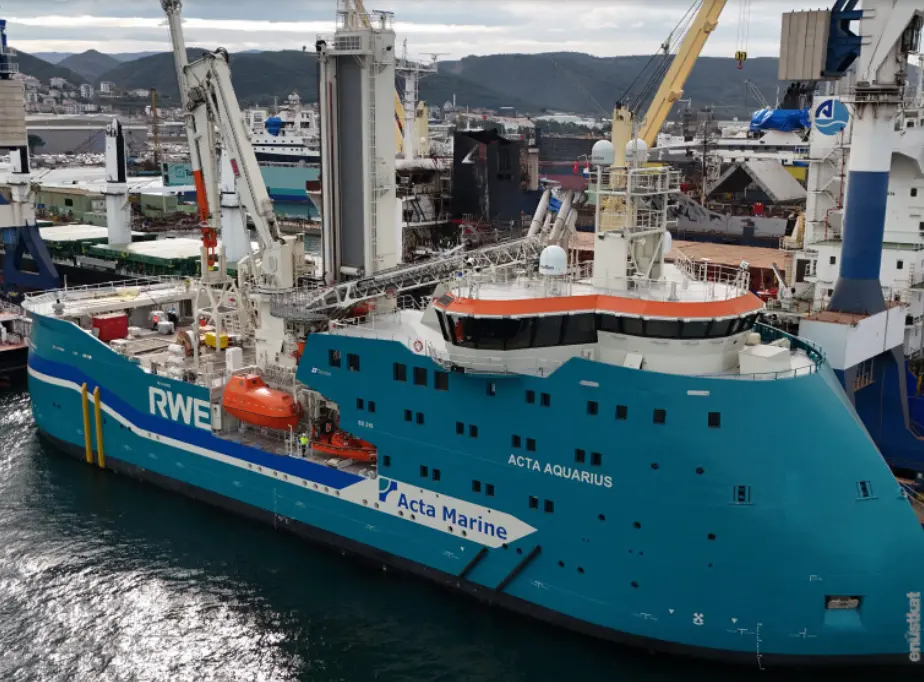
Dutch vessel owner and operator Acta Marine has taken delivery of a fourth and final methanol dual-fuel Construction Service Operation Vessel (CSOV) in a newbuild programme at Tersan Shipyard in Turkey.
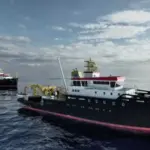
The 89.6-metre vessel, Acta Aquarius, completes a series of four next-generation DP2 walk-to-work (W2W) vessels designed by Ulstein to support offshore wind construction, commissioning and maintenance operations.
Acta Aquarius is certified for methanol dual-fuel operation, with engines capable of running on marine gas oil (MGO) or a blend of MGO and methanol. The propulsion system is supported by battery energy storage.
The vessel completed methanol-fuelled sea trials and left the shipyard ready to operate on methanol. It has a 3D motion-compensated crane and accommodation for up to 135 people. The vessel is accompanied by its daughter craft, Acta Situla, delivered earlier this year.
Acta Aquarius follows the deliveries of Acta Pegasus, Acta Hercules and Acta Gemini.
Rob Boer, CEO of Acta Marine, said the completion of the programme was an important investment in the future of the fleet.
Methanol gains ground
The European Maritime Transport Environmental Report 2025 recorded six methanol-capable vessels in operation in Europe and 17 on order, based on 2024 data. The market has since expanded: Grimaldi, for example, ordered nine methanol-capable RoPax vessels in 2026 for Mediterranean and Baltic operations.
Globally, DNV counted more than 450 methanol-capable vessels in operation or on order in its 2025 assessment, making methanol the second-largest alternative marine fuel after LNG.
One drawback is energy density: methanol contains about 15.8 MJ/litre, compared with around 35.8 MJ/litre for marine diesel – less than half
Its advantages include liquid storage at ambient conditions, established handling infrastructure and increasingly mature engine technology. However, availability and the cost of genuinely low-carbon methanol remain significant challenges.
‘Methanol-ready’ does not necessarily mean a vessel is actually burning low-carbon methanol. Fossil methanol offers no automatic lifecycle carbon advantage.