






Global initiative aims to find 100,000 ocean species
More than 150 attendees met up in London at the end of April to discuss new ideas for collaborating on the Ocean Census, the largest programme in history to assess life in the oceans.
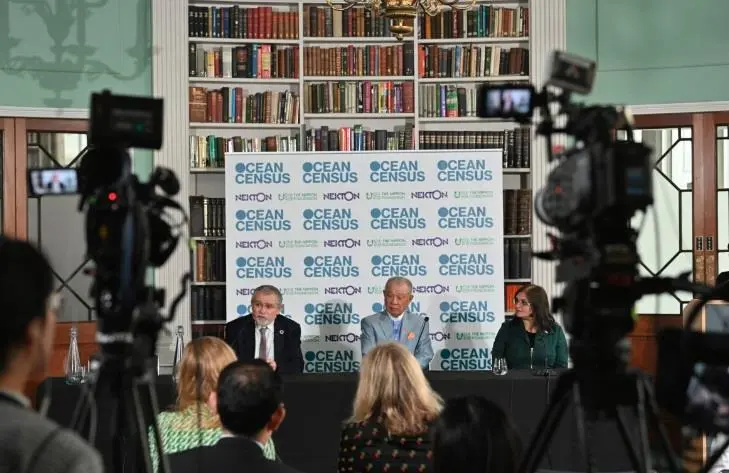
Meeting at the Royal Institution in London, the parties set an ambitious target of finding at least 100,000 marine species in the first decade.
From discussions about bringing on board the dive community right through to programmes for school children to become citizen scientists, the launch provided a rare face-to-face opportunity for this optimistic but determined set of specialists to spark ideas together.
Knowledge gathered will revolutionise our understanding of life on Earth and how to protect the ocean – the environment responsible for much of the air we breathe, regulating our climate, and a vital food source for billions.
The issue
Scientists believe little more than 10% of what lives in our seas has been found and there are around two million species still undiscovered. Ocean Census builds on major programmes of the past, including The Challenger Expeditions (1872-1876, the birth of modern marine science) and The Census of Marine Life (2000-2010).
The project is a global collaborative initiative, an open network of science, business, media and civil society organisations joining forces. It has been founded by The Nippon Foundation, the largest non-profit foundation in Japan that focuses on philanthropy through social innovation, and Nekton, a UK-based marine science and conservation institute. The project’s headquarters are in Oxford with the first Ocean Census Biodiversity Centre at the Oxford University Museum of Natural History.
“Ocean life makes all life on Earth possible and holds the wisdom of four billion years of our evolution on Earth. We can’t protect what we don’t know exists,” said Yohei Sasakawa, chairman of The Nippon Foundation, at the launch. “Ocean Census is full of dreams and wonder, and cannot be accomplished by the Nippon Foundation and Nekton alone. We would like to unravel the mysteries of the ocean, in collaboration with ocean research institutes, businesses, governments, the public, philanthropy and civil society.”
Turbocharging taxonomy
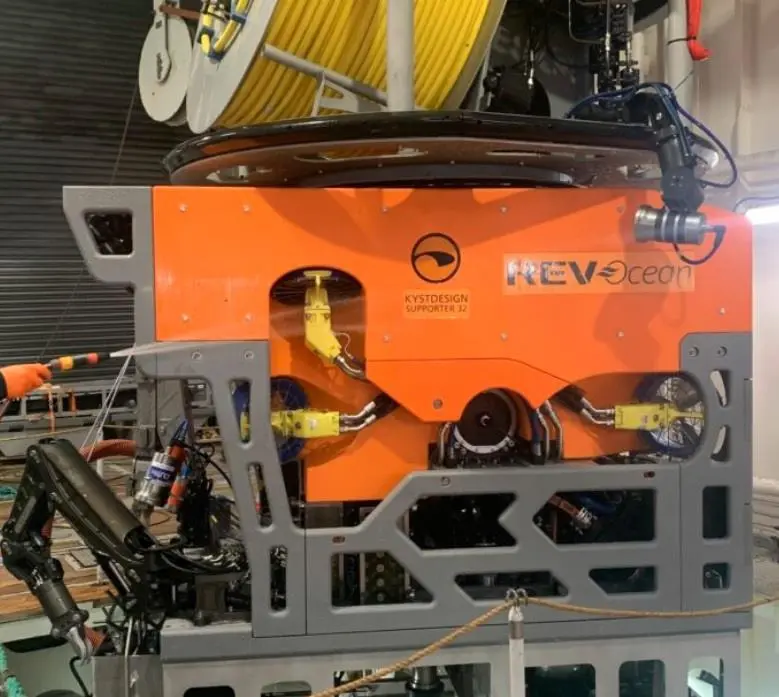
For the past 200 years, the work of finding and scientifically describing species (taxonomy) has been a slow, methodical process – the average rate of new species discovery hasn’t changed much since the 1800s, standing at around 2,000 a year.
“Revolutions in technologies such as digital imaging, sequencing and machine learning now make it possible to discover ocean life at speed and at scale,” said Professor Alex Rogers, Ocean Census Science Director. “It currently takes one to two years to several decades to describe a new species after it is collected by scientists but using new technologies and sharing the knowledge gained using cloud-based approaches, it will now only take a few months.”
Over the coming years, scientists from around the world will embark on dozens of expeditions to the ocean’s biodiversity hotspots to find new life from the surface to full ocean depth. Combining vessels from philanthropic, government and commercial fleets, they will be deploying a combination of advanced subsea technologies with divers, submarines and deep-sea robots.
The aggregated, open-sourced data will be added to a network of data centres globally and made freely accessible to scientists, decision makers, and the public.
Related Articles
 OTHER NEWS
 ELECTRICAL SYSTEMS
 ENVIRONMENT