![MaritimeJournal[Seawork]](https://www.maritimejournal.com/wp-content/uploads/2026/09/MaritimeJournalSeawork.svg)





Industry needs customised solutions for fuels: Caterpillar
As those in the maritime industry are aware, the International Maritime Organization has announced a goal of achieving net-zero emissions “by or around” 2050, depending on “national circumstances”.

The IMO’s aggressive target, with its many caveats, reflects the sector’s challenge to reduce its environmental impact as it remains a cornerstone of the global economy – and a hard-to-abate industry.
As the maritime industry strives to lower emissions, vessel diversity and industry applications – plus economic factors – can present unique challenges to achieving reduced emissions.
Small vessel owners in particular have a wealth of options in the form of behavioral changes and customized solutions as they help move the industry toward its net-zero goal.
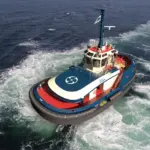
One example is tug titan Svitzer, which relies on a tug fleet in the port of London powered by Cat engines that run on 100% biofuels. Success with alternative fuels along with technological innovations that advance marine batteries and shoreside charging technology help workboat, patrol, crew transfer and ferry operators lower emissions as part of their individual decarbonization journeys.
Challenges to marine industry abatement
The shipping industry is responsible for approximately 3% of human greenhouse gas emissions. In its Review of Maritime Transport for 2023 report, the United Nations Conference on Trade and Development estimates $28 billion to $90 billion in annual investments would be required to ramp up fuel production and distribution and update marine infrastructure to reach the 2050 goal.
While the entire industry is focused on lowering emissions, large shipping companies have an advantage when it comes to impact. Their budgets can accommodate research and development initiatives and tech overhauls that support energy efficiency. Even if they do not directly fund initiatives designed to reduce emissions, their industry leadership status attracts investors and government grants.
Small maritime companies often lack the funds to retrofit older vessels with more energy-efficient technology. New vessels equipped with energy-efficient technologies can be more capital intensive. Fortunately, new, affordable solutions can help smaller maritime companies keep pace with their larger counterparts.
Advancing decarbonization
Vessel operators are making strides toward decarbonization by taking a comprehensive approach to change.
Svitzer’s 460-vessel fleet is a result of the company’s three-pronged approach to lowering emissions, which includes:
1. Enhanced scheduling and operational efficiency; and
2. Dedication to optimized fuel efficiency through the use of equipment powered by Cat engine connectivity and performance-monitoring technology.
Companies are increasingly powering smaller vessels with biodiesel in addition to hydrotreated vegetable oil (HVO). Using biodiesel or HVO in lieu of petroleum diesel reduces lifecycle GHG emissions in the fuel value chain, although tailpipe GHG emissions from biofuels are essentially the same as from traditional fuels.
Small vessel operators have taken interest in another approach – maritime infrastructure electrification. Building upon its electrification know-how in land applications, Caterpillar has announced plans to create marine class-certified batteries and shoreside charging solutions to help lower GHG emissions in the maritime industry.
A variety of options such as solar photovoltaic materials (PVs), hydrogen and hydrogen-blend gensets connected to an expanding grid of shore-side charging stations can be used to support electrified powertrain solutions on vessels.
In addition to lowering emissions, electrification solutions may promote a smoother ride with reduced noise and vibrations, greater efficiency, ease of manoeuvrability and reduced maintenance costs.
How vessel owners can prioritize suitable technologies
Vessel owners seeking ways to lower emissions will be able to choose from customized electrification approaches to best suit their budget, goals and needs.
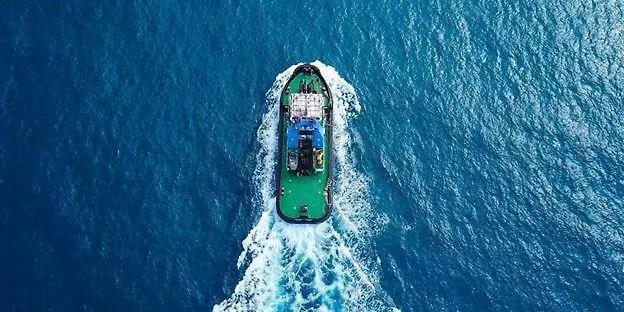
Tug and patrol boat owners, for example, may benefit from a hybrid solution that could employ biofuels and electrification. Another example is a ferry fleet operator with consistent routes being able to choose marine batteries that can be charged at shore-side stations.
As the Svitzer case study illustrates, successfully reducing GHG emissions is the result of a thoughtful, multifaceted operational strategy.
Selecting the right technologies can make it easier for small vessel owners to implement the behavioral and operational components of a comprehensive plan for decarbonization.
Customization for decarbonization
In the maritime industry, a one-size-fits-all approach doesn’t meet the varied needs and unique goals of the myriad of marine applications.
Each vessel operator’s decarbonization journey is unique and will require a customized solution that leverages marine batteries, shore-side charging and possibly biofuels or methanol alongside other technologies.
It means vessel operators must craft a decarbonization plan to fit their individual needs and budget. The combined efforts of ship owners and solution providers can help move the maritime industry closer to its goal of lower GHG emissions.
Related Articles
 FEATURES & VIDEOS
 ENVIRONMENT
 OTHER NEWS