![MaritimeJournal[Seawork]](https://www.maritimejournal.com/wp-content/uploads/2026/09/MaritimeJournalSeawork.svg)

Marine contractors hired to engineer oyster habitats
DEME has used specialist marine construction vessels and installation techniques to install one of Europe’s largest oyster reef restoration projects.
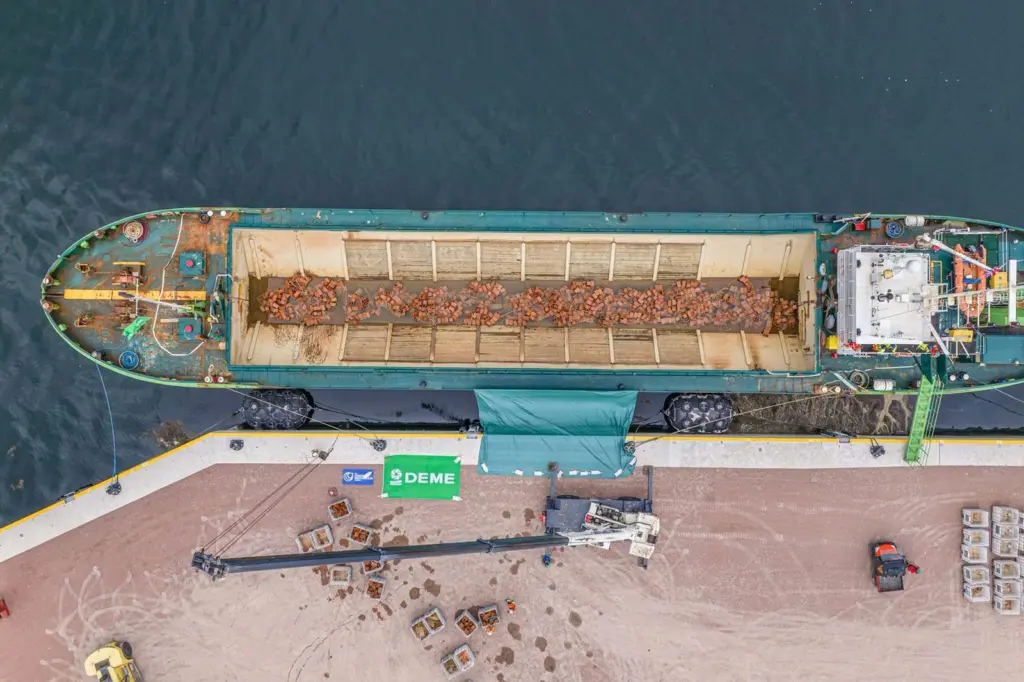
Working with The Oyster Restoration Company (TORC), DEME homed around one million juvenile European flat oysters in the Belgian North Sea.
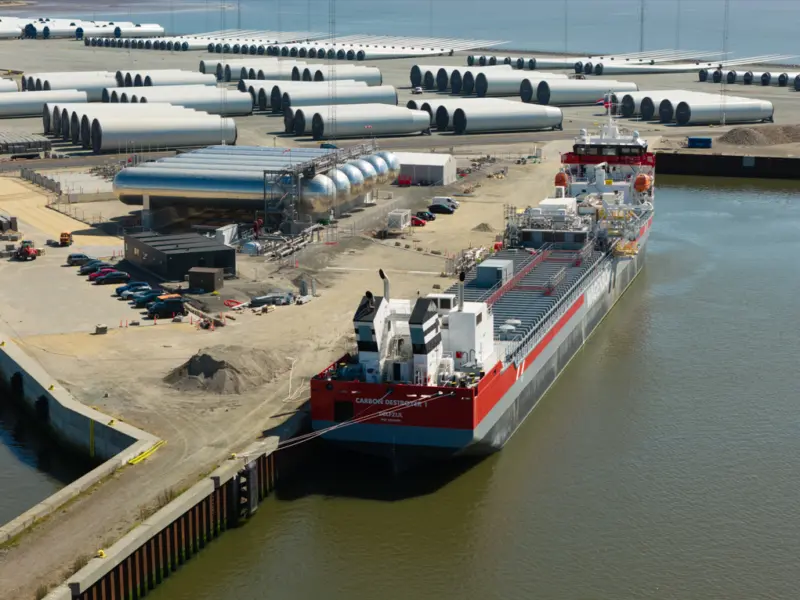
At the heart of the operation was DEME’s split hopper bargeVlaanderen VIII, which transported approximately 1,800 biodegradable clay reef modules from Ardersier in Scotland to the Hinderbanken gravel beds off the Belgian coast. Each module had been seeded with oyster spat – oysters that have begun to develop their shells – before loading.
Offshore installation methods more commonly associated with subsea infrastructure and renewables were adapted to carry out the EuroReefs project, commissioned by Belgium’s Federal Public Service Health, Food Chain Safety and Environment and financed through the EU’s NextGenerationEU programme.
Rather than conventional marine construction materials, the vessel deployed engineered clay structures designed to provide a stable substrate for the oysters while gradually integrating into the seabed ecosystem. Precise offshore placement was critical to ensure the artificial reefs were installed within the designated restoration area without damaging surrounding habitats.
The project combined offshore logistics, marine transport and environmental engineering, demonstrating how vessels traditionally employed on dredging and coastal infrastructure work can be adapted for ecological restoration.
According to DEME, the operation builds on experience gained through earlier pilot projects but significantly increases the scale. The Oyster Restoration Company lent its expertise in oyster cultivation and reef design, while DEME provided the marine engineering, transport and offshore installation capability.
The completed reef is expected to improve biodiversity by creating habitat for fish, crustaceans and other marine species while enhancing water quality through the oysters’ natural filtration capacity.
As offshore developers face growing biodiversity requirements alongside renewable energy projects, DEME said the engineering methods demonstrated during EuroReefs could provide a scalable model for future large-scale marine habitat restoration projects across European waters.
Ocean’s natural filters
There is a substantial body of scientific research showing that oysters are “ecosystem engineers”.
A 2014 paper in the journal Ecological Engineering found that restored oyster reefs rapidly developed filtration capacity while also creating habitat for fish and invertebrates. In the Louisiana study, restored reefs reached filtration rates of about 1,000 litres of water per hour per square metre after three years, demonstrating how restoration can quickly begin delivering environmental benefits.
Scientists also emphasise that oysters do much more than clean the water. A widely cited review on oyster ecosystem services says reefs improve water quality through filtration; provide habitat for fish, crabs and other marine life; stabilise sediments and help protect shorelines from erosion; and contribute to nutrient cycling in coastal ecosystems.
“Through EuroReefs, we are restoring native oyster reefs at a meaningful scale,” said Dr. Nik Sachlikidis, CEO of The Oyster Restoration Company. “This project brings together science, technology, and offshore expertise to help rebuild a habitat that is critical for marine biodiversity.”
“This project hits the core of Belgium’s marine restoration goals,” said Annelies Verlinden, Belgian Minister in charge of the North Sea. “Through oyster repopulation, we are turning the Nature Restoration Regulation from a legal requirement into a vibrant, living reality in the North Sea.”
Tomas Sterckx, Project Manager at DEME, said: “EuroReefs demonstrates how offshore engineering can support nature Restoration and integrate nature-based solutions at scale. By combining our marine engineering capabilities with TORC’s ecological expertise, we are helping to restore marine ecosystems, enhance biodiversity, and build more resilient environments in the Belgian North Sea.”