![MaritimeJournal[Seawork]](https://www.maritimejournal.com/wp-content/uploads/2026/09/MaritimeJournalSeawork.svg)



Companies collaborate to co-ordinate safety solutions
Two maritime technology providers have integrated AI-based visual detection with onboard data recording to improve safety monitoring, event logging and post-incident analysis for vessel operators.
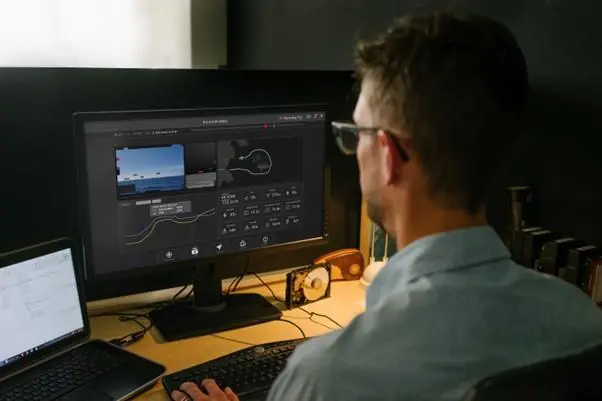
Austria-based SEA.AI and Canadian firm Barnacle Systems will integrate SEA.AI’s machine-vision systems with Barnacle Systems’ BRNKL Black platform, enabling the secure capture and storage of AI-detected navigational events alongside vessel and operational data.
The integration allows visual detections – such as nearby vessels, floating objects, navigational hazards, near-miss situations, and persons overboard – to be recorded in parallel with time stamps, vessel position and system data. By consolidating this information into a single record, operators can review events with greater clarity during incident investigations, audits and compliance reviews, the companies say.
SEA.AI’s optical detection technology is designed to address scenarios where radar and AIS coverage may be limited, including encounters with unlit vessels, partially submerged debris or marine mammals.
Through the partnership, these detections can now be preserved as part of a permanent operational record, providing context around what was visually observable before and during an incident.
For fleet operators, the combined system supports centralised access to safety-related data across vessels.
Recorded visual and sensor information can be used to assess operational risk, evaluate crew responses to developing situations and inform training programmes. The availability of objective, time-synchronised data also supports internal reporting requirements and safety management systems.
From a regulatory and insurance perspective, the ability to provide verifiable visual and operational evidence may assist in post-incident documentation and claims handling.
By reducing reliance on recollection alone, the system is intended to improve transparency and consistency in incident review processes.
The companies say the integration is applicable across a range of operational profiles, including commercial, government and industrial maritime operations where situational awareness and accountability are critical.
The system is designed to function continuously, capturing relevant detections without additional crew workload.
Related Articles
 ACCESSORIES & EQUIPMENT
 OTHER NEWS
 EQUIPMENT