![MaritimeJournal[Seawork]](https://www.maritimejournal.com/wp-content/uploads/2026/09/MaritimeJournalSeawork.svg)





Smart FEC: the backbone that keeps vital data flowing
Forward error correction (FEC) has become a trusted delivery vessel for critical data and video at sea. KenCast CEO Dr Henrik Axelsson explains how this unsung hero keeps, vessels moving, the seabed mapped and collisions at bay.

From autonomous vessels mapping the sea floor to leisure yachts accessing real-time weather updates and updating nautical charts, connectivity at sea is increasingly being used to support new data-driven applications.
The proliferation of High-Throughput Satellite (HTS) constellations is providing the bandwidth needed for advanced features such as collision-avoidance systems and live video streaming.
However, these tools can only function as intended if the supporting data is transmitted flawlessly, regardless of the vessel’s remoteness.
An unsung hero of data delivery, a technology called advanced forward error correction (FEC), has emerged as an essential method to ensure uninterrupted service even in harsh oceanic conditions.
Work or leisure, why the algorithm matters
Although satellite connectivity has provided vessels with critical access to navigational and communications services, as well as internet-based entertainment, data transmission is not inherently error-proof.
This remains true despite recent advances of low-earth orbit satellite networks.
Whilst multicasting via satellite offers an unparalleled method to simultaneously reach a nearly unlimited number of geographically dispersed sites, both fixed and mobile, digitally delivered data is always prone to delay, degradation and loss.
This can be especially critical for remote vessels, where incomplete or corrupted data could compromise operations or safety.
This is where FEC steps in as a versatile data-delivery technology relied upon by satellite operators, government agencies, Hollywood studios and multinational corporations to guarantee flawless delivery of their precious content.
Error correction was pioneered in the 1940s and 50s in an attempt to fix problems with the error-prone punched card reader.
Today’s FEC is a solution for modern problems, acting pre-emptively to ensure error detection and correction and tackling data issues in real time using mathematical algorithms to correct errors.
Think of FEC as a Sudoku puzzle where missing numbers are deduced from those present: FEC “fills in” missing data to accurately complete the entire file or stream. For small to mid-size workboats and leisure vessels, FEC’s ability to ensure data delivery supports everything from navigation and safety systems to enhanced quality of life for crew and passengers.
Remote diagnostics, fuel consumption optimisation and weather updates all require substantial data transfers to provide the onboard crew with actionable insights.
Navigational technologies, including eNavigation and Automatic Identification Systems (AIS) for collision avoidance, increasingly rely on FEC to support data-intensive applications, such as real-time video.
For passengers working remotely or staying connected onboard, reliable video streaming is crucial. From video calls to entertainment, high-quality content access significantly improves life at sea, which is critical for reducing crew turnover and enhancing passenger satisfaction. However, transmitting vast amounts of data across unpredictable oceanic networks requires more than just standard technology. Here, FEC steps in as an indispensable solution, but not all types are created equal.
While some systems employ basic FEC or even ‘carousel’ methods – where data is repeatedly sent until it arrives intact – these can be inefficient, costly and slow.
In contrast, advanced FEC algorithms ensure that each data packet arrives perfectly the first time, regardless of network instability.
The quality of the FEC algorithm directly influences the efficiency, speed and reliability of data transmission, ultimately reducing operational costs tied to retransmissions.
Cast away from data delays

Basic FEC solutions are limited. They’re built to handle small data packets, correcting only minor errors within short transmission windows; think of small audio and video files, over small time frames.
But when connections drop or downlinks stutter, the small data bits cannot be recovered, leaving gaps in the file that cannot be filled. This means the whole package has to be retransmitted to every receiver, creating frustrating delays and racking up unnecessary costs.
Enter advanced FEC, which tackles these limitations head-on. Known as Application Layer FEC (AL-FEC), this technology is ideally suited for large files, where the need for error correction is greatest.
AL-FEC expertly checks for errors, repairs data and removes the need for retransmissions, ensuring greater efficiency, reliability, operational effectiveness and cost savings.
But the innovation doesn’t stop there.
If typical FEC works by patching holes in a file or stream with supplemental data packets generated prior to transmission, the latest innovation uses only supplemental packets at transmission – there is no original file data.
This smart innovation excels when sending to receivers in-and-out of coverage – think of fleets of boats moving between satellite spot beams.
This ‘smart’ FEC solution is a game-changer, particularly for maritime applications where staying connected is crucial, such as in government agency and research operation missions.
Coast guard agencies, for example, are deploying increasingly advanced technologies to match the increasingly sophisticated methods of criminals smuggling goods into countries and to improve their ability to help vessels or people in distress along the coastline.
The US Coast Guard has identified autonomous technology as key to enabling “every cutter, small boat station, and sector to effect operations with heightened efficiency and precision”. It has highlighted unmanned surface vessels (USVs) in particular to locate targets of interest for a manned crew to eventually interdict, or as a communication relay.
Their use would demand flawless, assured and real-time data transmission to ensure success – data would need to be relayed between the USVs and crew, in real time, despite any weather effects on the connectivity channels.
Mapping the floor
Maritime FEC applications go even deeper, literally mapping the vast, largely uncharted ocean floor.
With only about 25% of the sea floor mapped so far, the scale of this effort is staggering. According to the National Oceanic and Atmospheric Administration (NOAA), “technology is being pushed to new limits” as organisations invent specialised vessels and use autonomous vehicles for these mapping missions.
To capture the high-resolution, low-altitude surveys needed, remotely operated vehicles (ROVs) are deployed, equipped with advanced geographic information systems (GIS) like sonar and lidar.
These tools allow them to generate intricate maps of the sea floor, producing incredible detail and massive quantities of data.
Given the remote nature of many mapping operations, transmitting data back to control centres or between vessels in real time is a formidable challenge.
Only the highest level of data-delivery technology can reliably support this.
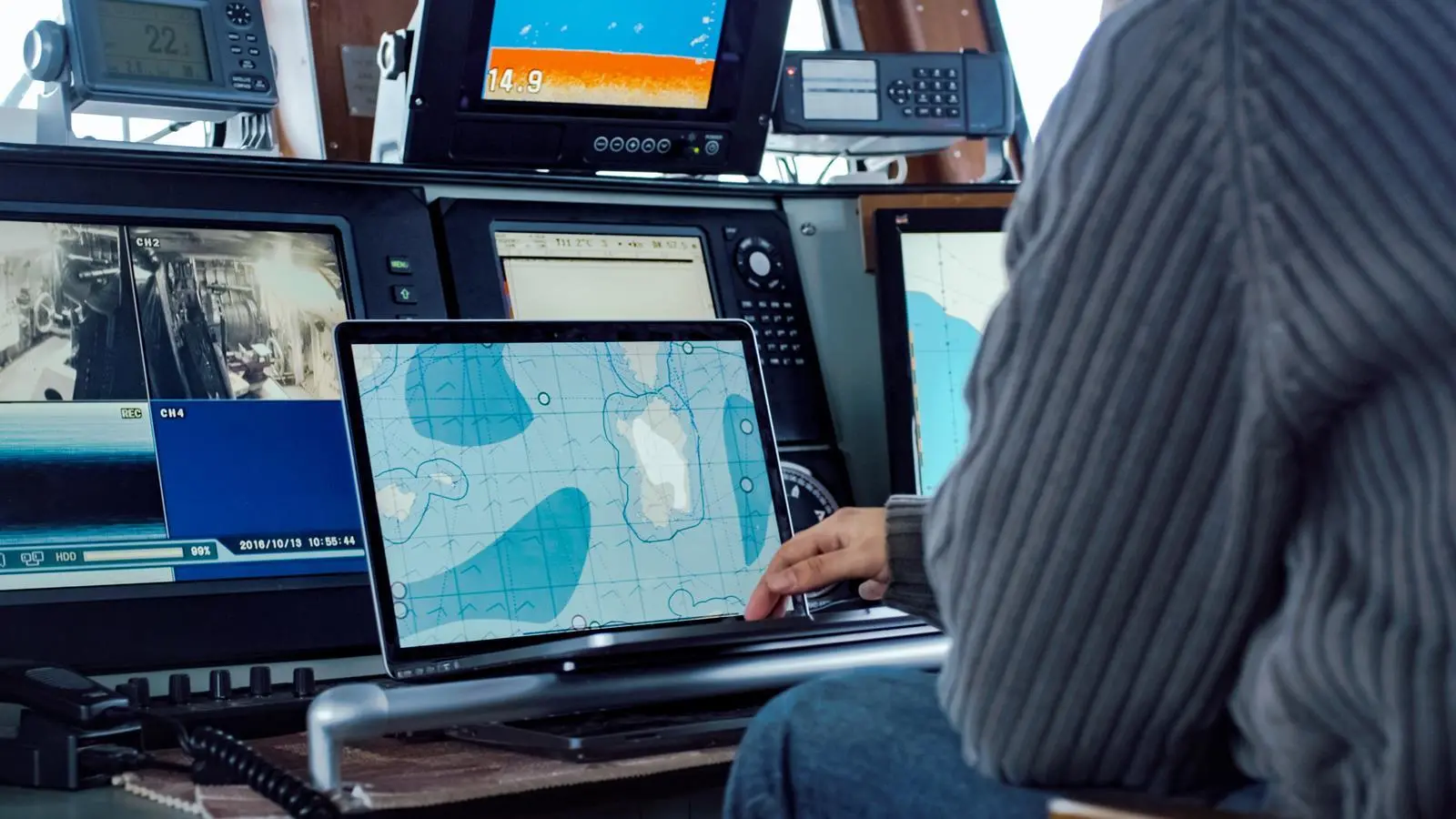
Advanced FEC steps in to ensure seamless, real-time transmissions, handling the immense data loads and connectivity hurdles that these deep-sea operations face.
And FEC’s applications don’t stop at ocean mapping. From wind farms to military vessels, a wide range of at-sea operations rely on uninterrupted data and imagery for both routine monitoring and critical missions.
As technology advances, these operations demand more from satellite connections, creating an ever-growing need for FEC’s latest capabilities. This smart iteration of FEC technology meets these demands, ensuring data transmission is smooth, secure, and complete – even in the most challenging conditions.
A new wave of connectivity
Whether mapping uncharted sea floors, aiding coast guard missions, or simply ensuring smooth streaming for remote workers at sea, AL-FEC and smart FEC is the backbone that keeps data flowing.
As maritime technology continues to push boundaries, FEC ensures that every byte reaches its destination without a hitch.
So next time you’re at sea, remember: it’s not just the wet waves that keep you moving forward, but also the ones bouncing off satellites to deliver the data you can count on.